

Radish microgreens caught me off guard the first time I actually sat down and looked into it. I had grown a tray on a whim, mostly because the seeds were cheap and the grow time was fast. When I snipped my first handful and tossed them on eggs, that peppery heat hit the back of my throat immediately, sharper than I expected, almost like a tiny horseradish punch. I went back for more.
Then I started digging into radish microgreens nutrition values. A 2012 USDA-funded study found that microgreens pack 4 to 40 times more vitamins than their fully grown counterparts. For a plant I had dismissed as garnish, that stopped me cold. Per 100g, radish microgreens deliver roughly 2.8g of protein, around 3.6g of fiber, and a solid hit of vitamins C, E, and K — along with folate and glucosinolates, the compounds behind that signature bite.
That spice isn’t just flavor. It’s chemistry and it turns out that chemistry does real work in the body.
In this article, I’m breaking down the full nutrition table, comparing different radish varieties, covering the nitric oxide angle most people skip, and stacking radish microgreens directly against mature radish and sprouts. Worth knowing before you write them off as a salad topping.
Disclaimer: This article is for informational purposes only and does not constitute medical or nutritional advice. Always consult your physician or a qualified nutritionist before making any changes to your diet or attempting to treat any health condition or symptoms.
| Common Name | Radish microgreens, micro radish |
| Botanical Name | Raphanus sativus |
| Family | Brassicaceae |
| Plant Type | Annual (harvested as seedling) |
| Harvest Size | 1–3 inches tall |
| Light Requirement | Indirect sunlight or grow light (6–8 hrs/day) |
| Growing Medium | Well-draining potting mix or hydroponic mat |
| Soil pH | 6.0–7.0 (slightly acidic to neutral) |
| Days to Germination | 2–3 days |
| Days to Harvest | 8–12 days |
| Ideal Temperature | 65–75°F (18–24°C) |
| Native Areas | Southeast Asia (origin of wild radish) |
| Toxicity | Non-toxic to humans and pets |
What Is the Nutritional Value of Radish Microgreens? (Per 100g)
Most of the nutrition in radish microgreens is concentrated precisely because the plant is still in seedling mode, it hasn’t yet distributed its stored energy into stems, leaves, and roots. What you eat is essentially the plant’s entire nutrient reserve in one small bite.
The table below is what most articles skip or gloss over. Here’s the actual data:
Radish Microgreens Nutrition Table (Source: USDA Food Composition Data · Xiao et al., 2012)
| Nutrient | Amount per 100g | % Daily Value |
|---|---|---|
| Calories | ~32 kcal | — |
| Protein | 2.2g | — |
| Dietary Fiber | 1.6g | 6% |
| Vitamin C | 14.8mg | ~16% |
| Vitamin E | High | ~25% |
| Vitamin K | Present | — |
| Vitamin A | Present | ~8% |
| Folate (B9) | 25µg | ~6% |
| Potassium | 233mg | ~5% |
| Calcium | Present | ~5% |
| Iron | Present | ~5% |
| Magnesium | Present | ~11% |
| Phosphorus | Present | ~11% |
One thing worth pointing out: radish microgreens were the only variety in the Xiao et al. study rated “high value” for Vitamin E. Not spinach microgreens, not sunflower, not broccoli. Radish. That’s a fact most nutrition breakdowns quietly skip past.
On protein, the 2.2g per 100g isn’t just filler weight. Radish microgreens carry a meaningful profile of essential amino acids, including leucine, isoleucine, and valine. These are the three branched-chain amino acids your body can’t produce on its own. Not a complete protein source by itself, but a genuinely useful addition to a plant-heavy diet where those amino acids can be harder to hit consistently.
How Do Radish Microgreens Compare to Mature Radish?
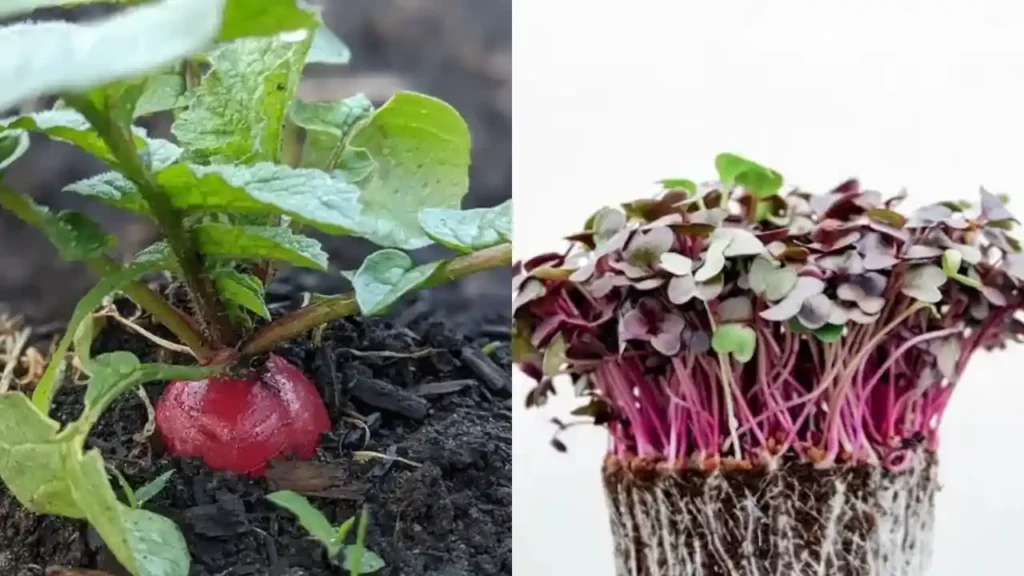
Most people assume the full-grown vegetable is the more nutritious version. With radish, that assumption doesn’t hold up.
At 7–10 days after germination, the seedling is still running entirely on stored seed energy, it hasn’t spread that reserve across a bulb, a stem, and leafy tops yet. Everything is packed into one small shoot. That’s the basic reason radish microgreens nutrition numbers look the way they do compared to the mature plant.
The Xiao et al. (2012) study put a hard number on this: microgreens contain 4 to 40 times more vitamins and carotenoids than their fully mature counterparts, depending on the variety tested. That’s not a small rounding difference.
Here’s how the three forms of radish stack up directly:
Radish Comparison Table (Source: USDA Food Composition Data · Xiao et al., 2012)
| Nutrient | Radish Microgreens | Mature Radish (bulb) | Radish Greens (leaves) |
|---|---|---|---|
| Vitamin C | 14.8mg (~16% DV) | 14.8mg (~16% DV) | Higher than bulb |
| Vitamin E | High (~25% DV) | Negligible | Low |
| Folate (B9) | 25µg (~6% DV) | 25µg | Moderate |
| Dietary Fiber | 1.6g (6% DV) | 1.6g | Higher than bulb |
| Carotenoids | High concentration | Low | Moderate |
| Overall Density | Highest | Lowest | Middle ground |
A few things stand out when you look at this side by side.
The bulb, the part most people actually eat, scores the lowest across almost every category. Radish greens do better, which surprises most people, but they’re still not close to what the microgreen delivers per gram. The Vitamin E gap is the starkest: the mature radish has almost none, the greens have a little, and the microgreen is the only form rated genuinely high in it.
The nutrition of radish microgreens isn’t just “a bit better.” In some categories it’s a different league entirely. If you’ve been eating mature radish for the health benefits, the microgreen form gets you there faster and with a lot less bulk on the plate.
If you want to take it further and grow full mature radish in containers indoors, we’ve covered the whole process in detail, soil mix, container depth, lighting, and harvest timing. Check out our article on Grow Radish in Containers Indoor in 28 Days.
Are Radish Microgreens the Same as Radish Sprouts And Which Is More Nutritious?
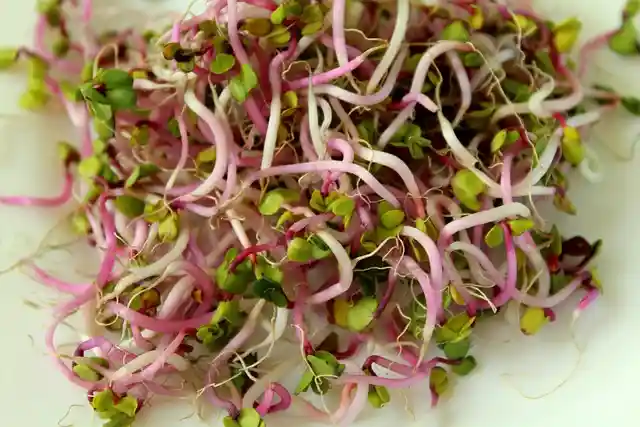
People use these two terms interchangeably and they’re not the same thing at all.
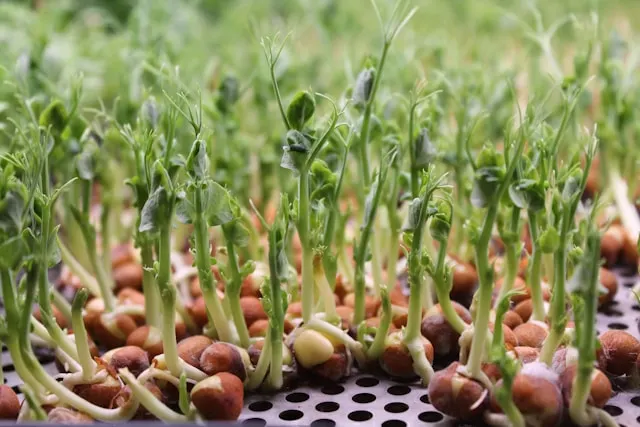
Sprouts are grown in water, no soil involved. You soak the seeds, rinse them twice a day, and eat the whole thing, seed, root, and shoot together, usually within 3 to 5 days. Microgreens are grown in soil or a growing medium, exposed to light, and you only harvest the shoot above the surface. They take a few days longer, around 7 to 12 days for radish.
That difference in how they’re grown changes the nutrition more than most people expect.
Because microgreens spend time under light, they go through photosynthesis. That process is what builds chlorophyll, carotenoids, and the full vitamin profile you see in the radish microgreens nutrition numbers. Sprouts never get that light exposure, they develop in the dark or near-dark, so they miss that entire layer of nutrient development.
Sprouts aren’t nutritionally empty. They carry solid enzyme content, and some research points to higher levels of certain bioactive compounds in the early germination window. But on vitamins, specifically Vitamin C, Vitamin E, and carotenoids, microgreens generally come out ahead.
Here’s the direct comparison:
Radish Microgreens vs. Radish Sprouts (Source: USDA Food Composition Data · Xiao et al., 2012)
| Factor | Radish Microgreens | Radish Sprouts |
|---|---|---|
| Grow Medium | Soil / grow mat | Water only |
| Light Exposure | Yes | No |
| Harvest Time | 7–12 days | 3–5 days |
| Part Consumed | Shoot only | Whole (seed + root + shoot) |
| Chlorophyll | High | Very low |
| Carotenoids | High | Low–Moderate |
| Vitamin C | ~14.8mg per 100g | Lower |
| Vitamin E | High (~25% DV) | Negligible |
| Enzyme Content | Moderate | Higher |
| Folate | 25µg per 100g | Lower |
| Food Safety Risk | Lower | Higher (warm water = bacteria risk) |
That last row matters more than people realize. Sprouts grown in warm, stagnant water are a well-documented food safety concern, the FDA has flagged them repeatedly over the years for Salmonella and E. coli risk. Microgreens, grown in a medium and harvested above soil level, carry a significantly lower risk profile.
So which one should you grow or buy? If speed and simplicity are the priority, sprouts work. Three days, no equipment, no soil. But if you’re after the benefits of radish sprouts and the fuller vitamin picture, microgreens are the better return on a few extra days of patience. The chlorophyll alone, which sprouts simply can’t build without light, makes a real difference in what ends up on your plate.
Sprouting radish seeds is straightforward, just soak, rinse twice daily, and harvest in 3 to 5 days. Growing microgreens is a different process and has a steeper learning curve for beginners. For a full step-by-step guide, head over to our blog on Grow Radish Microgreens at Home in Just 10 Days.
What Are the Health Benefits of Radish Microgreens Nutrition?
The research here is still developing. Most of what we know comes from laboratory studies and early-stage human trials, not large clinical conclusions. What follows is a summary of what the nutritional compounds in radish microgreens have been studied for, not a list of things they’re proven to do in your body.
Immune System Support (Vitamin C)
At ~16% of your daily Vitamin C in 100g, radish microgreens are a decent dietary source of a nutrient that’s well-established in immune function research. Vitamin C is consistently studied for its role in white blood cell activity and as an antioxidant that helps reduce oxidative stress. It won’t replace a varied diet, but it contributes meaningfully to the radish microgreens benefits picture.
Heart Health (Potassium + Fatty Acids)
The 233mg of potassium per 100g is one of the more concrete numbers in the radish microgreens nutrition profile. Potassium is widely researched in relation to blood pressure regulation, and dietary sources are generally considered preferable to supplementation. Radish microgreens also contain omega-3 and omega-6 fatty acids, which appear in cardiovascular research, though the amounts here are modest and shouldn’t be overstated.
Anti-Inflammatory Properties (Antioxidants + Anthocyanins)
Oxidative stress from digestion, pollution, and UV exposure is a documented driver of chronic inflammation. Radish microgreens contain antioxidants and anthocyanins, the same pigment compounds studied in berries and red cabbage, that laboratory research suggests may help neutralize free radicals. This is promising early-stage science, not a clinical outcome.
Digestive Health (Fiber + Prebiotic Activity)
The 1.6g of dietary fiber per 100g is modest on its own but adds up in the context of a diet that already leans toward whole foods. More interesting is the emerging research around the prebiotic properties of glucosinolates and fiber from Brassica-family plants, suggesting potential support for gut microbiome diversity. Some studies have also explored fiber’s role in slowing glucose absorption, which matters for blood sugar management, though this is an area where research is still building.
Skin and Bone Health (Vitamins A, E + Calcium)
Vitamin A is well established in research related to normal skin and immune function. Vitamin E, the standout in the benefits of radish microgreens, and the nutrient that set this variety apart in Xiao et al. is studied for its role in protecting cell membranes from oxidative damage. Calcium and phosphorus round out a profile that bone health researchers associate with density maintenance over time, particularly relevant in plant-forward diets where these minerals can be harder to source.
Compounds Studied in Cancer Research (Glucosinolates + Isothiocyanates)
As a Brassica family plant, radish microgreens contain glucosinolates that convert to isothiocyanates, including sulforaphane, during digestion. These compounds have been studied extensively in laboratory and animal settings for their potential role in apoptosis, the process by which the body identifies and removes abnormal cells. This research is preliminary. It does not mean radish microgreens prevent or treat cancer. What it does mean is that these compounds are worth paying attention to as the science matures.
Compounds Studied in Liver Health
Radishes have a long history in traditional Chinese medicine as a food used to support liver function and modern nutritional research has started to examine why. Certain compounds in radish, including indoles and glucosinolates, are being studied for their potential to interact with enzyme systems involved in normal liver metabolism, which help the body process and clear metabolic waste. The research is early and largely laboratory-based, but it does give some scientific grounding to a practice that’s been around for centuries. Whether that translates meaningfully to human liver health at the amounts found in microgreens is still an open question.
Do Radish Microgreens Boost Nitric Oxide And Why Does It Matter?
This is the part of radish microgreens nutrition that almost nobody writes about and it’s probably the most interesting angle for anyone eating these for performance or cardiovascular reasons.
What Nitric Oxide Actually Is
Nitric oxide (NO) is a molecule your body produces naturally. Its primary studied role is vasodilation, relaxing the walls of blood vessels so they widen, which is associated with improved blood flow and reduced pressure on the cardiovascular system. It’s not a supplement or an additive. Your body makes it, and dietary nitrates are one of the raw materials it uses to do that.
The Nitrate–Nitrite–NO Pathway
Here’s how the chain works. You eat food containing dietary nitrates. Bacteria in your mouth convert those nitrates to nitrites. Your body then converts nitrites to nitric oxide. This is established physiology, the nitrate–nitrite–NO pathway is well-documented in nutritional science, not fringe territory.
Radishes are a naturally high-nitrate vegetable. Radish microgreens, being a more concentrated form of the plant at peak seedling density, carry that nitrate profile in a smaller serving size. The research hasn’t yet produced precise nitric oxide conversion figures specific to radish microgreens, so exact claims here would be overstepping, but the underlying mechanism is sound and the nitrate content is real.
Nitric Oxide in Radish Microgreens vs. Beet Juice
Beet juice became the popular food-based nitric oxide source largely because of sports performance research from the early 2010s. It works, and the evidence behind it is reasonably solid for athletic contexts. But beet juice is essentially a single-purpose food when it comes to micronutrients.
Nitric oxide in radish microgreens comes packaged differently. The same serving that delivers dietary nitrates also brings Vitamin E (at levels no competitor microgreen matched in the Xiao study), Vitamin C, folate, and glucosinolates. Whether that combination produces meaningfully different outcomes compared to beet juice hasn’t been studied directly, that’s an honest gap in the current research. What’s fair to say is that radish microgreens offer nitrate content alongside a broader micronutrient profile than beet juice does.
Who Is Actually Looking at This
The people most interested in food-based nitric oxide sources tend to fall into two groups: athletes looking for natural pre-workout nutrition, and people managing blood pressure who prefer dietary approaches over supplementation. Both groups have good reason to be interested in nitrate-rich foods based on existing research. Neither group should treat radish microgreens as a replacement for medical guidance or prescribed treatment, the evidence for specific therapeutic outcomes at microgreen serving sizes isn’t there yet.
How to Eat Them for the Most Benefit
A few things are worth knowing if you’re eating radish microgreens with nitric oxide conversion in mind.
Eat them raw. Heat degrades the nitrate content and deactivates the myrosinase enzyme that drives glucosinolate conversion. A quick rinse, then straight onto food, no cooking.
Don’t use antibacterial mouthwash right before eating them. This sounds oddly specific, but the bacteria in your mouth are what perform the first conversion step from nitrate to nitrite. Studies on beet juice consumption have shown that antibacterial mouthwash measurably reduces nitric oxide production from dietary nitrates. The same logic applies here.
Timing matters if you’re eating them for physical performance. The nitrate-to-NO conversion takes time, research on beet juice generally suggests consuming nitrate-rich foods two to three hours before exercise, not immediately before. Radish microgreens on a pre-workout meal make more practical sense than eating them in the locker room.
Which Variety Has the Best Radish Microgreens Nutrition?
“Radish microgreens” isn’t one thing. There are several distinct varieties, and the nutritional differences between them are real enough to matter depending on what you’re eating them for.
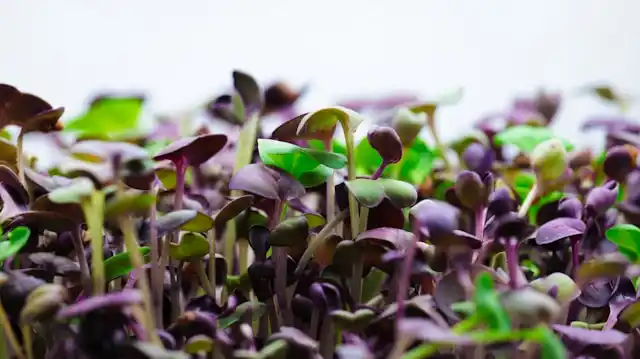
Daikon Radish Microgreens Nutrition
Daikon is where the numbers get genuinely interesting. In the Xiao et al. 2012 USDA study, daikon radish microgreens recorded the highest Vitamin E content of every microgreen variety tested, not just every radish variety, every microgreen. That’s the fact that keeps coming up because it’s actually unusual.
The flavour is mild, fresh, and slightly sweet compared to the sharper heat you get from other radish varieties. It’s the easiest variety to eat in larger quantities without the peppery intensity becoming a distraction. Common cultivars include Triton, Purple Rambo, Red Arrow, China Rose, Hong Vit, and Sai Sai, each with minor flavour variations but a broadly similar nutrient profile.
On the blood sugar angle: daikon radish microgreens contain glucosinolates and coenzyme Q10, both of which appear in early research around blood sugar regulation. Glucosinolates and coenzyme Q10 have both been studied in relation to metabolic health and glucose metabolism in early laboratory research. The daikon radish microgreens nutrition research here is preliminary, these are compounds worth knowing about, not outcomes you can count on from a single food source.
China Rose Radish Microgreens Nutrition
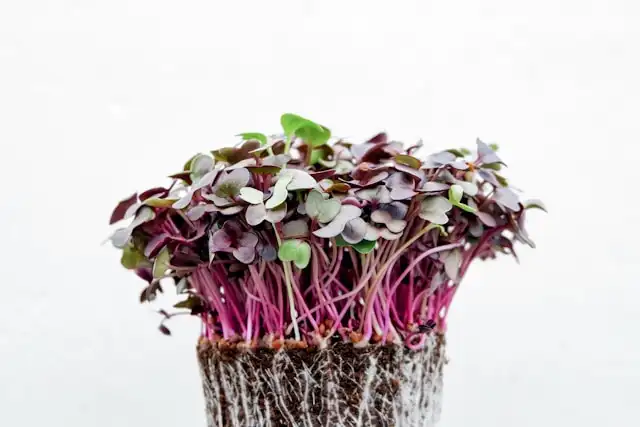
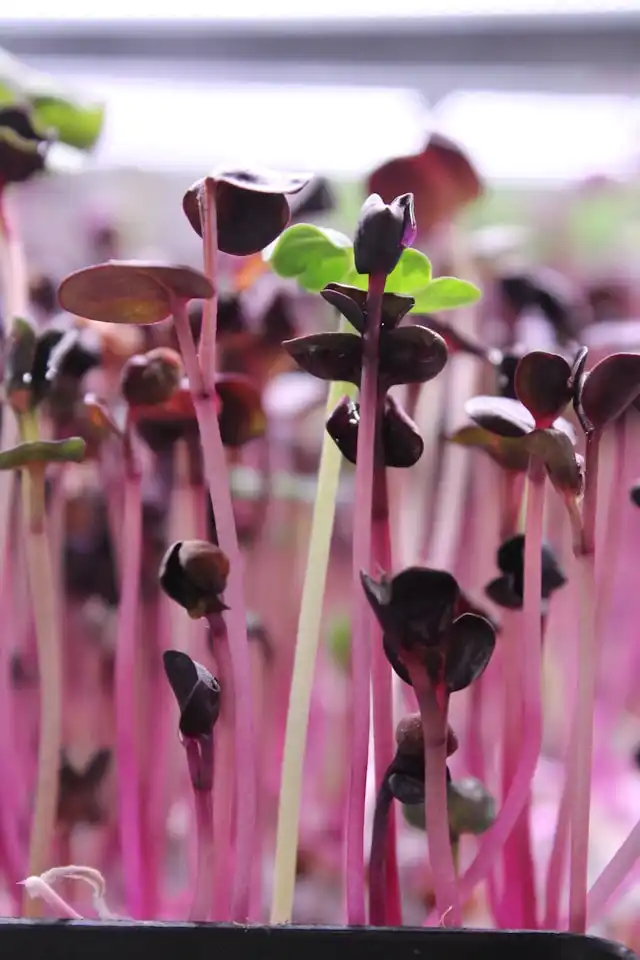
China Rose is the variety that gets photographed. Bright pink stems, green leaves, it looks better on a plate than almost anything else in the microgreen category. But the china rose radish microgreens nutrition profile holds up beyond aesthetics.
The vitamin profile is close to daikon, solid Vitamin C content, good antioxidant presence, with a flavor that leans slightly sweeter and less aggressively peppery. It works well raw in salads and as a garnish where appearance matters, without sacrificing the nutritional case for eating it. If you’re introducing someone to radish microgreens for the first time, China Rose is probably the least confrontational starting point.
Purple Radish Microgreens Nutritional Benefits
The purple and red-stemmed varieties, Purple Rambo being the most common, carry something the green and pink varieties don’t: high anthocyanin content. Anthocyanins are the pigment compounds responsible for the colour, and they’re a specific subclass of antioxidants with their own research base around biological pathways related to inflammation and immune response, and in early laboratory studies, potential interactions with cellular stress and signaling pathways.
The purple radish microgreens nutritional benefits case rests largely on anthocyanin concentration. Studies on anthocyanin-rich foods generally show higher antioxidant capacity scores compared to their less pigmented counterparts, and the same logic applies within the radish microgreen category. If you’re specifically interested in anthocyanin-rich foods and antioxidant-related compounds, the purple varieties stand out nutritionally.
Radish Microgreen Variety Comparison (Source: USDA Food Composition Data · Xiao et al., 2012)
| Variety | Standout Nutrient | Flavour | Best For |
|---|---|---|---|
| Daikon (various) | Vitamin E (highest of all microgreens) | Mild, fresh | General nutrition, blood sugar research |
| China Rose | Vitamin C, antioxidants | Slightly sweet, mildly peppery | Salads, garnishes, beginners |
| Purple / Rambo | Anthocyanins | Bold, peppery | Antioxidant and anti-inflammatory focus |
| Hong Vit | Balanced vitamins | Mild | Everyday use, mixed dishes |
The honest answer to which variety is “best” depends on what you’re optimising for. Daikon wins on Vitamin E by a meaningful margin. Purple varieties win on anthocyanin content. China Rose wins on versatility and appearance. Hong Vit is the sensible everyday option when you’re not chasing a specific nutrient and just want something consistent.
How Many Radish Microgreens Should You Eat Per Day?
There’s no official recommended daily intake for microgreens, they’re a food, not a supplement, and nutrition research hasn’t landed on a specific target figure yet. That said, a practical starting point most dietitians work with for microgreens generally is 1 to 2 oz per day (roughly 28–56g). That’s enough to get a meaningful contribution from the radish microgreens nutrition profile without overloading a single food source.
The more useful question is probably how to actually eat that amount without it feeling like a chore.
Raw works best. Heat degrades Vitamin C and deactivates the myrosinase enzyme responsible for converting glucosinolates into their active isothiocyanate form. If you cook them, you lose a meaningful portion of what makes the nutrition microgreen radish research interesting in the first place. A quick rinse and straight onto whatever you’re eating is the practical approach.
Where they fit without thinking too hard about it:
- Folded into scrambled eggs or an omelette at the end (off heat)
- Layered into sandwiches, wraps, or tacos in place of lettuce
- Scattered over grain bowls or soups just before serving
- Blended into smoothies where the peppery flavour mostly disappears
- Tossed through salads as the base or a topping
A note on thyroid conditions. Radish microgreens are a Brassica-family food, which means they contain compounds known as goitrogens that have been studied for their potential interaction with iodine uptake when consumed in very large amounts. At normal dietary amounts, this isn’t a documented concern for people with healthy thyroid function. For anyone managing a thyroid condition, the standard guidance is moderation with cruciferous vegetables and a conversation with whoever is managing that condition before making significant dietary changes. This isn’t specific to radish microgreens, it applies to broccoli, kale, and cabbage too.
A note on digestive sensitivity. The fiber and glucosinolate content may contribute to bloating or mild digestive discomfort in people who aren’t used to eating Brassica vegetables regularly. Starting with a smaller amount, a pinch rather than a full handful, and building up over a week or two tends to sidestep that problem without requiring you to give them up entirely.
Neither of these notes is a reason to avoid radish microgreens. They’re context worth having before you make them a daily habit.
Radish Microgreens vs. Other Microgreens — How Do They Stack Up?
Radish isn’t the only microgreen worth growing, and it doesn’t lead every category. Here’s an honest look at where it sits relative to three other commonly eaten varieties.
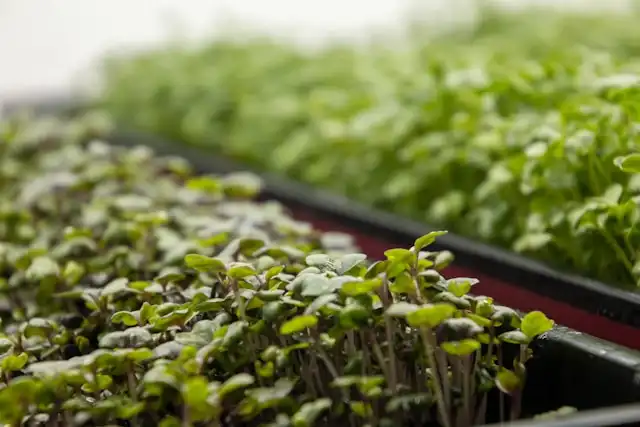
Microgreens Nutrition Comparison Table (Source: USDA Food Composition Data · Xiao et al., 2012)
| Nutrient / Factor | Radish | Broccoli | Sunflower | Pea |
|---|---|---|---|---|
| Vitamin E | Highest of all tested | Moderate | Moderate | Low |
| Vitamin C | Good (~16% DV) | High | Moderate | Moderate |
| Sulforaphane (Glucosinolates) | Present | Highest concentration | None | None |
| Protein | 2.2g per 100g | ~2.8g | ~3.2g | ~4g+ |
| Anthocyanins | High (purple varieties) | Low | Low | Low |
| Flavour | Peppery, bold | Mild, slightly bitter | Nutty, mild | Sweet, fresh |
| Grow Time | 7–10 days | 7–10 days | 10–12 days | 10–14 days |
The available research suggests a few broad nutritional differences between varieties. Radish microgreens recorded notably high Vitamin E levels in the Xiao et al. study and the purple varieties add an anthocyanin concentration that other microgreens don’t match. That combination may be relevant for people specifically interested in those compounds.
Broccoli microgreens are frequently discussed in research related to glucosinolates and sulforaphane, largely because of their sulforaphane content. The glucosinolate content in broccoli microgreens is higher than in radish, and sulforaphane is one of the most extensively studied compounds found in Brassica vegetables. Radish contains glucosinolates too, broccoli microgreens generally contain higher sulforaphane-related glucosinolate levels than radish varieties.
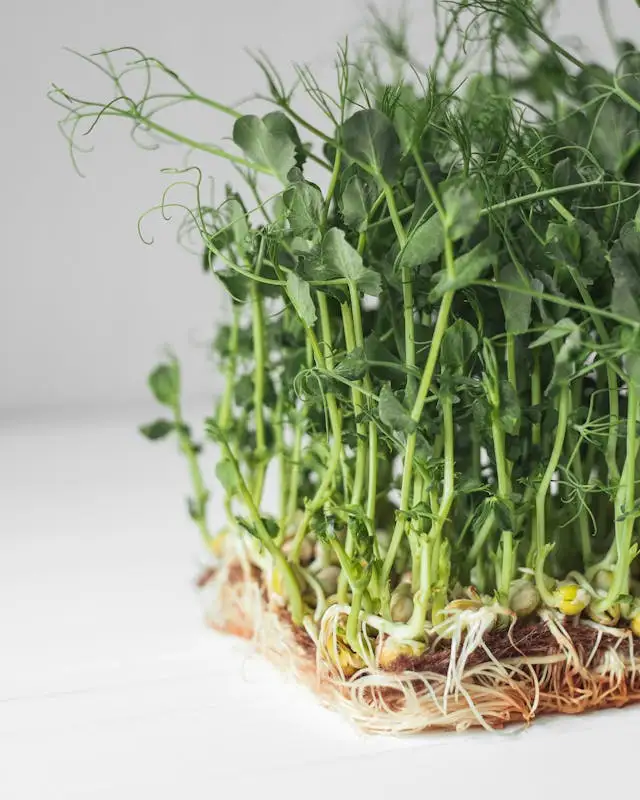
Pea microgreens tend to be higher in protein than many other common microgreen varieties. At 4g or more per 100g, they typically contain more protein than radish microgreens on a per-weight basis, with a mild sweetness that makes them the easiest variety to eat in volume. For people prioritizing plant-based protein intake, pea microgreens may be the more practical choice.
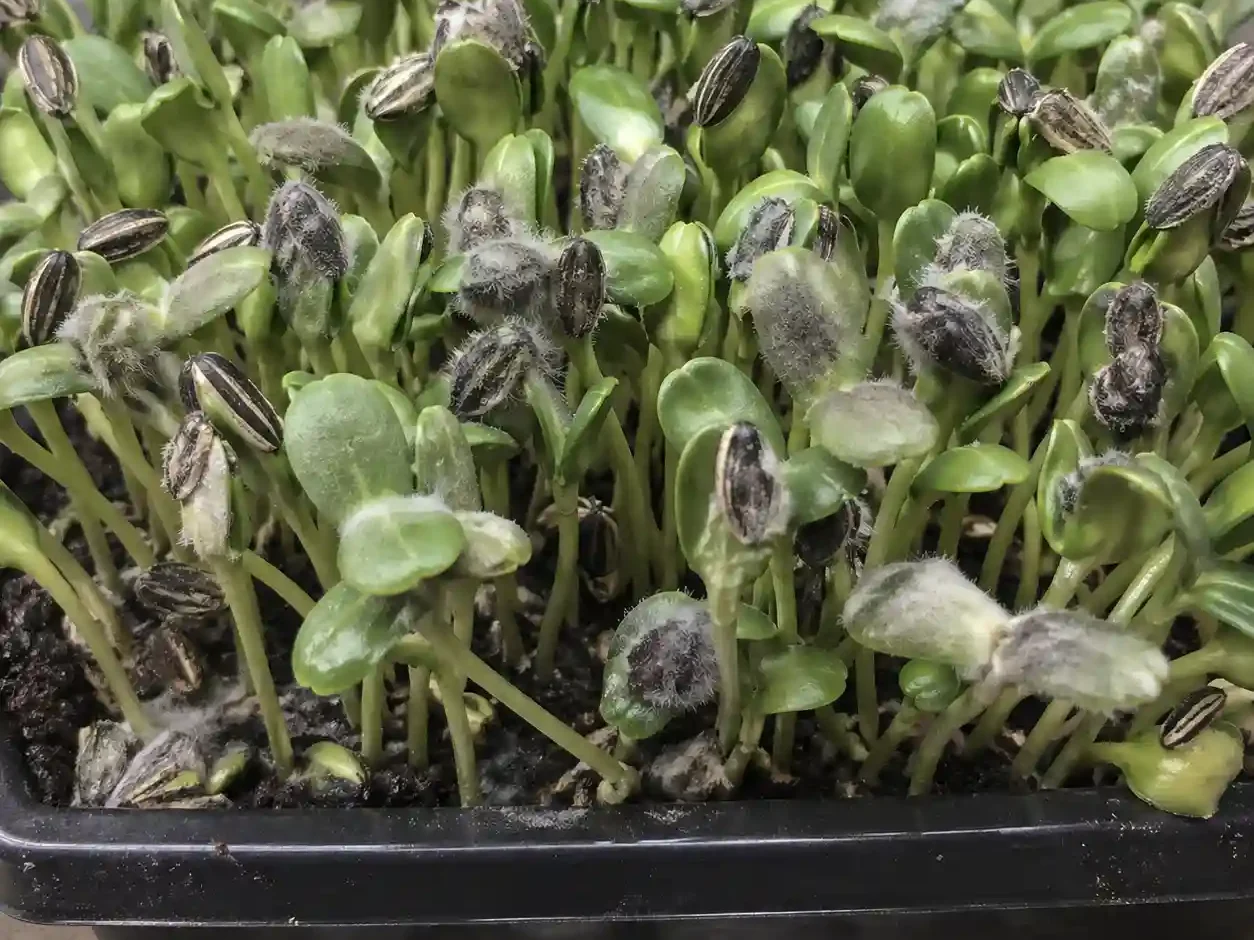
Sunflower microgreen sits in the middle of most categories, decent protein, moderate vitamins, a nutty flavor that works well in larger quantities. Sunflower microgreens are generally valued more for their balanced nutritional profile than for a single standout nutrient, but consistently solid across the board.
The honest framing is that nutrition in radish microgreens is genuinely strong, but no single microgreen variety covers everything. Rotating between two or three varieties throughout the week is a more nutritionally complete approach than committing to one and radish earns its place in that rotation on Vitamin E and antioxidant content alone.
References
- Xiao, Z., Lester, G. E., Luo, Y., & Wang, Q. (2012). Assessment of vitamin and carotenoid concentrations of emerging food products: edible microgreens. Journal of Agricultural and Food Chemistry, 60(31), 7644–7651. https://doi.org/10.1021/jf300459b
- U.S. Department of Agriculture, Agricultural Research Service. (2014). FoodData Central. Retrieved from https://www.ars.usda.gov/news-events/news/research-news/2014/specialty-greens-pack-a-nutritional-punch/
- Giovannetti, M., Avio, L., Barale, R., Ceccarelli, N., Cristofani, R., Iezzi, A., & Sbrana, C. (2012). Nutraceutical value and safety of tomato fruits produced by mycorrhizal plants. British Journal of Nutrition, 107(2), 242–251.
- Hord, N. G., Tang, Y., & Bryan, N. S. (2009). Food sources of nitrates and nitrites: the physiologic context for potential health benefits. American Journal of Clinical Nutrition, 90(1), 1–10. https://doi.org/10.3945/ajcn.2008.27131
- Lidder, S., & Webb, A. J. (2013). Vascular effects of dietary nitrate (as found in green leafy vegetables and beetroot) via the nitrate–nitrite–nitric oxide pathway. British Journal of Clinical Pharmacology, 75(3), 677–696. https://doi.org/10.1111/j.1365-2125.2012.04420.x
- Fahey, J. W., Zhang, Y., & Talalay, P. (1997). Broccoli sprouts: an exceptionally rich source of inducers of enzymes that protect against chemical carcinogens. Proceedings of the National Academy of Sciences, 94(19), 10367–10372. https://doi.org/10.1073/pnas.94.19.10367
- Muriel, P. (2009). Role of free radicals in liver diseases. Hepatology International, 3(4), 526–536. https://doi.org/10.1007/s12072-009-9158-6
- U.S. Food and Drug Administration. (2020). Sprouts: What you should know.
Note: Nutritional values cited throughout this article are based on USDA FoodData Central data and the Xiao et al. 2012 peer-reviewed study. All other health-related research is referenced for informational context only and does not constitute medical advice.
Frequently Asked Questions
Are radish microgreens more nutritious than mature radishes?
Yes. Studies show radish microgreens contain 4 to 40 times more vitamins and carotenoids per gram than their mature counterparts, because the plant concentrates energy in the seedling shoot before it is harvested.
What vitamins are in radish microgreens?
Radish microgreens are rich in vitamins A, B1, B2, B3, B5, B6, B9 (folate), C, E, and K. They are the only microgreen rated as “high value” for Vitamin E.
Do radish microgreens have nitric oxide?
Radish microgreens are high in dietary nitrates, which the body converts into nitric oxide — a molecule that dilates blood vessels and supports blood pressure management and exercise performance.
What is the difference between radish sprouts and radish microgreens?
Sprouts are grown in water and eaten whole. Microgreens are grown in soil or a growing medium, exposed to light, and harvested at the shoot stage. Microgreens generally have higher levels of chlorophyll and light-activated nutrients.
Are daikon radish microgreens more nutritious than regular radish microgreens?
Daikon varieties (including Triton, Purple Rambo, and China Rose) are among the most studied. Daikon microgreens showed the highest Vitamin E content of 25 microgreen varieties tested in the USDA-backed 2012 study.
Can radish microgreens help lower blood sugar?
The fiber content slows sugar absorption, and compounds like glucosinolate and coenzyme Q10 found in radish may support healthy blood sugar levels, though radish microgreens should not replace medical treatment for diabetes.
How do I add radish microgreens to my diet?
Eat them raw for maximum nutrition — add to salads, sandwiches, tacos, smoothies, or as a garnish on soups and grain bowls. A serving of 1–2 oz per day is a practical starting point.
Are Radish Microgreens Good for You?
By most nutritional measures, yes. They deliver Vitamin C, Vitamin E, folate, potassium, and fiber in a more concentrated form than the mature radish bulb. They also contain glucosinolates and antioxidants that appear in early-stage health research. No single food is a health solution on its own — if you have a specific condition, check with your physician or nutritionist.
Does Radish Lower Triglycerides?
Early animal and laboratory research suggests certain radish compounds may influence lipid metabolism, but this hasn’t translated into confirmed human clinical outcomes yet. The evidence is too preliminary to make a reliable claim. If triglyceride management is a concern, that conversation belongs with your doctor, not a food blog.