

Dragon fruit is one of the most visually striking fruits on the planet — a neon-pink, scale-covered cactus fruit that looks like it belongs in a fantasy novel. Yet despite its exotic appearance, it is grown across dozens of countries and comes in far more varieties than most people realize. So what type of fruit is dragon fruit, exactly? It belongs to the cactus family Cactaceae, like Aloe Vera, and botanically it is classified as a berry — though its taste, texture, and nutrition vary widely depending on which of the many types of dragon fruit you are eating.
Most people have only ever seen one kind at the grocery store, usually the pink-skinned variety with white flesh. But that is just the beginning. There are red-fleshed, yellow-skinned, and even purple varieties, each with its own flavor profile, calorie count, growing conditions, and health benefits.
In this guide, you will discover all types of dragon fruit, their plants, flavors, calories, and which one is best for you.
In This Article
Affiliate Disclosure: This post contains affiliate links. If you purchase through these links, I may earn a small commission at no extra cost to you. This helps keep the website and blog running so I can continue creating free content. Thank you for your support!
Dragon fruit, known botanically as Hylocereus (now reclassified under Selenicereus), is a tropical cactus native to Central America but now cultivated widely across Southeast Asia, Australia, and the Americas. It is a climbing vine cactus that produces one of the most visually dramatic fruits in the plant world. The plant thrives in warm, dry climates and is surprisingly low-maintenance once established. Understanding its basic plant profile helps growers and enthusiasts know exactly what conditions it needs to flourish.
| Common Name | Dragon fruit, pitaya, pitahaya, strawberry pear |
| Botanical Name | Selenicereus undatus (syn. Hylocereus undatus) |
| Family | Cactaceae |
| Plant Type | Perennial cactus |
| Mature Size | 5–10 ft. tall, up to 20 ft. long (climbing) |
| Sun Exposure | Full sun to partial shade |
| Soil Type | Well-drained, sandy or loamy |
| Soil pH | 6.0–7.0 (slightly acidic to neutral) |
| Hardiness Zones | 10–12 |
| Native Areas | Central America, Mexico |
| Toxicity | Non-toxic to humans and pets |
What Is Dragon Fruit and Where Is It From?
Dragon fruit is a tropical fruit that grows on a climbing cactus vine belonging to the family Cactaceae — the same family as desert cacti, though this one thrives in humid, tropical conditions. So what type of fruit is dragon fruit, exactly? Botanically it is a berry, produced from a night-blooming cactus flower that only opens for a single night. The fruit itself is the swollen base of that flower, which develops into the bright, scaly oval we recognize in stores.
As for dragon fruit where it is from — its origins trace back to Central America and Mexico, where indigenous peoples cultivated and consumed it for centuries. Spanish and Portuguese traders eventually carried it to Southeast Asia in the early 19th century, and countries like Vietnam, Thailand, and the Philippines quickly adopted it. Today, Vietnam alone accounts for a massive share of the world’s commercial dragon fruit supply.
The plant itself is a dragon fruit cactus that climbs and sprawls rather than standing upright like a typical cactus. It uses aerial roots to grip trellises, trees, or walls and can grow up to 20 feet long under the right conditions. There are several distinct dragon fruit species — primarily Selenicereus undatus, Selenicereus costaricensis, and Selenicereus megalanthus — each producing fruit with different skin colors, flesh colors, and flavor profiles, which we will cover in full detail in the next section.
Dragon Fruit Species: Understanding the Dragon Fruit Plant
Before diving into individual varieties, it helps to understand the dragon fruit species that all cultivated varieties descend from. There are four main species of the dragon fruit plant, and most of the varieties you will encounter in markets or home gardens belong to one of them. Knowing the species tells you a lot about what to expect — skin color, flesh color, sweetness, and even how the plant behaves in your garden.
The Main Dragon Fruit Cactus Species
There are four primary types of dragon fruit plants that form the foundation of every variety grown commercially and at home today.
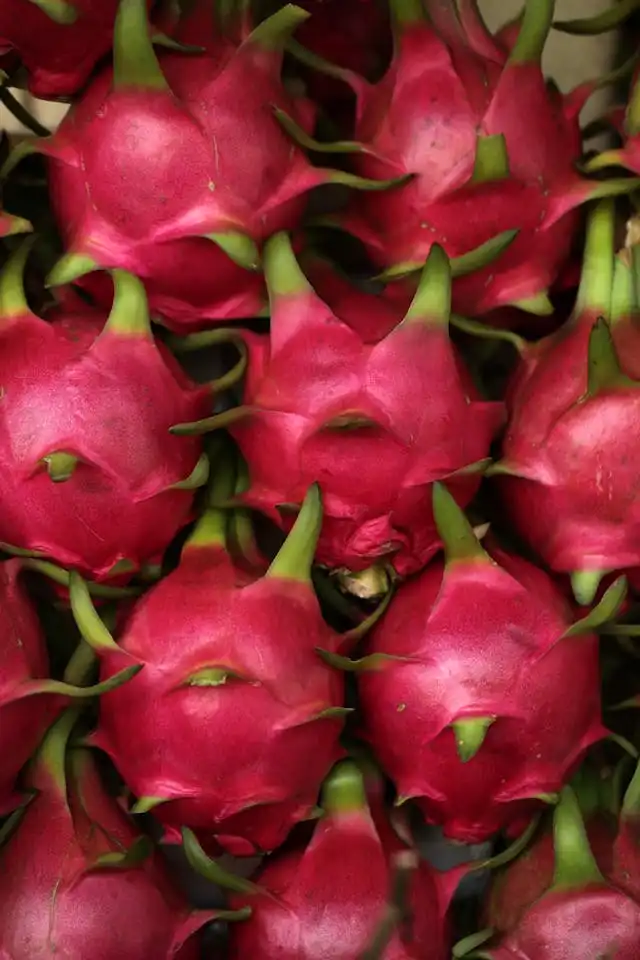
Hylocereus undatus is the most widely grown species in the world and likely the one you have already eaten. It produces fruit with bright red-pink skin and white flesh speckled with tiny black seeds. The flavor is mild and lightly sweet, making it the most commercially dominant of all dragon fruit species. Vietnam grows this species at an enormous scale for export.
Buy it Here: https://amzn.to/487JM0J
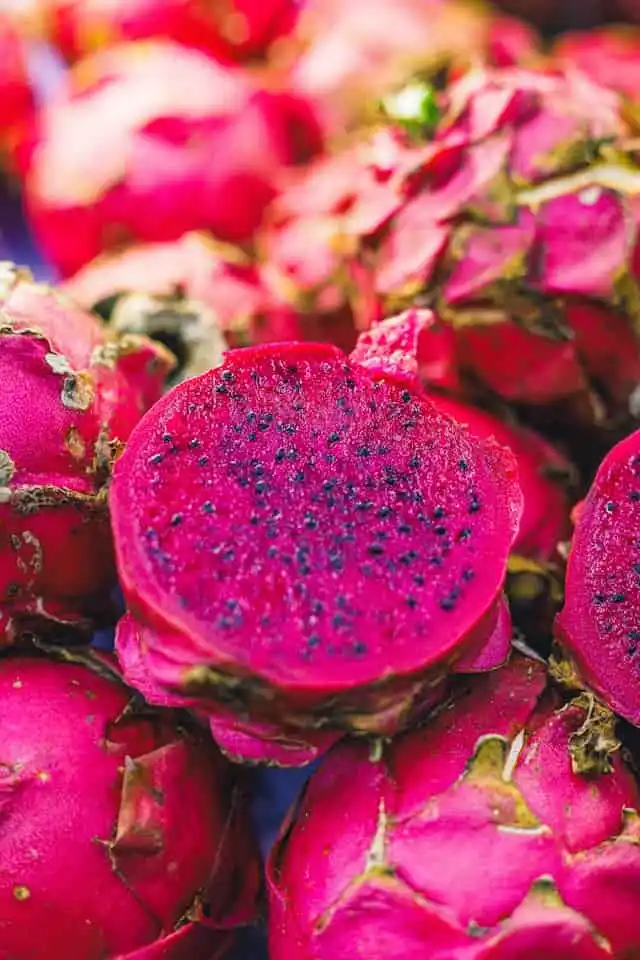
Hylocereus costaricensis, sometimes called the Costa Rican dragon fruit, produces a deep red or purple flesh beneath its red skin. It is visually the most dramatic of the four species and carries a noticeably richer, sweeter flavor than the white-fleshed varieties. The intense pigmentation comes from high concentrations of betalain antioxidants, which also make the flesh stain easily.
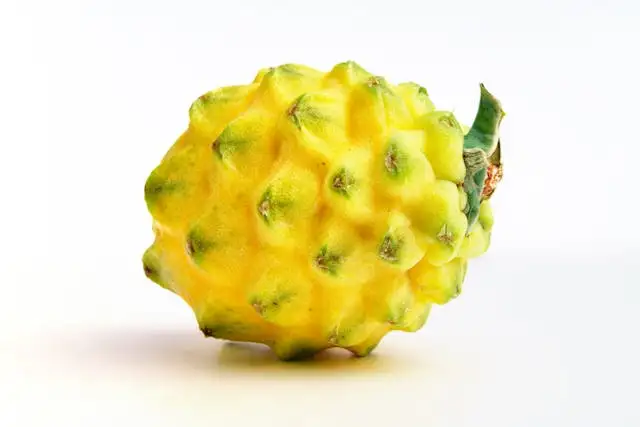
Selenicereus megalanthus is the yellow dragon fruit species and stands apart from all others in appearance. Its yellow, knobby skin contains white flesh with a flavor that many consider the sweetest and most complex of all types of dragon fruit plants. It is slower to mature and harder to grow commercially, which is why it tends to be rarer and more expensive in markets.
Buy it Here: https://amzn.to/4vAk5zW
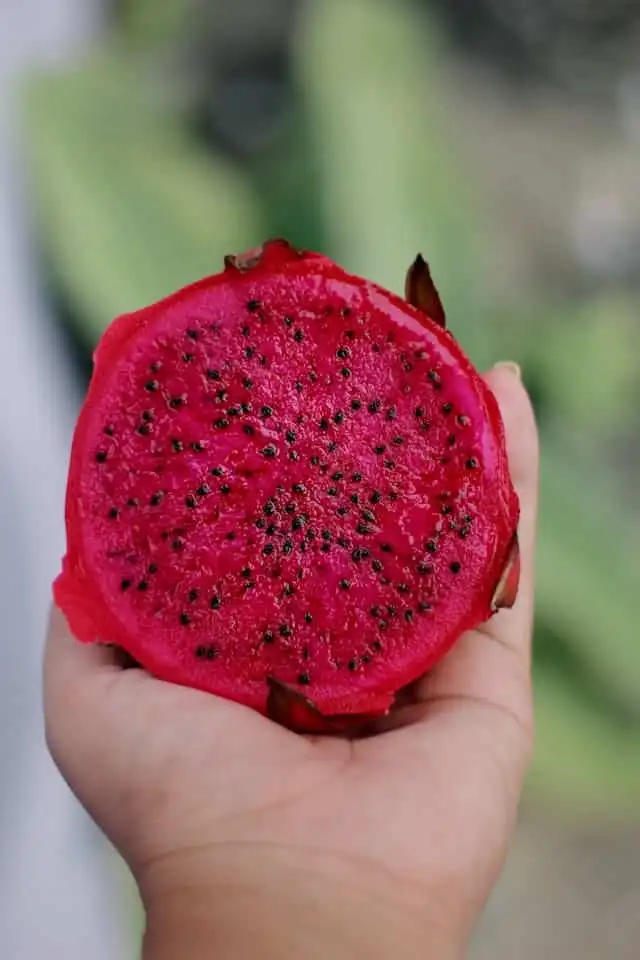
Hylocereus polyrhizus has red skin like undatus but produces distinctly pink to magenta-colored flesh. It is sweeter than the white-fleshed species and is increasingly popular as a parent plant in hybrid breeding programs aimed at developing new high-sugar varieties.
| Species | Skin Color | Flesh Color | Flavor Profile | Rarity |
|---|---|---|---|---|
| Hylocereus undatus | Red-pink | White | Mild, lightly sweet | Very common |
| Hylocereus costaricensis | Red | Deep red/purple | Rich, sweet, bold | Moderately common |
| Selenicereus megalanthus | Yellow | White | Very sweet, complex | Rare, expensive |
| Hylocereus polyrhizus | Red | Pink/magenta | Sweeter than undatus | Increasingly available |
What Makes Each Dragon Fruit Plant Different?
Beyond color and taste, the four types of dragon fruit plants differ meaningfully in how they grow, what climate they prefer, and how productive they are.
Vine size and structure vary across species. Hylocereus undatus is the most vigorous grower and can reach 20 feet or more, requiring strong trellising. Selenicereus megalanthus grows more slowly and stays comparatively compact, which makes it more manageable but also means it takes longer — sometimes 3 to 4 years — before it produces its first fruit.
Climate preference is another key difference. All four species prefer warm conditions, but undatus and costaricensis handle humidity and tropical heat the best and are well-suited to Southeast Asian climates. Megalanthus, the yellow species, actually prefers slightly cooler highland conditions and is native to the Andes, which is part of why it is harder to cultivate at scale in hot lowland regions.
Yield and fruiting cycles also differ. Hylocereus undatus is the highest-yielding species under commercial conditions, capable of producing fruit multiple times a year in ideal climates. Polyrhizus and costaricensis yield well but slightly less reliably. Megalanthus is the lowest-yielding and slowest of the four.
Indoor vs. outdoor growing depends largely on your climate zone. In USDA zones 10–12, all four species can be grown outdoors year-round. In cooler zones, undatus and polyrhizus adapt best to container growing indoors or in greenhouses, as they are relatively forgiving with temperature fluctuation. Dragon fruit needs full sun, so understanding light requirements for indoors plants is key if you plan to grow it in containers. Megalanthus actually tolerates slightly cooler nights better than the others, but still requires frost protection. Costaricensis is the most cold-sensitive of the four and does best in consistently warm outdoor environments.
| Species | Vine Size | Best Climate | Yield | Indoor Suitability |
|---|---|---|---|---|
| H. undatus | Very large (up to 20 ft) | Tropical, humid | Very high | Good in large containers |
| H. costaricensis | Large | Tropical, warm | High | Moderate — needs heat |
| S. megalanthus | Medium | Highland, cooler tropical | Low | Fair — tolerates cooler nights |
| H. polyrhizus | Large | Tropical to subtropical | Moderate-high | Good in large containers |
All Types of Dragon Fruit — Every Variety Explained
By now it is clear that dragon fruit is far more than a one-variety fruit. From mild and watery to intensely sweet and earthy, the different types of dragon fruit offer a surprisingly wide range of eating experiences. Below is a breakdown of all types of dragon fruit by species, covering appearance, taste, texture, and what makes each one worth seeking out.
| Variety | Skin Color | Flesh Color | Taste |
|---|---|---|---|
| Hylocereus undatus | Red/Pink | White with black seeds | Mildly sweet |
| Hylocereus costaricensis | Red | Deep red/purple | Sweeter, earthier |
| Selenicereus megalanthus | Yellow | White with black seeds | Sweetest of all |
| Hylocereus polyrhizus | Red | Pink/Magenta | Sweet and slightly tart |
What types of dragon fruit are there beyond these four species? There are also dozens of named cultivars bred from these species — varieties like Physical Graffiti, American Beauty, and Cosmic Charlie — but they all trace back to one of the four species above. We will cover select cultivars in the next section.
Fruit with White Flesh and Black Seeds
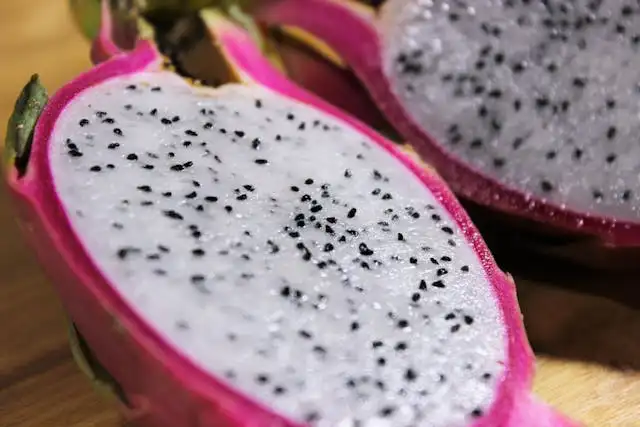
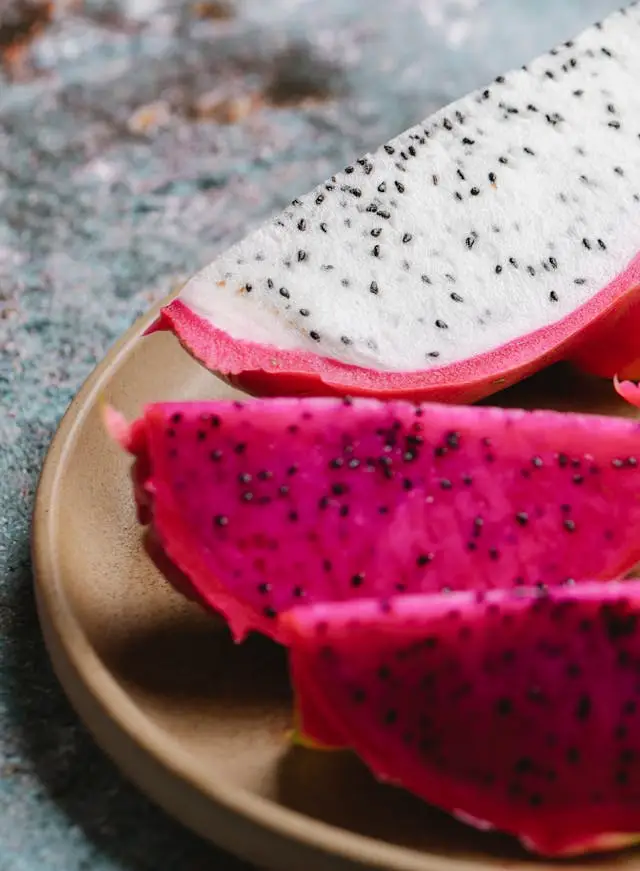
When most people picture dragon fruit, they are thinking of Hylocereus undatus, the variety with bright pink-red skin and white flesh dotted throughout with tiny black seeds. It is by far the most common type found in supermarkets globally and the default variety in most commercial farming operations.
The flesh is crisp and juicy with a texture that sits somewhere between a kiwi and a pear, firm enough to slice cleanly but soft enough to scoop with a spoon. The flavor is mild and lightly sweet with almost no acidity, which makes it approachable for people trying dragon fruit for the first time but sometimes underwhelming for those expecting something more intense.
The black seeds scattered through the white flesh are completely edible and are actually one of the more nutritious parts of the fruit. They are rich in healthy fats, particularly omega-3 and omega-6 fatty acids, and add a very slight crunch without affecting the overall texture in any significant way. You do not need to remove them, and doing so would be nearly impossible anyway given how evenly distributed they are throughout the flesh. This fruit with white flesh and black seeds is the benchmark against which all other dragon fruit varieties tend to be compared.
Buy it Here: https://amzn.to/487JM0J
Yellow Dragon Fruit
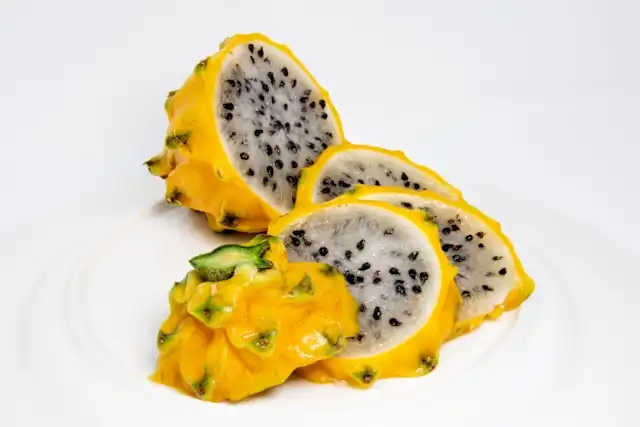
Selenicereus megalanthus, commonly called yellow dragon fruit, is the variety that consistently earns the title of sweetest type among growers, chefs, and fruit enthusiasts. Unlike the red-skinned species, it has bumpy, knobby yellow skin with no scales, giving it a more irregular, almost alien appearance compared to the classic dragon fruit silhouette.
Inside, the flesh is white with the same fine black seeds found in undatus, but the similarity in appearance ends there. The flavor is noticeably richer and more complex, deeply sweet with subtle tropical notes that some describe as a cross between a pear and a banana. The sugar content is measurably higher than the other species, which is part of why it commands a premium price in most markets.
Yellow dragon fruit is native to the Andes region of South America and prefers slightly cooler highland climates, which makes it harder to cultivate at scale in the hot lowland farms that dominate commercial dragon fruit production. That limited supply, combined with its superior flavor, makes it the most prized and expensive variety for consumers willing to seek it out.
Buy it Here: https://amzn.to/4vAk5zW
Red-Fleshed Dragon Fruit
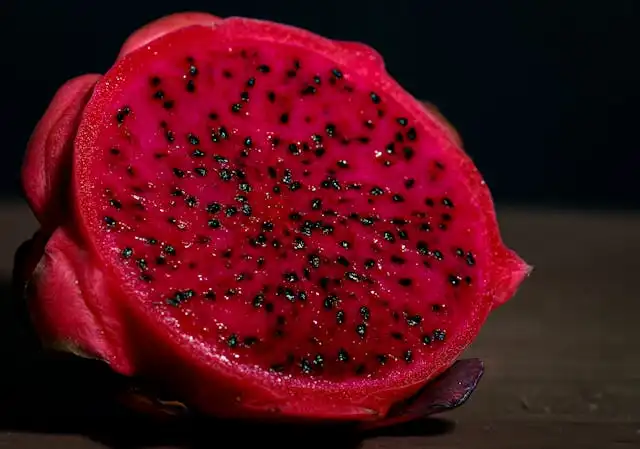
Hylocereus costaricensis, the red-fleshed dragon fruit, is the most visually dramatic of all the main species. Its skin is red like undatus, but cutting it open reveals a deep crimson to purple flesh that stains everything it touches, cutting boards, fingers, and clothing included. If you have ever seen a deeply colored smoothie bowl labeled as dragon fruit, there is a very good chance costaricensis was the variety used.
The flavor is noticeably richer and sweeter than white-fleshed dragon fruit, with an earthier undertone that gives it more complexity. The texture is similarly juicy but feels slightly denser than undatus, and the taste lingers longer on the palate.
The intense red-purple color is not just visually striking, it signals a high concentration of betalains, a class of antioxidant pigments also found in beetroot. These compounds have been studied for their anti-inflammatory properties and are one of the reasons red-fleshed dragon fruit is increasingly popular in health food markets. Gram for gram, costaricensis delivers a significantly higher antioxidant load than its white-fleshed counterpart, making it the most nutritionally compelling of the four main species.
Pink-Fleshed Dragon Fruit
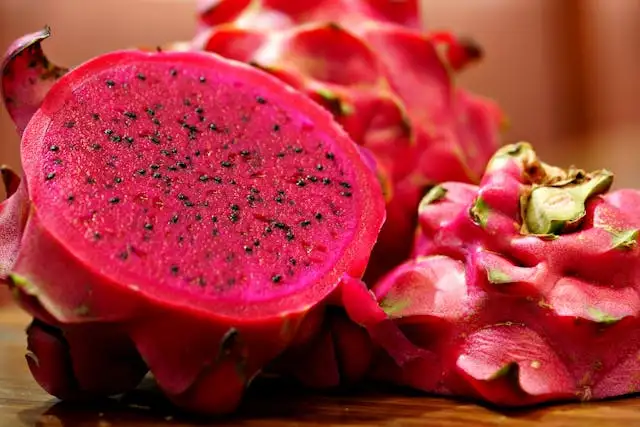
Hylocereus polyrhizus occupies an interesting middle ground among the different types of dragon fruit. Its skin is red like both undatus and costaricensis, so it is easy to confuse with the other red-skinned species from the outside. Slice it open, however, and the flesh reveals itself as a vivid pink to magenta color, deeper than white but less intense than the dark crimson of costaricensis.
The flavor profile is where polyrhizus really distinguishes itself. It is sweeter than undatus but carries a slight tartness that the other species lack, giving it a more balanced and lively taste. Many people who find white dragon fruit too bland and red dragon fruit too earthy settle on polyrhizus as their preferred variety for eating fresh.
Beyond its appeal as a fresh fruit, polyrhizus has become the most widely used species in commercial hybrid breeding programs. Its pink pigmentation, reliable sweetness, and vigorous vine growth make it an ideal parent plant for developing new named cultivars. Varieties like American Beauty and Cosmic Charlie both carry polyrhizus genetics, and its influence on the expanding world of dragon fruit cultivation is hard to overstate.
The Dragon Fruit Flower — Blooms That Only Last One Night
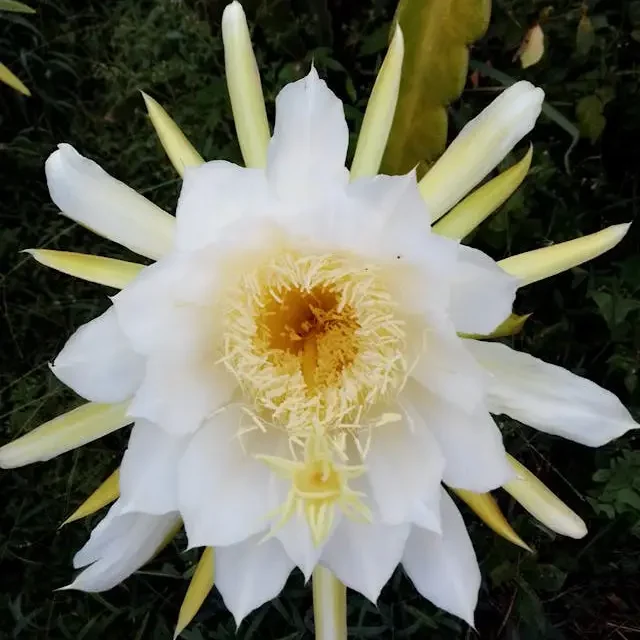
The dragon fruit flower is one of the most dramatic and fleeting spectacles in the plant world. Each bloom is enormous — typically 25 to 30 centimeters long — with layers of creamy white petals surrounded by pale yellow-green outer sepals. The flowers emerge directly from the edges of the cactus pads and open fully only after dark, filling the night air with a strong, sweet fragrance designed to attract their natural pollinators.
That pollination window is remarkably short. Each dragon fruit flower blooms for a single night only, closing permanently before sunrise. In the wild, bats and large moths do the work of pollination during those few nighttime hours. On commercial farms and in home gardens, growers often hand-pollinate the flowers using a small brush to transfer pollen between blooms, since natural bat and moth populations are not always present in cultivated environments. Missing that single-night window means the flower drops without producing fruit.
This fleeting nature makes the dragon fruit flower almost as prized as the fruit itself among gardeners and plant enthusiasts. Many growers deliberately stay up late on nights when blooming is expected just to witness it — and to hand-pollinate before the opportunity closes.
Types of Yellow Flower Dragon Fruit
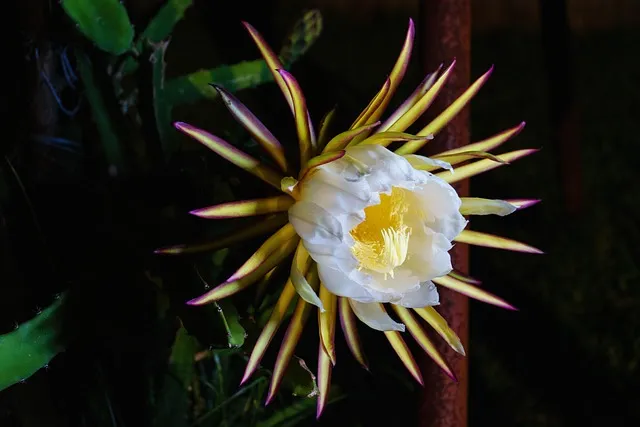
While all dragon fruit flowers share the same basic large, showy structure, there is meaningful variation in the coloring of the outer sepals and petals depending on the species. The varieties most associated with distinctly yellow flower characteristics belong primarily to the Selenicereus megalanthus species — the same species that produces the yellow-skinned fruit.
Selenicereus megalanthus produces flowers with more pronounced yellow tones in the outer sepals compared to the predominantly white blooms of Hylocereus undatus and costaricensis. This yellow flower dragon fruit variety is also notably larger in its bloom size, and because the plant grows at a slower pace overall, the flowering events feel even more significant when they occur. Growers who cultivate megalanthus specifically often report that the flowers are as much a draw as the fruit itself.
Other cultivars with yellow flower tendencies include certain hybrids developed in Central America and Colombia, where megalanthus genetics have been crossed with higher-yielding red-skinned species to produce plants that carry the yellow flower trait alongside improved fruit production.
Tip: Dragon fruit flowers are completely edible and are considered a delicacy in parts of Southeast Asia. They can be eaten fresh, added to salads, or lightly stir-fried. Because the bloom lasts only one night, flowers intended for eating are usually harvested just as they begin to open in the evening or immediately after they close at dawn.
What Is the Best Type of Dragon Fruit?
With four main species and dozens of cultivars to choose from, the question of the best type of dragon fruit does not have a single universal answer. It depends almost entirely on what you are looking for, whether that is the sweetest eating experience, the highest nutritional value, the easiest fruit to find at a store, or the most rewarding plant to grow at home.
| Goal | Best Variety |
|---|---|
| Sweetest taste | Yellow dragon fruit (Selenicereus megalanthus) |
| Most antioxidants | Red-fleshed (Hylocereus costaricensis) |
| Easiest to find | White-fleshed (Hylocereus undatus) |
| Best for growing | Pink-fleshed (Hylocereus polyrhizus) |
If you are eating dragon fruit purely for flavor and sweetness, yellow dragon fruit is the clear winner. Its sugar content is higher than any other species and its taste is more complex and satisfying than the mild white-fleshed varieties most people encounter first. The trade-off is availability, you will likely need to visit a specialty grocer or order online to find it consistently.
If nutrition is your primary concern, red-fleshed Hylocereus costaricensis is the standout choice. Its deep crimson color signals a high betalain antioxidant content that the other species simply cannot match, and it delivers more flavor than white-fleshed varieties as well.
For most general readers, however, the honest recommendation is to start with whatever you can find, which will almost certainly be white-fleshed Hylocereus undatus, and then seek out yellow and red-fleshed varieties once you know you enjoy the fruit. Personal preference plays a significant role here. Some people love the clean, subtle flavor of white dragon fruit. Others find it too bland and only come back to dragon fruit once they discover the yellow or red varieties. The best type of dragon fruit, ultimately, is the one that keeps you coming back for more.
Calories in a Dragon Fruit — Nutrition Across All Types
One of the most appealing things about dragon fruit, beyond its appearance and taste, is how well it fits into a balanced diet. The average calories in a dragon fruit come to roughly 60 calories per 100 grams, making it one of the lighter tropical fruits you can eat. For context, the same serving of mango delivers around 60–70 calories, banana around 89, and durian well over 150. Dragon fruit sits comfortably at the low end of the tropical fruit calorie range without sacrificing nutritional value.
| Variety | Calories (per 100g) | Fiber | Vitamin C | Notable Nutrients |
|---|---|---|---|---|
| H. undatus (white) | ~60 kcal | 3g | 9mg | Iron, magnesium, B vitamins |
| H. costaricensis (red) | ~60–65 kcal | 3g | 8mg | High betalain antioxidants, iron |
| S. megalanthus (yellow) | ~63–67 kcal | 3–4g | 10mg | Highest natural sugars, vitamin C |
| H. polyrhizus (pink) | ~60–63 kcal | 3g | 8–9mg | Antioxidants, magnesium |
Across all varieties, dragon fruit is a reliable source of dietary fiber, with around 3 grams per 100g serving. That fiber content supports digestive health and helps you feel full without adding significant calories. It also provides a useful amount of vitamin C, iron, and magnesium — nutrients that many people fall short on in everyday diets. The red and pink-fleshed varieties add betalain antioxidants on top of that baseline, which the white-fleshed species cannot match.
What surprises many people is how modest the sugar content is compared to other tropical fruits. Despite tasting sweet, dragon fruit contains far less sugar than mango, pineapple, or lychee, which makes it a more suitable option for people monitoring their sugar intake without wanting to give up fruit entirely.
If you enjoy comparing the nutritional value of produce, our lettuce vs cabbage breakdown is worth a read.
Is Dragon Fruit Good for Seniors?
Dragon fruit is an excellent fruit choice for older adults, and the nutritional profile lines up well with the health priorities that tend to matter most with age. The high fiber content supports digestive regularity, which is a common concern for seniors, while the magnesium and iron contribute to bone health, energy levels, and healthy blood circulation.
The antioxidants in dragon fruit — particularly the betalains found in red and pink-fleshed varieties — help combat oxidative stress, which plays a role in age-related inflammation and cellular damage. Vitamin C supports immune function and skin health, both of which become increasingly important as the body ages.
From a dietary standpoint, dragon fruit is also gentle on the digestive system, low in sodium, and free of saturated fat, making it compatible with most heart-health and diabetes-management diets commonly followed by older adults. Its high water content also contributes to daily hydration, which seniors are often at greater risk of neglecting.
That said, seniors taking blood thinners or medications for diabetes should check with their doctor before adding dragon fruit regularly to their diet, as its mild blood-sugar-lowering effect and antioxidant compounds can interact with certain medications.
Is Dragon Fruit Good for Weight Loss?
Yes, dragon fruit is a genuinely good fruit to include in a weight loss diet. Its low calorie count, high fiber content, and high water content make it filling without being calorie-dense. The fiber slows digestion and helps manage hunger between meals, while the natural sweetness makes it a satisfying alternative to processed snacks. It is not a magic solution on its own, but as part of a balanced diet it earns its place comfortably.
Final Thoughts on the Different Types of Dragon Fruit
Dragon fruit is a far more diverse fruit than most people realize. The four main types — white-fleshed Hylocereus undatus, red-fleshed Hylocereus costaricensis, yellow-skinned Selenicereus megalanthus, and pink-fleshed Hylocereus polyrhizus — each offer a distinct flavor, nutritional profile, and growing experience. If you have only ever tried one type, the differences between varieties are significant enough to genuinely change your opinion of the fruit.
Which type of dragon fruit is your favorite? Let us know in the comments below!
Frequently Asked Questions
Are there different types of dragon fruit?
Yes, there are four main species of dragon fruit — Hylocereus undatus (white flesh), Hylocereus costaricensis (red flesh), Selenicereus megalanthus (yellow skin, white flesh), and Hylocereus polyrhizus (pink flesh) — plus dozens of named cultivars bred from these species. Each differs in skin color, flesh color, flavor, and growing requirements.
What type of fruit is dragon fruit?
Dragon fruit is botanically classified as a berry. It grows from the flower of a climbing cactus belonging to the family Cactaceae. Despite its exotic appearance, it is in the same botanical category as tomatoes and grapes, which are also technically berries.
What types of dragon fruit are there?
There are four primary species — white-fleshed red-skinned, red-fleshed red-skinned, white-fleshed yellow-skinned, and pink-fleshed red-skinned. Beyond those species, there are cultivated varieties such as American Beauty, Cosmic Charlie, and Physical Graffiti, most of which are hybrids developed for improved sweetness, yield, or color.
Which dragon fruit is the sweetest?
Yellow dragon fruit (Selenicereus megalanthus) is widely considered the sweetest of all types. It has the highest natural sugar content among the four main species and a more complex flavor than the milder white-fleshed varieties. It is also the rarest and most expensive type to find in stores.
Can you grow dragon fruit at home?
Yes, dragon fruit can be grown at home in USDA hardiness zones 10–12 outdoors, or in containers indoors in cooler climates. It needs a sturdy trellis, well-drained soil, and plenty of sunlight. Hylocereus polyrhizus and Hylocereus undatus are generally the most forgiving species for home growers. Just like growing vegetables indoors without equipment, dragon fruit is more manageable at home than most people expect. The plant can take one to three years to produce its first fruit, but once established it is relatively low-maintenance.
Is the dragon fruit flower edible?
Yes, dragon fruit flowers are completely edible and are considered a delicacy in parts of Southeast Asia. They can be eaten fresh, added to salads, or lightly cooked. Because each flower blooms for only one night, they need to be harvested either as they open in the evening or just after they close at dawn.
What is the best variety of dragon fruit?
It depends on your goal. For the sweetest flavor, yellow dragon fruit is the best choice. For the highest antioxidant content, red-fleshed Hylocereus costaricensis leads the group. For everyday availability and mild flavor, white-fleshed Hylocereus undatus is the most practical option. For home growing, Hylocereus polyrhizus is widely recommended for its vigor and reliable yield.
Which color dragon fruit is the healthiest?
Red-fleshed dragon fruit (Hylocereus costaricensis) is generally considered the most nutrient-dense variety due to its high concentration of betalain antioxidants, which give the flesh its deep crimson color. These compounds have been associated with anti-inflammatory benefits. That said, all varieties provide useful amounts of fiber, vitamin C, iron, and magnesium, so no variety is a poor nutritional choice.
Can dragon fruit lower cholesterol?
Some early animal studies suggest dragon fruit may support healthy cholesterol levels due to its fiber and antioxidant content, but human clinical evidence remains limited. It can be part of a heart-supportive diet, but should not replace medical treatment. Consult a healthcare provider if you have specific concerns about cholesterol.
Who should not eat dragon fruit?
Dragon fruit is safe for most people. Those with allergies to cactus or tropical fruits should introduce it cautiously. People managing diabetes should be aware that it may have a mild blood-sugar-lowering effect and check with their doctor if consuming it regularly. Pregnant individuals can generally eat it safely in normal amounts, but when in doubt, check with a healthcare provider.