

Sliced open a garlic clove and found a bright green sprout hiding inside? You’re not alone. That garlic green in the middle surprises most cooks, and immediately raises the question: is something wrong with it? The short answer is no, nothing is wrong. That green core is simply a sign that your garlic has started to sprout, a completely natural process triggered by age, warmth, or light exposure. It’s not mold, it’s not rot, and it won’t make you sick.
The green center in garlic is a young sprout forming inside the clove. It’s safe to eat, but it carries a sharper, more bitter flavor than the surrounding garlic flesh. Removing it before cooking takes only a second and noticeably improves the taste of your dish — especially in raw preparations like aioli or vinaigrette.
That said, there’s more to know before you toss it or cook it whole. The age of your garlic, how you’re using it, and whether that bitterness matters in your recipe all play a role. Here’s exactly what’s happening inside that clove, and what to do about it.
In This Article
What Is Green Garlic?
“Green garlic” is actually two different things, and the name gets used for both, which causes a fair amount of confusion in kitchens and gardens alike.
The Green Sprout Inside a Clove
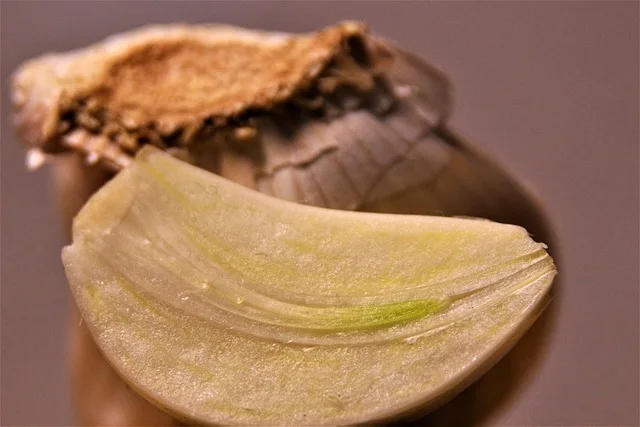
The first is what you’ve probably stumbled across mid-prep: a small green shoot growing right through the center of a clove. It’s the garlic’s embryonic sprout, sometimes called the germ. When garlic is young and freshly harvested, the germ is barely noticeable — pale, tiny, easy to miss. But as the bulb ages, that inner shoot slowly grows, turning a vivid lime or jade green. This is the “garlic green in the middle” moment that stops most home cooks in their tracks, wondering if something has gone wrong.
Spring Garlic: The Other Kind of Green Garlic
The second meaning is an entirely different ingredient: young, immature garlic pulled from the ground before the bulb has fully formed. This fresh-pulled green garlic looks like a fat, oversized scallion, with a white base that hasn’t yet separated into individual cloves and long, tender green stalks. It shows up at farmers markets in early spring and tastes like a gentler, grassier version of mature garlic — bright and aromatic without the sharp bite.
Both are completely real, both are useful in the kitchen, and neither means your garlic has gone bad. But when most people ask why their garlic is green in the middle, they’re looking at the sprout, and the answer to that is all about age, storage, and a little plant biology.
Why Does Garlic Turn Green in the Middle?
That green center isn’t a sign of mold, rot, or anything gone wrong, it’s simply your garlic doing what living plants do. But the cause depends on when you’re noticing the color, because a raw clove and a cooked one turn green for entirely different reasons.
The Sprouting Germ: A Green Shoot Inside the Clove
The green you see running through the center of a raw clove is the garlic’s embryonic sprout called the germ. Garlic doesn’t stop being alive after harvest. The bulb is essentially a packed energy reserve, designed by nature to eventually push up new growth. When conditions are right, it will.
Age is the primary driver. A freshly harvested clove has a germ so pale and underdeveloped it barely registers. But as the bulb sits, in a warehouse, on a store shelf, then in your kitchen, that inner shoot slowly matures and deepens into the vivid green you’re finding now. Warmth, light, and humidity accelerate the whole process. A bulb kept near a sunny window or in a warm kitchen will sprout noticeably faster than one stored somewhere cool, dark, and well-ventilated. The germ isn’t a sign of spoilage. It’s just a sign of time.
Some Varieties Are More Prone to It
Not all garlic behaves the same way. Softneck varieties, the kind most commonly sold in supermarkets, tend to have a longer shelf life and a slower-sprouting germ. Hardneck varieties, which are often fresher and more flavorful, sprout more readily and may show that green center sooner. If you’re consistently finding green-centered cloves, the variety or its age at the time of purchase could be a factor.
Why Does Garlic Turn Green When Cooked or Pickled?
This one surprises people and the color can be dramatic. Garlic that looks perfectly normal going into a pan or a jar sometimes comes out blue-green or even teal. It looks alarming. It isn’t.
The culprit is chemistry. Garlic contains sulfur compounds and an enzyme called alliinase. When a clove is cut, crushed, or damaged, alliinase activates and begins reacting with those sulfur compounds, the same reaction responsible for garlic’s sharp, pungent aroma. Under acidic conditions (think vinegar-based pickles or a squeeze of lemon) or with prolonged heat, this reaction goes a step further, producing pigment compounds called pyrroles. Pyrroles are blue-green, and they’re perfectly harmless.
Younger or fresher garlic tends to have higher enzyme activity, which is why it’s more likely to turn green when pickled. Older garlic that’s already partially sprouted can behave the same way when cooked. The color varies, sometimes a faint blue tinge, sometimes a striking jade, depending on the acidity, temperature, and the specific chemistry of that particular bulb. Either way, the garlic is completely safe to eat. It just looks like something went wrong when it didn’t.
Is Green Garlic Bad? Should You Be Worried?
The short answer: green garlic is not bad. A green tinge, whether it’s a sprouted germ inside a raw clove or a blue-green color after cooking or pickling is not a sign of spoilage, toxicity, or anything that should put you off eating it. What you’re seeing is biology and chemistry, not decay.
That said, garlic can go bad, and it’s worth knowing the difference.
The Green Germ
A green shoot running through the center of a clove is simply a sprout. It’s safe to eat, won’t harm you, and doesn’t mean the surrounding garlic is compromised. The only real complaint cooks have about it is flavor, the germ tends to be more bitter and sharper than the rest of the clove, which is why many recipes recommend removing it before cooking. But eating it won’t hurt you. It’s just garlic, slightly further along in its life cycle.
Green Color After Cooking or Pickling
If your garlic turned blue-green in a pickle jar or developed a teal tint in a hot pan, that’s the sulfur chemistry at work, not a warning sign. The pigment compounds responsible for the color are harmless. The garlic tastes normal, is safe to eat, and the color fades or becomes less noticeable once you’re past the initial visual surprise.
When Garlic Has Actually Gone Bad
Forget the color — these are the signs that actually matter:
Soft or mushy texture. Fresh garlic cloves should feel firm when you press them. If a clove gives easily, feels squishy, or has collapsed inward, it’s rotting from the inside. Toss it.
The same logic applies to alliums like green onions — sliminess is the real red flag, not color. Check out our guide on Why Are My Green Onions Slimy? Causes, Safety & Easy Fixes
Brown or black discoloration. A healthy clove is ivory to pale yellow inside. Brown patches, dark spots, or a clove that looks uniformly darkened are signs of decay — not sprouting, not chemistry, but genuine spoilage.
Visible mold. White fuzz, blue-green mold (distinct from the cooking color change — this will appear on the outer skin or a damaged surface), or any fuzzy growth means the whole bulb needs to go.
A rancid or off smell. Garlic smells sharp and pungent, but it should smell clean. A sour, fermented, or unpleasantly funky odor that doesn’t smell like garlic anymore is a reliable sign something has gone wrong.
A green center on a firm, clean-smelling clove? Keep cooking. A soft, brown, strange-smelling clove? That’s the one to throw out, color or no color.
Can You Eat Green Garlic? Are Garlic Greens Edible?
Yes — completely. Whether you’re looking at a green sprout inside a raw clove, the tender stalks of young spring garlic, or a clove that turned blue-green in the pan, all of it is safe to eat. No part of the garlic plant is toxic to humans, and a little sprouting doesn’t change that. What it does change, slightly, is flavor, and in one surprising case, nutritional value.
Does the Green Germ Change the Flavor?
It depends on how you’re using it.
Raw, the germ is noticeably more bitter and sharp than the surrounding clove. It carries a more aggressive, almost harsh edge that can dominate in preparations where garlic is front and center, think fresh aioli, raw vinaigrettes, or anything where the garlic isn’t tempered by heat. If you’re mincing a clove straight into something uncooked, it’s worth splitting the clove lengthwise and flicking the germ out with the tip of your knife. It takes seconds and makes a real difference to the finished flavor.
Cooked, the difference becomes largely negligible. Heat mellows the germ just as it mellows the rest of the clove, and most people couldn’t pick it out in a roasted dish, a braise, or a sauce that’s had time on the stove. In those cases, removing it is optional, a matter of preference rather than necessity.
The general rule: remove the germ when garlic is eaten raw or barely cooked. Leave it when the garlic is going into something that will cook low and slow.
Are There Health Benefits to Sprouted Garlic?
Here’s where it gets interesting. Sprouted garlic — the kind with a visible green germ, might actually be more nutritious than a fresh, unsprouted clove.
A 2014 study found that garlic sprouted for five days had significantly higher antioxidant activity than fresher, younger cloves. The researchers noted that the sprout itself appeared to be producing new antioxidant compounds as part of the plant’s natural defense response, the same biological process that protects a sprouting plant from pathogens and environmental stress. Five-day-old sprouts showed the highest antioxidant levels of any stage tested.
It’s one study, and it shouldn’t be taken as a reason to deliberately let your garlic age on the counter. But it does reframe the narrative around sprouted garlic. That clove sitting in your pantry with a green shoot growing through it isn’t a lesser ingredient — it may actually bring something extra to the table.
What to Do with Green Garlic
Finding a green germ in your garlic doesn’t have to slow you down. Depending on what you’re making and how adventurous you’re feeling you can remove it, cook right past it, plant it, or lean into it entirely. Here’s how to handle each scenario.
How to Remove the Green Germ
If you’re making something raw or lightly cooked, removing the germ takes about five seconds and is worth doing.
- Peel the clove as you normally would.
- Slice it in half lengthwise — a single cut straight through the center.
- Locate the germ. It runs through the middle of one or both halves, usually a bright green shoot sitting in a natural groove.
- Pop it out with the tip of your knife or your fingernail. It lifts out cleanly with almost no pressure.
- Proceed with your recipe using the remaining clove halves.
That’s it. The clove is perfectly usable, and the sharper, more bitter edge is gone with it.
Can You Plant It? Using the Sprout to Grow New Garlic
If your garlic has already pushed up a visible green shoot, it has done most of the hard work for you, it wants to grow. You can absolutely let it.
Press the clove sprout-side up into a small pot of well-draining soil, about an inch deep, and water it lightly. Within days you’ll see the green tip continue to emerge. What grows is essentially a garlic green, similar to a scallion in appearance, mild and grassy in flavor, and you can snip and use those greens in cooking just as you would chives or green onions. It won’t produce a full new bulb indoors, but as a way to extend the life of an aging clove and get something useful out of it, it works beautifully. A sunny windowsill is all it needs.
If your garlic has already pushed up a visible green shoot, it has done most of the hard work for you. Here’s a full guide to growing garlic greens at home — a sunny windowsill is all it needs.
Laba Garlic: When Green Garlic Is the Goal
Not every culture treats green garlic as a problem to solve. In northern China, turning garlic vivid green is the entire point.
Laba garlic is a centuries-old tradition tied to Laba Festival, celebrated on the eighth day of the twelfth lunar month. Whole peeled cloves are submerged in rice vinegar and left to steep in a cool place, traditionally outdoors in winter for several weeks. The acid and cold together trigger the same sulfur-enzyme reaction that surprises people in Western kitchens, but here it’s done deliberately and patiently. The result is cloves that turn a deep, jewel-like green all the way through, with a flavor that is sharp, tangy, and more complex than raw garlic, mellowed by the vinegar but with a lingering warmth. They’re traditionally eaten alongside jiaozi to cut through the richness of the filling.
Laba garlic is a good reminder that green garlic isn’t a flaw that needs correcting. In the right context, it’s exactly what you’re aiming for.
How to Stop Garlic from Turning Green
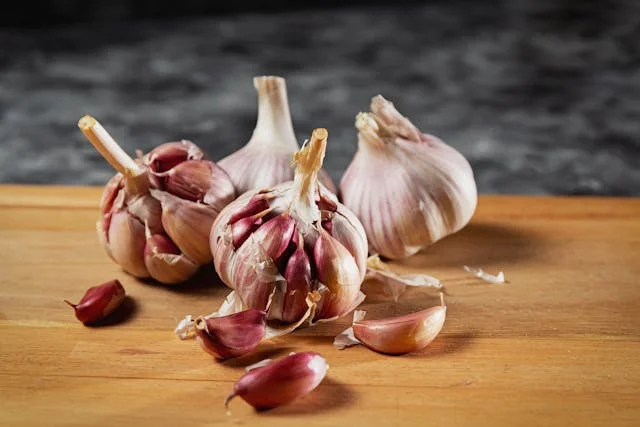
If you’d rather not deal with a sprouted germ or an unexpectedly teal pickle jar, a little attention to storage and technique goes a long way. The green itself is harmless, but it’s easy enough to slow down or prevent altogether.
Store It Right and the Germ Stays Dormant
Garlic sprouts in response to warmth, light, and moisture. Remove those conditions and you remove most of the problem.
The ideal storage temperature for a whole, unpeeled bulb is somewhere between 60–65°F, cool enough to keep the germ dormant, but not so cold that it triggers the refrigerator effect. A cold fridge actually encourages sprouting and can introduce unwanted moisture, so unless garlic is already peeled or broken, keep it out.
Humidity speeds up sprouting more than most people realize — the same way it affects most plants you’re storing or growing indoors. Don’t know what the ideal humidity is for plants and vegetables, check out our full guide on humidity for plants and vegetables.
What works:
- A cool, dark pantry or cupboard away from the stove and oven
- A mesh bag, open basket, or clay garlic keeper — anything that allows airflow and prevents moisture from building up
- A spot away from windows and direct light
What doesn’t:
- Storing garlic near heat-producing appliances or in a warm kitchen drawer
- Sealed plastic bags, which trap humidity and accelerate rot
- Keeping garlic next to ethylene-producing fruits like bananas, apples, or pears — ethylene gas speeds up ripening and sprouting in nearby produce
A whole, unbroken bulb stored properly can last anywhere from one to two months. Once the bulb is broken into individual cloves, the clock moves faster — aim to use them within one to two weeks.
Preventing Green Color When Cooking or Pickling
The blue-green color that appears during cooking or pickling is a chemical reaction, and like most reactions, it can be slowed or avoided if you understand what’s triggering it.
For pickling:
- Use the freshest garlic you can find. Younger cloves have lower enzyme activity, which means less reactivity with acid. Garlic that’s already aging or sprouting is more prone to dramatic color changes in the jar.
- Blanch the cloves briefly before pickling. A quick dip in boiling water deactivates alliinase, the enzyme responsible for the reaction, before the vinegar ever comes into contact with the garlic. The color change becomes significantly less likely.
- Add the acid last when building a brine, and avoid letting garlic sit in acidic marinades at room temperature for extended periods before processing.
For cooking:
- Avoid reactive metal cookware — aluminum and unlined copper can interact with sulfur compounds in garlic and intensify discoloration. Stainless steel, cast iron, or enameled pans are better choices.
- Don’t cook garlic low and slow in highly acidic dishes without expecting some color shift. A long braise with tomatoes or wine may produce a slight tinge — it won’t affect the flavor, but it’s worth anticipating if presentation matters.
None of this requires dramatic changes to how you cook. A cooler pantry, a mesh bag, and a quick blanch before pickling handle most of it.
Frequently Asked Questions
Is the green part of garlic poisonous?
Not at all. The green germ inside a raw clove and the blue-green color that develops during cooking or pickling are both completely safe to eat. Neither is toxic, and neither indicates spoilage.
Why did my garlic turn green overnight in vinegar?
Acid activates sulfur compounds in garlic, triggering a reaction that produces green and blue pigments called pyrroles. It happens faster in older garlic or at room temperature. The color looks alarming but the garlic is perfectly fine to eat.
Is green garlic the same as garlic scapes?
No. Green garlic is a young, immature bulb harvested before it fully forms — it resembles a fat scallion. Garlic scapes are the curly flower stalks that grow from hardneck garlic varieties later in the season. Related plant, different part, different harvest window.
Can I eat garlic that has sprouted all the way through?
Yes. A fully sprouted clove is still safe to eat. The surrounding garlic may taste slightly more bitter than usual, and the germ itself will be more pronounced in flavor — but there’s nothing harmful about it.
Is green on garlic mold?
Not usually. A green sprout inside the clove or a green tinge after cooking is normal. Actual mold appears on the outer skin or a damaged surface as fuzzy growth, and is often accompanied by soft texture and an off smell. Those are the real warning signs.
Is garlic ok to eat with green in the middle?
Yes. A green center simply means the clove has begun sprouting. The garlic is safe to use — just halve the clove, remove the germ if you’re eating it raw, and carry on.
Can green garlic be used in cooking?
Absolutely. Young green garlic works beautifully in stir-fries, soups, pestos, and anywhere you’d use scallions or mild garlic. The sprouted germ inside older cloves can stay in for cooked dishes where heat mellows its bitterness.
What are the benefits of green garlic?
Young green garlic offers the same sulfur compounds and nutrients as mature garlic with a milder flavor profile. Interestingly, sprouted garlic — cloves with a developed green germ — has been shown in at least one study to have higher antioxidant activity than fresher, unsprouted cloves.
Is unripe garlic green?
Fresh, immature garlic pulled before the bulb fully develops has green stalks and a softer, undivided white base — that’s what’s sold as green garlic at farmers markets in spring. The cloves themselves, however, are not green inside; that color comes from sprouting or a cooking reaction, not immaturity.
What is the middle part of garlic called?
It’s called the germ or the sprout. It’s the embryonic shoot of the plant, running through the center of the clove. In young garlic it’s pale and barely visible; in older garlic it grows into the bright green center that catches most cooks off guard.