

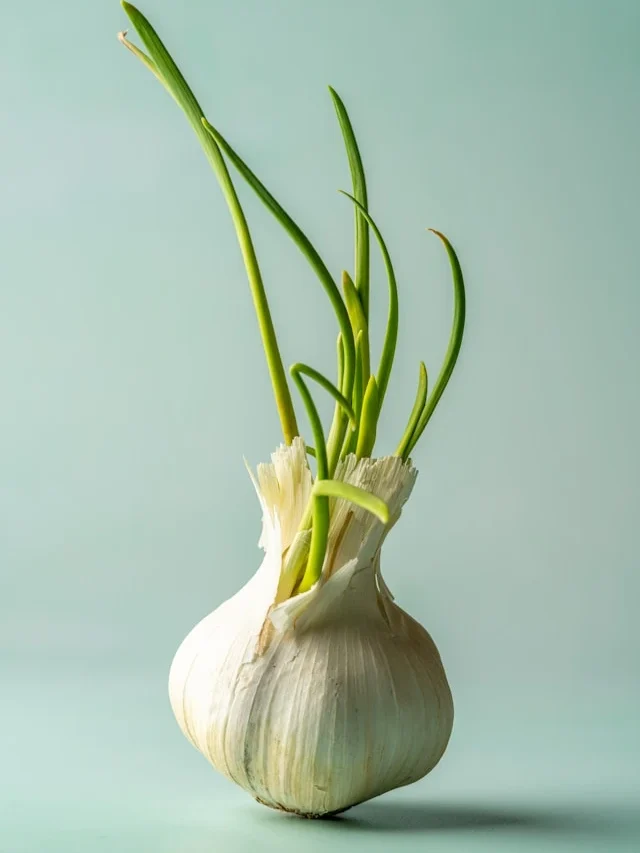
You tucked a garlic bulb away in the pantry, forgot about it for a few weeks, and now there’s a green plant growing out of garlic, wiry little shoots reaching upward like it’s trying to escape. Your first instinct might be to toss it. But here’s the thing: those sprouts are not a problem. They’re actually an invitation. Learning how to grow garlic greens is one of the simplest, most satisfying things you can do in a kitchen, no soil, no yard, no gardening experience required.
Those bright little shoots you’re seeing — the green things growing out of garlic — are completely edible and surprisingly delicious. Mild, grassy, and a little garlicky, they’re excellent snipped over eggs, soups, or noodles. And if you’re wondering whether garlic green growing past its prime is still safe to eat, the short answer is yes — though the clove itself may taste more bitter once it’s sprouted, the greens are fresh, vibrant, and perfectly good.
In this guide, you’ll learn exactly how to coax those shoots along, whether you’re starting from a forgotten clove or a fresh bulb, and how to keep them growing so you’ve got a steady snip-and-use supply right on your windowsill. Check out 11 more easy to grow vegetables at home.
In This Article
What Are Garlic Greens and Why Should You Grow Them?
Garlic greens are the tender, bright green shoots that push up from a garlic clove as it begins to sprout. If you’ve ever left a bulb of garlic on the counter a little too long and noticed thin green stems poking out from the top, you’ve already witnessed the beginning of this process. Those sprouts are garlic greens, and what many people toss in the trash turns out to be one of the most rewarding and effortless things you can grow at home.
Growing green garlic doesn’t require a backyard, a raised bed, or any prior gardening experience. A single clove, a glass of water or a small pot of soil, and a sunny windowsill is genuinely all it takes. That simplicity is a big part of why so many people stumble into growing garlic greens by accident, they spot a garlic clove sprouting green in their kitchen, look it up out of curiosity, and end up with a steady supply of fresh greens they never knew they were missing.
Taste and culinary uses
The flavor of garlic greens sits somewhere between fresh garlic and green onions, garlicky and aromatic, but milder and grassier than a raw clove. The younger the shoot, the more delicate the flavor. As the greens grow taller, the taste becomes slightly more pronounced, though it never reaches the sharpness of mature garlic.
In the kitchen, garlic greens are remarkably versatile. You can use them anywhere you’d reach for green onions or chives, chopped over scrambled eggs, stirred into soups and noodle dishes, tossed into stir-fries, folded through butter, or scattered over flatbreads before baking. They work well both raw and briefly cooked, and because the flavor is approachable rather than intense, they tend to win over people who find raw garlic too overpowering. Check out more garlic uses.
Why bother growing them at all?
The honest answer is that garlic greens might be the lowest-effort edible plant you can keep in your kitchen. There’s no waiting for seeds to germinate, no transplanting, no pest management. You start with a clove, often one that’s already begun sprouting green on its own, and within a week or two you’re snipping fresh greens to use in cooking. For people without outdoor space, it’s a rare opportunity to grow something genuinely useful in a small apartment without any special equipment. And for anyone who already keeps garlic in the kitchen, it’s essentially free food from something that might otherwise go to waste.
Health Benefits of Garlic Greens
Garlic has a long history as both a culinary staple and a functional food, and its greens carry many of the same beneficial properties as the clove, in a fresher, more delicate form. They won’t replace a balanced diet, but they’re a genuinely nutritious addition to everyday cooking, especially when you’re using them regularly as a snip-and-scatter herb.
They contain allicin — garlic’s most active compound
Allicin is the sulphur compound responsible for garlic’s distinctive smell and most of its well-documented health properties, including antimicrobial and anti-inflammatory effects. Garlic greens contain allicin, particularly when eaten raw or lightly cooked. Heat breaks allicin down quickly, so if you’re after the full benefit, snipping them fresh over a finished dish is the most effective approach.
Vitamins C and K
Garlic greens are a reasonable source of vitamin C, which supports immune function and collagen production, and vitamin K, which plays a role in blood clotting and bone health. Neither is present in enormous quantities, but for something that takes a week to grow on your windowsill and costs essentially nothing, the nutritional return is solid.
They’re rich in antioxidants
Like other young green shoots, garlic greens contain antioxidant compounds that help the body manage oxidative stress. Younger plants often have a higher concentration of these compounds relative to their size than their mature counterparts, which makes freshly grown greens a particularly good source.
They support digestive health
Garlic has prebiotic properties, it contains fructooligosaccharides, a type of fibre that feeds beneficial gut bacteria. Garlic greens share this quality, making them a small but meaningful addition for anyone paying attention to gut health. They’re also considerably gentler on digestion than raw garlic cloves, which some people find irritating in larger amounts.
| Benefit | What’s behind it | Best way to get it |
|---|---|---|
| Anti-inflammatory & antimicrobial | Allicin — the active sulphur compound in garlic | Eat raw or add at the end of cooking; heat breaks allicin down fast |
| Immune & bone support | Good source of vitamin C and vitamin K | Regular use as a finishing herb adds up over time |
| Antioxidant protection | Young green shoots are concentrated in antioxidant compounds | Freshly grown greens have higher levels than mature or dried garlic |
| Gut health | Contains fructooligosaccharides — a prebiotic fibre that feeds good gut bacteria | Gentler on digestion than raw cloves, so easier to use daily |
| Low-calorie flavour boost | Adds depth to meals with minimal calories | Snip over eggs, grains, soups, or noodles — works anywhere chives would |
They’re low-calorie and easy to use daily
Perhaps the most practical benefit is the simplest one. Because garlic greens are mild enough to add to almost anything, eggs, grains, soups, noodles, they’re easy to eat consistently. A small handful snipped over a meal adds flavor with minimal calories, which makes them a useful tool for adding nutritional variety without changing how you cook in any significant way.
Garlic greens vs. garlic scapes — what’s the difference?
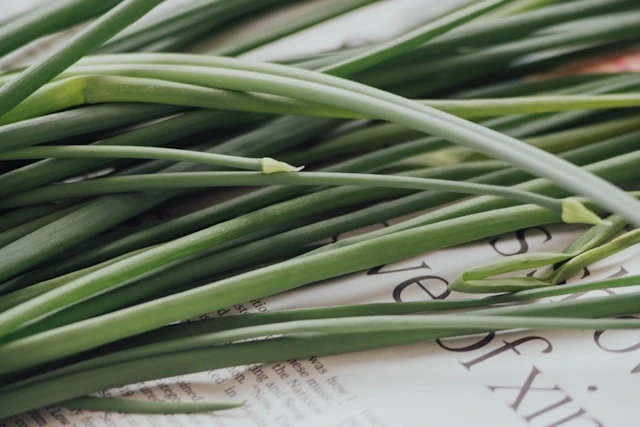
This distinction trips people up regularly, so it’s worth clarifying. Garlic greens are the young leafy shoots that grow from a sprouting clove early in the plant’s life. They’re harvested young, are entirely tender, and can be eaten whole. Garlic scapes, on the other hand, are the curling flower stalks that appear much later in the growing season on hardneck garlic varieties. Scapes are thicker, curlier, and only appear on more mature plants grown in the ground over several months. If you’re growing garlic indoors in a pot or glass, you’re growing garlic greens, scapes aren’t part of that picture.
Why Is My Garlic Growing Green Sprouts?
Garlic is a living thing, even after it’s been harvested and cured. Given enough time, especially in a warm kitchen, near a window, or anywhere with a little ambient moisture, a clove will naturally start to wake up and try to grow. That green growing out of garlic is simply the shoot the plant would have sent up if it had been left in the ground. It’s not a sign of rot, mold, or anything gone wrong. It’s just garlic doing what garlic does.
Are Garlic Greens safe to eat?
Yes — with one small caveat. The clove itself is perfectly edible when garlic cloves are growing green sprouts, though it may taste sharper or slightly more bitter than usual, especially in the centre where the shoot has been drawing on the clove’s stored energy. If you’re roasting or cooking it down, you likely won’t notice the difference. Raw, it can be a bit aggressive. As for the sprout itself, the garlic green growing up through the middle, it’s entirely safe, just milder and more delicate than the clove.
The one thing worth doing is splitting the clove and removing the green shoot before using the raw garlic in something like a dressing or dip where bitterness would stand out. That’s about the extent of the caution needed.
But here’s the better option.
Instead of picking around it or tossing the whole bulb, use it. A garlic clove growing a green chute is already doing the hard work for you, it’s primed to sprout, which means it’s the ideal starting point if you want to grow garlic greens at home. Why does garlic grow green sprouts in the first place? Survival instinct. And you can redirect that instinct into a steady supply of snippable greens in under a week, no garden required. The next section shows you exactly how.
How to Grow Green Garlic at Home: What You’ll Need
One of the best things about growing green garlic at home is that it requires almost nothing you don’t already have. There’s no special equipment, no grow lights, no expensive seed packets. If you have a garlic clove and a windowsill, you’re most of the way there. Here’s what to gather:
Garlic cloves — Store-bought is completely fine. You don’t need seed garlic or anything from a specialist supplier. Any bulb from the supermarket will work, though organic cloves tend to sprout a little more reliably since they’re less likely to have been treated to slow sprouting. If you already have a clove with a garlic growing green stem poking out of it, even better, it’s already ahead of the game.
A container — A small glass, jar, or cup works for water growing. If you’re going the soil route, a pot around 10–15 cm deep is ideal, but an old mug, a tin, or any vessel with drainage will do the job.
Water or soil — This comes down to preference. Water is faster and requires zero prep. Soil produces slightly more robust greens and keeps going longer. Neither requires anything fancy — basic potting mix is all you need if you go that route.
A reasonably sunny spot — A kitchen windowsill that gets a few hours of light is ideal. Garlic greens aren’t demanding, but they do grow faster and taste better with decent light.
That’s genuinely the whole list. How to grow green garlic is really a question of patience more than preparation, the setup takes minutes, and the clove handles the rest.
Step-by-Step: How to Grow Garlic Greens in Soil
Soil growing takes a little more setup than water, but it rewards you with stronger, longer-lasting greens and a more natural growing cycle. Once a clove is in the ground, so to speak, it largely takes care of itself.
Step 1. Choose your clove
Pick a firm, healthy clove — the bigger the better, since larger cloves have more stored energy to fuel early growth. If you have one already showing a small green tip, use it first. Separate the cloves just before planting rather than leaving them sitting out.
Step 2. Plant pointy-side up
Fill your container with potting mix to about an inch below the rim. Push each clove in pointy-side up, deep enough that the tip sits just below or at the surface — roughly one to two inches down. The pointed end is where the shoot will emerge, so orientation matters. If you’re planting several cloves, space them a few centimeters apart so the greens have room to grow without crowding.
Step 3. Water lightly and find a spot
Water gently after planting — enough to moisten the soil through without waterlogging it. Garlic doesn’t like sitting in wet soil, so if your container has drainage holes, all the better. Place it near a window that gets a reasonable amount of light. Growing garlic greens indoors works well on a south or east-facing sill, but even a moderately lit spot will do the job, just a touch more slowly.
Step 4. Watch for the shoot
Within five to ten days you’ll see the first signs of a garlic growing green stem pushing through the soil — a thin, bright shoot curling slightly upward before it straightens out. Once it appears, growth moves quickly. From that point it’s simply a matter of keeping the soil lightly moist and letting the light do its work.
Step 5. Harvest when ready
When the greens reach around 15–20 cm tall, they’re ready to harvest. Use scissors to snip from the top, leaving an inch or two of stem above the soil. This encourages the clove to keep producing rather than stopping altogether. Depending on the clove’s size, you can usually get two or three cuts from a single planting before growth slows noticeably.
The whole process, from planting to first harvest, takes somewhere between one and two weeks. It’s one of the more instant-gratification moments in growing anything, and once you know how to grow garlic greens this way, a pot on the windowsill becomes a fairly permanent fixture.
How to Grow Garlic Greens in Water (No Soil Needed)
If the soil method feels like more effort than you want to put in, the water method is even simpler, and for anyone growing garlic greens indoors in a small kitchen or apartment, it’s often the more practical choice. No compost, no mess, no drainage to think about. Just a clove, a glass, and some water.
Step 1. Set it up in under a minute
Take a small glass or jar and fill it with just enough water to reach the base of the clove. You want the flat, root end sitting in water while the pointed tip stays dry above the surface, fully submerging the clove will cause it to rot rather than sprout. A shot glass works well for a single clove; a small tumbler lets you do three or four at once. Set it on a windowsill with decent light and leave it alone.
Step 2. Keep the water fresh
Change the water every two days or so. This is the one habit the method requires, and it matters, stale water encourages rot and slows growth. A quick rinse of the glass while you’re at it keeps things clean. Other than that, there’s not much to do.
Step 3. What to expect
This is where grow green garlic in water earns its reputation for speed. Greens can appear within three to five days, sometimes sooner if the clove was already starting to sprout. The shoot grows quickly once it gets going, you’ll notice a visible difference day to day. Harvest by snipping the greens when they reach around 10–15 cm, leaving a small amount of stem so regrowth can continue.
The tradeoff worth knowing: the clove itself won’t last as long as it would in soil. Without growing medium to draw nutrients from, it exhausts its stored energy faster. You’ll typically get one good round of greens, maybe a partial second, before growth stops. For most people growing garlic greens indoors on a casual basis, that’s a perfectly fine exchange for the convenience.
Do Garlic Greens Grow Back After Cutting?
Yes — but with a limit worth knowing upfront so you’re not left wondering why growth suddenly stalls.
When you snip garlic greens, the clove will push out new growth from the same shoot, provided you haven’t cut too close to the base. The general rule is to take the top third of the stem and leave the rest intact. Cut too low and you remove the growing tip, which effectively ends the cycle. Leave enough stem and the clove has what it needs to keep going.
In practice, most cloves will regrow one to two times after the first harvest. The second cut tends to come a little slower than the first, and the third, if you get one, slower still. This is normal. The clove is a finite source of energy, and growing green garlic repeatedly from the same clove gradually draws that reserve down. The greens may also come through slightly thinner or shorter with each round, which is a reliable sign the clove is nearing the end of what it can offer.
How to know when it’s done
When regrowth stops appearing after five or six days, or the new shoots come through looking pale and weak rather than bright green, the clove has run its course. At that point, compost it and start fresh. There’s no benefit to leaving a spent clove in soil or water, it won’t recover, and it may begin to rot if left too long.
The straightforward way to keep a continuous supply is to stagger your planting. Put in a new clove or two every week or so alongside your existing ones, so as one clove winds down another is just hitting its stride. That way you’re always a few days away from fresh greens rather than starting from scratch each time.
Garlic Greens vs Green Onions: What’s the Difference?
A quick one to clear up, because the confusion is understandable — both are slender, green, and look broadly similar sitting on a windowsill or poking out of a pot.
If you’ve been growing green onions at home too, the process has a few key differences worth knowing. Check out our full guide on how to grow green onions for a step-by-step breakdown.
Does green onion grow from garlic?
No. Garlic and onions are related, both belong to the allium family, but they’re different plants entirely. A green onion (also called a spring onion or scallion) grows from an onion bulb or onion seed. Garlic grows from a garlic clove. If you plant a garlic clove, you will get garlic greens. You won’t get green onions, no matter the conditions.
The mix-up tends to happen because both plants produce long, thin green shoots that look similar at a glance, and both can be grown in a glass of water on a windowsill using more or less the same method.
How to tell them apart
The easiest way to distinguish them is appearance and smell. Green onions have hollow, tubular stems, you can feel the air inside if you pinch one. Garlic greens have flat, solid blades, more like a grass or a chive leaf. The garlic growing a green stem also tends to emerge from a single point at the center of the clove, pushing up as one shoot rather than a cluster.
Smell is the other giveaway. Crush or cut either one and the difference is immediately obvious, garlic greens carry that unmistakable garlic scent, while green onions smell sharply of onion.
Can you use them interchangeably?
Often, yes. In cooked dishes — stir-fries, soups, fried rice, egg dishes, garlic greens and green onions can generally swap in for each other without much consequence. The flavor contribution is different but compatible. Where it matters more is in raw applications like dressings or fresh garnishes, where garlic greens bring a more distinctly garlicky note and green onions bring a milder, sweeter bite.
If you’ve spotted green things growing out of garlic and weren’t sure what you were looking at, now you know, and you can use them with confidence.
Frequently Asked Questions
Are garlic greens easy to grow?
Very. They’re one of the most beginner-friendly things you can grow at home. A clove, a glass of water or a small pot of soil, and a windowsill with some light is all it takes. Most people see sprouts within three to five days, and harvestable greens within one to two weeks.
Can you grow garlic greens in water?
Yes, and it’s arguably the easiest method. Place a clove in a small glass with just the base touching water, keep it near a window, and change the water every couple of days. Greens typically appear faster with the water method than with soil, though the clove will exhaust itself sooner and you’ll get fewer harvests before needing to start fresh.
What are garlic greens used for?
Anywhere you’d use chives or spring onions, garlic greens will work. They’re particularly good snipped over eggs, stirred through soups or noodles at the last minute, folded into dumplings or flatbreads, or scattered over roasted vegetables. Raw, they add a mild garlicky lift; briefly cooked, they soften into something sweeter and more subtle.
How do you grow garlic indoors in winter?
The same way you would any other time of year — garlic greens don’t follow a seasonal cycle the way outdoor garlic does. Plant a clove in soil or water, place it near your sunniest window, and the process works just as well in January as in June. If light is limited during winter months, rotating the container every day or two helps the greens grow evenly rather than leaning heavily toward the light source.
Are garlic greens and green garlic the same?
Not quite, though the terms are sometimes used interchangeably. Garlic greens refer specifically to the shoots that sprout from a clove — the thin, flat-bladed leaves you grow on a windowsill and snip as an herb. Green garlic refers to a young, immature garlic plant harvested early in the season before the bulb fully forms, used more like a spring onion. Same plant family, different stage of growth, different culinary uses.
What do you do with fresh garlic greens?
Use them as you would a fresh herb — snip directly over finished dishes, mix into sauces, stir through scrambled eggs, or chop into a salad dressing. They don’t need cooking, though they can handle a little heat. The simplest approach is keeping a pair of scissors near the pot and snipping a small amount over whatever you’re eating. They lose their brightness quickly once cut, so fresh is always better.
Do garlic greens taste like garlic?
Yes, but milder. The flavor is closer to a whisper of garlic than the punch you get from a raw clove — grassy, slightly pungent, and fresh rather than sharp. They won’t overpower a dish the way raw garlic can, which makes them easier to use generously and more versatile across different recipes.
Do people eat garlic greens?
Widely, across many different food cultures. In parts of Asia, garlic shoots are a common stir-fry ingredient. In Eastern Europe they appear pickled or fresh alongside spring meals. In the Middle East, sprouted garlic greens show up in various traditional dishes. In Western kitchens they’ve historically been underused, but that’s changing as more people discover how simple and practical they are to grow at home.
What are the health benefits of garlic greens?
They carry many of the same beneficial compounds found in the clove, including allicin — the sulphur compound linked to anti-inflammatory and antimicrobial properties — along with vitamins C and K, antioxidants, and prebiotic fibre that supports gut health. They’re also considerably gentler on digestion than raw cloves, making them easier to incorporate into daily eating without discomfort.
Can you eat garlic if it’s growing green sprouts?
Yes, it’s perfectly safe. The clove itself may taste slightly more bitter than usual, particularly at the centerwhere the shoot has been drawing on its stored energy, but there’s nothing harmful about it. For raw preparations like dressings or dips where bitterness would be noticeable, it’s worth splitting the clove and removing the green shoot first. For cooked dishes, the difference is minimal and most people won’t notice it at all.