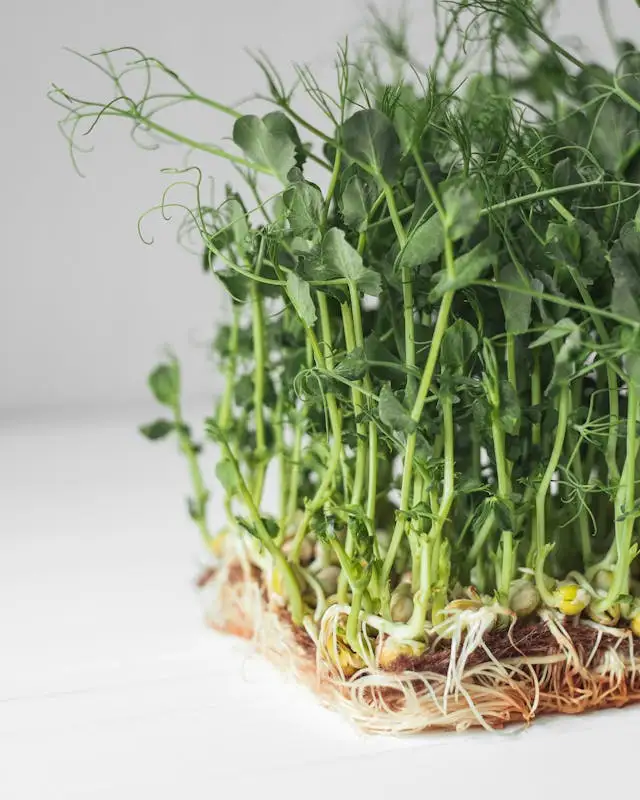

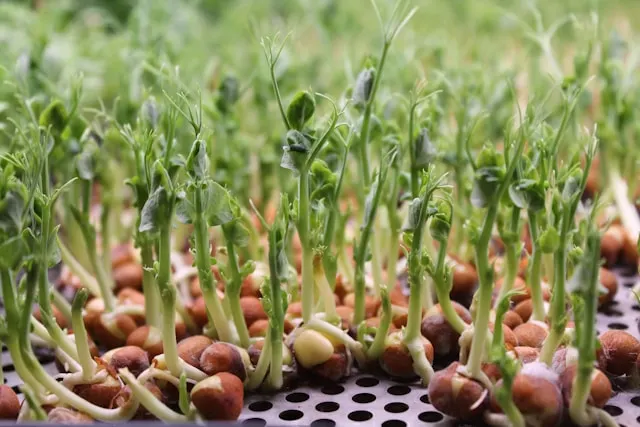
Pea shoot microgreens nutrition is exceptional for their size: a 100g serving delivers roughly 35–45 calories, making them one of the lowest-calorie microgreens available. They are richest in vitamin C (around 35mg per 100g — about 40% of the daily value), vitamin A (from beta-carotene), and folate. Their two most clinically notable benefits are immune support from the high vitamin C content and cardiovascular protection from their folate and potassium profile. Compared to mature peas, pea shoot microgreens contain up to 40 times higher nutrient concentrations per gram — which is why they consistently rank among the most nutrient-dense microgreens you can grow or buy.
Nutrition Facts Table (per 100g)
Pea shoot microgreens pack more vitamin K per 100g than almost any other microgreen — over 250% of your daily value in a single serving.
| Nutrient | Amount (per 100g) | % Daily Value |
|---|---|---|
| Calories | 42 kcal | — |
| Protein | 4.0 g | 8% |
| Carbohydrates | 5.7 g | 2% |
| Dietary Fibre | 2.6 g | 9% |
| Vitamin K | 200–260 µg | 167–217% |
| Vitamin C | 35–65 mg | 39–72% |
| Vitamin A | 90–315 µg RAE | 10–35% |
| Folate | 120–150 µg | 30–38% |
| Iron | 1.6–2.5 mg | 9–14% |
| Manganese | 0.3–0.5 mg | 13–22% |
| Magnesium | 22–33 mg | 5–8% |
| Potassium | 200–280 mg | 4–6% |
In This Article
The nutritional information and health associations described on this page are based on published research and are intended for general educational purposes only. They do not constitute medical advice and should not be used to diagnose, treat, or manage any health condition. Individual nutritional needs vary. If you are pregnant, managing a chronic condition, or taking medication, particularly anticoagulants such as warfarin, speak to your doctor or a registered dietitian before significantly changing your diet.
Health Benefits of Pea Shoot Microgreens
Most microgreens get lumped together as a vague “superfood” category. Pea shoots are worth separating out. The nutrient concentrations are high enough and specific enough, to point to real, measurable effects on blood, bones, immunity, and cardiovascular function. Here’s what the research actually links them to.
If you want to grow your own supply at home rather than buying them weekly, the setup is simpler than most people expect, our full pea shoot microgreens grow guide walks through everything from seed to harvest.
Bone Strength You Can Actually Measure
Pea shoot microgreens are one of the richest plant sources of vitamin K1, with some analyses showing over 200% of the daily value per 100g. Vitamin K1 is directly involved in osteocalcin activation, the protein that binds calcium to bone tissue. Studies on dietary vitamin K consistently show an association with reduced fracture risk in older adults, particularly in the hip and spine.
Add pea shoots to your salad two to three times a week if bone density is a concern, the vitamin K content rivals that of kale at a fraction of the bitterness.
Immune Support From Real Vitamin C Levels
A 100g serving of pea shoot microgreens provides 35–65mg of vitamin C, which puts it in the same range as orange juice. Vitamin C supports both innate and adaptive immune function: it stimulates white blood cell production and acts as an antioxidant that neutralizes free radicals before they damage tissue. Research consistently links adequate vitamin C intake to shorter duration of common colds and lower susceptibility to respiratory infections.
Raw pea shoots retain the most vitamin C, heat degrades it quickly, so keep them off the cooked dish and use them as a finishing green.
Cardiovascular Risk Markers, Specifically Homocysteine
Pea shoots are a solid source of folate, with roughly 120–150µg per 100g. Folate’s most documented cardiovascular role is in homocysteine metabolism, elevated homocysteine is an independent risk factor for heart disease and stroke. The B-vitamin group, with folate at the front, is what keeps those levels in check. Diets consistently low in folate are linked to higher homocysteine and, downstream, worse arterial health.
If you’re not eating legumes regularly, pea shoot microgreens are one of the easier ways to hit a meaningful portion of your daily folate target.
Eye Health via Beta-Carotene
The green color in pea shoot microgreens comes partly from carotenoids, including beta-carotene, a precursor to vitamin A. Vitamin A is required for rhodopsin synthesis, the pigment in the retina that handles low-light vision. Long-term dietary inadequacy is linked to night blindness and, in severe cases, macular degeneration. Beta-carotene from food, as opposed to supplement form, has a much better safety record and is better regulated by the body.
Pair pea shoots with a small amount of fat (olive oil, avocado), beta-carotene is fat-soluble and absorbs significantly better when eaten with lipids.
Blood Sugar Stability From Fibre and Protein Together
Pea shoot microgreens provide around 2.6g of fiber and 4g of protein per 100g, an unusual combination for a leafy green. Fiber slows gastric emptying, which flattens the post-meal glucose curve. Protein has a similar effect through different mechanisms, including delayed carbohydrate absorption and increased satiety hormone response. Together, they make pea shoots a more metabolically useful topping than most people expect from something this light.
Adding pea shoots to a carb-heavy meal, a sandwich, grain bowl, or flatbread, is a low-effort way to moderate the glycaemic load without changing the dish much.
Iron Absorption, With One Catch
Pea shoots contain non-haem iron at around 1.6–2.5mg per 100g, the plant form that absorbs less readily than meat-sourced iron. The catch is also the fix: the vitamin C in pea shoots converts non-haem iron to a more absorbable form in the gut. Eating pea shoots as a standalone source delivers both the iron and the absorption enhancer in the same bite, which makes them more useful for iron intake than most plant foods of equivalent iron content.
Don’t eat pea shoots alongside coffee or black tea in the same meal, tannins actively inhibit iron absorption and would offset the benefit.
Anti-Inflammatory Activity From Polyphenols
Pea shoot microgreens contain polyphenols including flavonoids and phenolic acids, which are associated with reduced markers of systemic inflammation. Chronic low-grade inflammation is linked to a wide range of conditions, metabolic syndrome, cardiovascular disease, and cognitive decline among them. While the polyphenol content of pea shoots is harder to pin down with the same precision as their vitamins, the evidence for plant polyphenols broadly is strong enough that consistent inclusion in the diet is supported by multiple systematic reviews.
Variety matters more than volume here, rotating pea shoots with other polyphenol-dense greens is more effective than eating large amounts of one type alone.
Health benefit claims in this section are informed by published research. Key source includes: NIH — Microgreens: nutritional properties, health benefits, production techniques, and food safety risks.
What’s Actually in Them and How Your Body Uses It: Pea Shoot Microgreens Nutrition
Most nutrition content stops at the number. “35mg of vitamin C” gets listed in a table and that’s it. The more useful question is what happens after you eat it, how much actually gets absorbed, what it does once it’s in circulation, and whether anything in your diet is quietly blocking it. Pea shoots are worth going deeper on because several of their key nutrients have absorption quirks that most sources skip entirely.
Vitamin K — The Standout Nutrient, With a Real Warning Attached
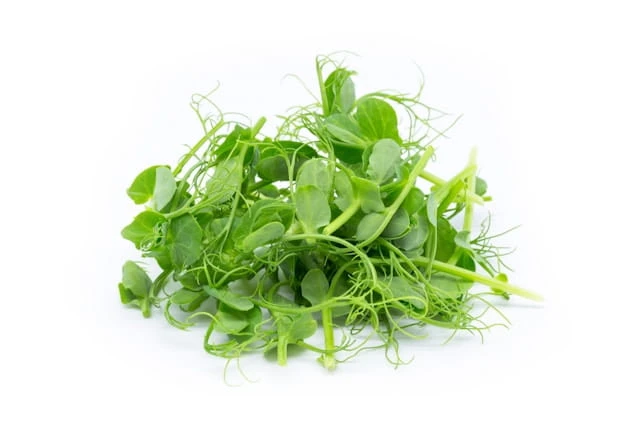
Pea shoot microgreens contain vitamin K1 (phylloquinone) at concentrations that regularly exceed 200µg per 100g, more than 160% of the daily value, and in some lab analyses, closer to 250%. That’s not a rounding error. It puts pea shoots in the same tier as kale and spinach for K1 content, which surprises people because pea shoots don’t look or taste like a nutrient-dense dark leafy green.
In the body, vitamin K1 has two main jobs. The first is blood clotting: K1 activates clotting factors II, VII, IX, and X in the coagulation cascade. Without adequate K1, minor bleeding takes longer to stop. The second is bone metabolism: K1 activates osteocalcin, a protein that anchors calcium to bone matrix. Research has consistently linked higher dietary vitamin K intake to lower fracture risk, particularly in postmenopausal women, though the effect is stronger in people who start from a low baseline.
Bioavailability note: K1 from plants is fat-soluble. Without dietary fat in the same meal, a significant portion passes through without being absorbed. A drizzle of olive oil or a few slices of avocado in the same bowl meaningfully improves uptake. This isn’t a minor tweak, some studies suggest fat co-ingestion can increase K1 absorption by 300–400%.
Warfarin caution: Vitamin K directly opposes the mechanism of warfarin (and other vitamin K antagonist anticoagulants). These drugs work by blocking K1-dependent clotting factor activation — so eating a large and variable amount of K1 makes the drug’s effect unpredictable. The issue isn’t that people on warfarin can’t eat pea shoots. It’s that sudden increases or decreases in dietary K1 destabilise INR levels. Consistency matters more than avoidance. If you’re on warfarin, talk to your prescribing clinician before making pea shoots a daily habit.
Vitamin C — Higher Than Most People Expect, But Heat Kills It Fast
The 35–65mg range per 100g puts pea shoot microgreens ahead of many fruits people think of as vitamin C staples. A medium orange averages around 53mg total. Pea shoots at the higher end of that range match it gram-for-gram, which is not the comparison most people would make unprompted.
Vitamin C (ascorbic acid) is a water-soluble antioxidant with two distinct roles. The first is structural: it’s required for collagen synthesis, specifically for the hydroxylation of proline and lysine residues that give collagen fibrils their tensile strength. Connective tissue, skin integrity, and wound repair all depend on this. The second is immune: vitamin C accumulates in white blood cells at concentrations 50–100 times higher than in plasma, where it supports both neutrophil function and the generation of antibodies. Research links dietary vitamin C, not megadose supplements to reduced duration of upper respiratory infections, particularly under physical stress.
Bioavailability note: Vitamin C is one of the more straightforward nutrients in terms of absorption, but it’s fragile. Heat above 70°C degrades it rapidly, and prolonged storage does the same. Pea shoots eaten raw, freshly cut, retain the most. If they’ve been sitting in the fridge for five days, expect meaningfully lower C content than the published figures suggest. The practical takeaway: buy fresh, eat within two to three days, keep them raw.
Folate — The Cardiovascular Benefit Most People Haven’t Heard Of
Folate (vitamin B9) sits at around 120–150µg per 100g in pea shoot microgreens, which covers 30–38% of the daily value. That’s meaningful, especially for two groups: people planning pregnancies (folate in the first weeks of pregnancy is strongly linked to reduced neural tube defect risk) and people who don’t eat many legumes or dark leafy greens regularly.
The cardiovascular angle is less well-known but equally well-evidenced. Folate, along with vitamins B6 and B12, is required for the conversion of homocysteine back to methionine. When this pathway underperforms, usually from dietary deficiency rather than genetic variation, homocysteine builds up in the blood. Elevated homocysteine is an independent risk marker for cardiovascular disease and stroke, separate from cholesterol. It’s not the first thing most GPs mention, but it shows up consistently in population studies.
Bioavailability note: Food folate absorbs at roughly 50% efficiency compared to synthetic folic acid in supplements. That sounds like a knock against food sources, but it isn’t, the body regulates food folate absorption better, and there are no ceiling effects to worry about. The practical issue is that cooking destroys folate efficiently. Pea shoots eaten raw deliver significantly more usable folate than cooked pea products.
Iron — Useful, But You Need to Eat It Right
At 1.6–2.5mg per 100g, pea shoots aren’t an iron-dense food in absolute terms. But they’re more useful as an iron source than the raw number implies, for one specific reason: the vitamin C they contain converts non-haem iron (the plant form) to a more absorbable state in the gut.
Non-haem iron normally absorbs at around 2–20% efficiency depending on the meal context, compared to 15–35% for haem iron from meat. Ascorbic acid reduces ferric iron (Fe³⁺) to ferrous iron (Fe²⁺), which the intestinal transporter DMT1 can actually take up. Studies have shown that including vitamin C in the same meal can increase non-haem iron absorption by up to 67%. With pea shoots, you’re getting both compounds in the same bite, which makes them more efficient as an iron source than eating, say, spinach and vitamin C separately.
What blocks it: Tannins in tea and coffee, calcium from dairy, and phytates in whole grains all inhibit non-haem iron absorption. If iron intake is a concern, avoid tea or coffee within an hour of eating pea shoots and don’t pair them with a calcium-heavy component in the same meal.
Antioxidants — The Polyphenol Case, Without the Hype
Pea shoot microgreens contain a range of polyphenolic compounds, primarily flavonoids and phenolic acids, though published values vary enough that giving a precise figure would be misleading. What the research does support, across multiple studies of pea microgreens specifically, is measurably higher antioxidant activity than mature pea plants, with some analyses showing several times the polyphenol concentration.
The mechanism worth understanding is oxidative stress. Free radicals, reactive oxygen species produced by normal metabolism, UV exposure, pollution, and inflammation, damage cell membranes, DNA, and proteins over time. Polyphenols neutralise free radicals directly and also upregulate the body’s own antioxidant enzymes (including superoxide dismutase and catalase). The disease associations here are broad: chronic oxidative stress is implicated in cardiovascular disease, neurodegenerative conditions, and certain cancers. The link between dietary polyphenol intake and reduced risk across these categories is supported by large observational studies, though the effect of any single food is impossible to isolate.
Bioavailability note: Polyphenol absorption is genuinely complicated. Different polyphenol classes absorb at different sites, at different rates, and gut microbiome composition affects how much each individual actually gets from the same food. What’s clear is that raw, lightly processed pea shoots retain more polyphenol content than cooked ones, and that consistent daily intake across a varied diet matters more than eating a large amount of one source occasionally.
Pea shoots microgreens nutrition claims in this section are informed by published research. Key sources include: [Research gate: Assessment of nutritional and metabolic profiles of pea shoots: The new ready-to-eat baby-leaf Vegetable, Bolt Pharmacy: Peas Vitamin K Content and Warfarin: Safe Dietary Guidance].
Pea Shoot Microgreens vs Other Microgreens: How Do They Actually Compare?
People ask this question constantly and somehow nobody in the top results has answered it with actual numbers. Pea shoots get grouped into the generic “microgreens are nutritious” bucket alongside broccoli and sunflower without anyone stopping to say, yes, but which one wins on protein? Which one is your best bet if iron is the goal?
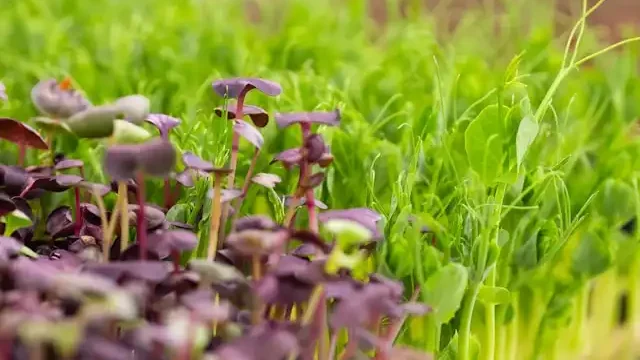
The table below compares five of the most commonly grown microgreens across the four nutrients where the differences are meaningful enough to matter. These aren’t marketing figures, where ranges exist across published analyses, the table reflects that honestly.
| Nutrient (per 100g raw) | Pea Shoots | Broccoli | Sunflower | Radish | Spinach |
|---|---|---|---|---|---|
| Vitamin C | 35–65mg | 80–100mg | 5–17mg | 28–44mg | 25–35mg |
| Protein | 3.8–4.2g | 3.5–4.0g | 3.2–3.8g | 1.5–2.5g | 2.5–3.0g |
| Iron | 1.6–2.5mg | 0.9–1.4mg | 1.2–2.0mg | 0.5–1.0mg | 2.0–3.5mg |
| Antioxidant activity | High† | Very high† | Moderate | High† | High† |
What the table actually tells you:
Broccoli wins on vitamin C and it’s not close. If immune support or collagen synthesis is the priority, broccoli microgreens outperform pea shoots on this specific nutrient by a meaningful margin. Worth knowing if you’re growing both and trying to decide which to eat more of. If you want to grow your own, here’s our full broccoli microgreens grow guide.
Pea shoots lead on protein. The difference over broccoli is small, but pea shoots beat every other microgreen on this list for protein content, and they do it consistently across analyses, not just in the best-case figures. For anyone using microgreens as a serious protein contribution to a plant-based diet, this gap matters.
Spinach edges pea shoots on iron, but only if you’re eating it in a context that supports absorption. Spinach is high in oxalates, which bind iron and reduce how much you actually absorb. Pea shoots have no meaningful oxalate load, and their vitamin C content actively improves iron uptake. The raw spinach iron figure looks better on paper; the absorbed iron figure is more complicated.
Sunflower is the weakest here across the board, at least on these four metrics. That doesn’t make it a bad microgreen. Sunflower has a genuinely good fatty acid profile and a texture that makes it more practical as a bulk green in salads and wraps. It just doesn’t compete nutritionally with the others in this specific comparison. Here’s our sunflower microgreens grow guide, if you’re growing them for the texture and yield rather than the nutrient numbers.
Radish is the outlier nobody talks about. Low protein, moderate vitamin C, low iron, but radish microgreens consistently show high antioxidant activity in DPPH assays, driven by glucosinolates and anthocyanins rather than the more conventional antioxidant pathways. The comparison isn’t straightforward, which is why the table flags it rather than ranking it.
The honest summary: there’s no single winner. Pea shoots are the most balanced option across all four categories, they don’t top the table in any one column, but they don’t bottom out in any either. Broccoli is the better choice if vitamin C is the specific goal. Spinach edges ahead on iron if oxalate load isn’t a concern for you. If you’re growing one microgreen and want the most nutritionally consistent return, pea shoots make a reasonable case.
Raw vs Cooked Pea Shoot Microgreens: Does Heat Destroy the Nutrition?
Short answer: yes, for some nutrients. No, for others. And with pea shoots specifically, the case for eating them raw is stronger than with most greens.
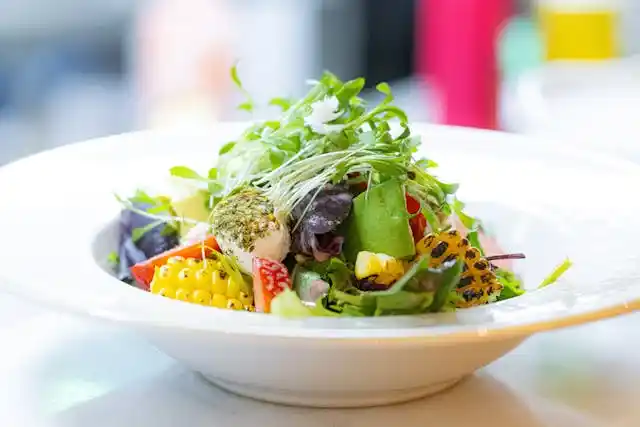
Vitamin C goes first — and fast
Vitamin C starts degrading at around 70°C and breaks down quickly above that. It’s also water-soluble, which means boiling leaches it out into the cooking water before heat even finishes the job. A lightly steamed pea shoot might retain 50–60% of its original vitamin C content. A stir-fried or boiled one could lose 70–80%. Given that vitamin C is one of the two or three nutrients that makes pea shoots worth eating in the first place, that’s a significant loss for what is usually a minor culinary preference.
Folate behaves similarly. It’s heat-sensitive and water-soluble, the worst possible combination for cooking survival. Studies on leafy greens consistently show 50–70% folate loss after boiling, with steaming performing somewhat better but still meaningfully worse than raw.
What cooking doesn’t destroy
Vitamin K1 is fat-soluble and relatively heat-stable. Cooking doesn’t meaningfully degrade it, and the bigger absorption variable, eating it with dietary fat, applies equally whether the shoots are raw or cooked. Iron content is also unaffected by heat; if anything, cooking breaks down some plant cell walls and can marginally improve mineral accessibility, though the effect is small.
Protein holds up well through light cooking too. The amino acid profile doesn’t change materially at the temperatures involved in a quick sauté or a warm dish.
Why raw makes more sense for microgreens specifically
Most greens get cooked because they need it, kale is tough, spinach wilts to nothing, chard has a bitterness that heat rounds out. Pea shoot microgreens don’t have any of these problems. They’re tender, mildly sweet, and genuinely pleasant to eat straight. Cooking them doesn’t improve the eating experience in any obvious way, and it costs you the nutrients most worth keeping.
The practical approach: use pea shoots as a finishing green. Add them after the heat is off, on top of a warm grain bowl, tucked into a wrap, scattered over soup just before serving. They soften slightly from residual heat without losing the vitamin C and folate that make them nutritionally useful.
If you do cook them, in an omelette, a quick stir-fry, or a soup, go fast and hot rather than long and slow. Shorter exposure to heat preserves more than gentle prolonged warming does.
How Much Pea Shoot Microgreens Should You Eat Per Day?
A practical target is 50–100g per day, roughly one large handful. That’s enough to deliver a meaningful nutritional contribution without requiring you to reorganize your meals around it.
| Daily Amount | What It Looks Like | Key Nutrients Delivered |
|---|---|---|
| 25g (small handful) | Light garnish on a dish | ~10–15mg vitamin C, ~1g protein, ~50–65µg vitamin K |
| 50g (one handful) | Side salad or generous topping | ~18–33mg vitamin C, ~2g protein, ~100–130µg vitamin K |
| 100g (two handfuls) | Main salad base or blended | ~35–65mg vitamin C, ~4g protein, ~200–260µg vitamin K |
| 150g+ | Large salad bowl | Diminishing returns, rotate with other greens at this volume |
Most people don’t need to weigh their microgreens. One good handful, the amount that fits loosely in a cupped hand, lands around 50g and covers roughly half the daily vitamin C target and 80–100% of vitamin K in a single addition to whatever you’re already eating.
The 100g target is worth aiming for if pea shoots are your primary leafy green that day. It’s two handfuls. In a salad bowl it doesn’t look like much; blended into a smoothie you won’t notice it at all.
Four ways to hit 50–100g without thinking about it
Salad base — swap half your romaine or mixed leaves for pea shoots. They hold dressing well and don’t wilt as fast as softer greens. One generous base portion gets you to 60–80g without measuring.
Smoothie — a large handful blends completely smooth with banana, frozen mango, or pineapple. The flavour disappears entirely. This is the easiest route to a consistent daily 50g for people who don’t eat salads every day.
Sandwich or wrap filling — most people use two or three leaves of lettuce. Swap that for a proper layer of pea shoots. A well-stuffed wrap gets you to 30–40g, which stacks easily with a small salad later.
Finishing green on cooked meals — a large handful scattered over a warm bowl, soup, or eggs just before serving. They soften slightly from the heat but don’t cook through, so you keep the vitamin C and folate. This is the lowest-effort route if you’re already cooking anyway.
One thing worth saying plainly: 150g or more daily from a single microgreen isn’t necessary and probably isn’t the best use of the calories or the plate space. Variety across different greens, rotating pea shoots with broccoli microgreens, spinach, or whatever else you’re growing, delivers a broader nutrient profile than eating large amounts of one type. Pea shoots are good. They’re not so good that they should crowd everything else out.
Speckled Pea Shoot Microgreens — Are They Nutritionally Different?
Speckled peas, sometimes called dun peas or speckled dun peas, are a field pea variety with a mottled brown and green seed coat. They’re popular for microgreens because they germinate fast, grow dense, and produce a slightly more robust shoot than standard green pea varieties. Whether they’re nutritionally different is a fair question, and the honest answer is: marginally, but not in ways most people would notice.
Same category, slightly different profile
All pea shoot microgreens, green, yellow, and speckled varieties, come from Pisum sativum and share the same fundamental nutritional architecture. Vitamin K, vitamin C, folate, protein, and iron are present across all of them in broadly similar concentrations. The macronutrient split doesn’t change meaningfully between varieties.
Where speckled peas differ slightly is in their seed coat. The darker, mottled outer layer contains higher concentrations of phenolic compounds, specifically tannins and anthocyanins, compared to lighter-seeded green pea varieties. These are the same polyphenol classes associated with antioxidant activity in other dark-seeded legumes like black beans and lentils.
| Nutrient | Green Pea Shoots | Speckled Pea Shoots | Difference |
|---|---|---|---|
| Vitamin C | 35–65mg | 35–60mg | Negligible |
| Protein | 3.8–4.2g | 3.8–4.5g | Negligible |
| Iron | 1.6–2.5mg | 1.8–2.6mg | Marginal |
| Folate | 120–150µg | 115–145µg | Negligible |
| Polyphenols | Moderate | Moderate–High | Slightly higher in speckled |
| Vitamin K | 200–260µg | 195–255µg | Negligible |
Why the seed coat matters — and where it stops mattering
The polyphenol advantage in speckled peas is real at the seed stage. Field pea research consistently shows darker-seeded varieties have higher total phenolic content and stronger antioxidant activity in DPPH assays than lighter varieties. In the whole seed, that difference is meaningful.
In the microgreen, it’s less clear. By the time the seed has germinated and the shoot has grown to harvest length, typically 8–12 days, the phenolic compounds from the seed coat have been partially metabolized or diluted across a larger plant mass. The shoot itself, not the seed coat, is what you’re eating. Some of the polyphenol advantage carries through; how much exactly hasn’t been nailed down in published research specific to speckled pea microgreens at harvest stage.
The practical difference between eating speckled and green pea shoot microgreens is probably small enough that it shouldn’t drive your variety choice. Taste, availability, and germination rate are more useful decision criteria.
Where speckled peas do have a real edge
Germination rate and yield. Speckled dun peas are a field pea variety bred for hardiness, and that shows in the tray. They tend to germinate more uniformly than some green pea varieties, handle slightly higher sowing density, and produce a shoot that holds its structure longer after harvest. For home growers, this matters more than the marginal polyphenol difference, a denser, more reliable tray means more actual food, which is the point.
If you’re growing speckled pea shoots specifically for the nutritional benefit, you’re not making a wrong choice. But you’re also not unlocking a dramatically different nutrient profile from green pea shoots. They’re the same food, grown from a slightly different seed, with a modest polyphenol edge that the current research can’t fully quantify at the microgreen stage.
Potential Downsides of Pea Shoot Microgreens — And Who Should Be Cautious
Most nutrition content on microgreens reads like a sales pitch. Every food has trade-offs, and pea shoots are no different. None of what follows is a reason to avoid them, but a few groups genuinely need to pay attention.
Vitamin K and Blood Thinners
This one is worth taking seriously. Pea shoot microgreens contain 200–260µg of vitamin K1 per 100g, well over the daily value. Warfarin (and other vitamin K antagonist anticoagulants like acenocoumarol) works by suppressing vitamin K-dependent clotting factors. Eating large or inconsistent amounts of vitamin K directly interferes with how predictably the drug works, causing INR levels to fluctuate.
The problem isn’t eating pea shoots once. It’s adding them as a daily staple without telling your prescribing clinician, then stopping, then starting again. That inconsistency is what destabilises anticoagulation control. If you’re on warfarin, the standard clinical guidance is consistency over avoidance, but any meaningful change to your dietary vitamin K intake should be discussed with your doctor first.
Oxalates — Lower Risk Than Spinach, Still Worth Knowing
Pea shoots contain oxalates, but at considerably lower concentrations than high-oxalate greens like spinach, beet greens, or Swiss chard. For most people this is a non-issue. For people with a history of calcium oxalate kidney stones, the most common type, high-oxalate foods can contribute to recurrence risk when eaten in large amounts regularly.
At the 50–100g daily serving suggested earlier, pea shoots are unlikely to be a meaningful oxalate load for most people. At 200g+ daily as a primary green, it’s worth factoring in alongside other dietary oxalate sources. People with a diagnosed history of kidney stones should check with a dietitian rather than relying on general guidance here.
Overconsumption of Any Single Food
This applies to every food but gets ignored because it’s not a dramatic warning. Eating large quantities of one microgreen daily, however nutritious, crowds out variety, and variety is where diet-wide nutritional adequacy actually comes from. Pea shoots are high in vitamin K and moderate in several other nutrients, but they’re not a complete nutritional picture on their own.
Rotating pea shoots with other greens, broccoli microgreens, spinach, watercress, gives you a broader polyphenol and micronutrient range than eating 200g of pea shoots every day. More is not always better when it comes from a single source.
Quick Summary — Who Should Be Cautious
- On warfarin or vitamin K antagonists — don’t make pea shoots a new daily habit without speaking to your doctor first; consistency in vitamin K intake matters for stable INR levels
- History of calcium oxalate kidney stones — pea shoots are lower risk than spinach but not oxalate-free; keep portions moderate and check with a dietitian
- Eating 150g+ daily as your only leafy green — rotate with other varieties for a broader nutrient profile; no single microgreen covers everything
- Pregnant or managing a chronic condition — follow the general disclaimer: dietary changes of any kind are worth running past a healthcare provider, not a nutrition blog
This page does not constitute medical advice. If you have a health condition or take medication that may interact with dietary vitamin K or oxalates, consult your doctor or a registered dietitian before making significant changes to your diet.
How to Get More Pea Shoot Microgreens Into Your Diet
Pea shoots are genuinely one of the easier microgreens to eat consistently because they don’t need much done to them. They’re tender enough to eat straight, mild enough to blend without noticing, and sturdy enough to hold up in a sandwich or wrap without wilting immediately. A handful on top of whatever you’re already eating, eggs, a grain bowl, soup just before serving, gets you to a useful daily amount without any real effort.
For more structured ideas on working them into meals, this pea shoot microgreens recipe post covers eight ways to use them, from smoothies to salads to a simple pea shoot pesto that holds in the fridge for four days.
Frequently Asked Questions
Are pea shoots high in protein?
Pea shoot microgreens contain approximately 3.8–4.2g of protein per 100g, making them one of the highest-protein microgreens available. For a leafy green, that’s a meaningful contribution — comparable to broccoli microgreens and significantly ahead of radish or sunflower varieties.
Are pea shoots healthier than spinach?
Pea shoots and spinach have different nutritional strengths rather than one being straightforwardly better than the other. Spinach edges ahead on iron and calcium, but pea shoots have a lower oxalate content — which means the iron and calcium they do contain absorbs more efficiently, and they carry significantly more vitamin K per 100g.
Can you eat pea shoots daily?
Yes — 50–100g per day is a practical and nutritionally useful daily amount for most healthy adults. The main exception is people on warfarin or vitamin K antagonist medications, who should keep their vitamin K intake consistent and discuss dietary changes with their doctor before adding pea shoots as a daily staple.
Do pea shoots boost immunity?
Pea shoot microgreens contain 35–65mg of vitamin C per 100g, a nutrient with a well-established role in immune function — specifically in white blood cell production and antioxidant defence. Research consistently links adequate dietary vitamin C intake to reduced duration of upper respiratory infections, though pea shoots alone are not a treatment or cure for any condition.
Are pea shoots anti-inflammatory?
Pea shoot microgreens contain flavonoids and phenolic acids — polyphenol compounds associated with reduced markers of systemic inflammation in published research. They are not a medicinal anti-inflammatory, but consistent inclusion of polyphenol-rich foods like pea shoots in the diet is linked to lower chronic inflammation markers across large observational studies.
Are pea shoots good for pregnancy?
Pea shoot microgreens are a reasonable dietary source of folate, providing 120–150µg per 100g — roughly 30–38% of the daily value. Adequate folate intake in early pregnancy is strongly linked to reduced risk of neural tube defects. That said, pregnant women should follow dietary guidance from their midwife or doctor rather than relying solely on any single food source for folate.
Are pea sprouts low in histamine?
Pea shoots are generally considered a low-histamine food and are typically well-tolerated by people managing histamine intolerance. However, individual responses vary, and sprouted or fermented foods can sometimes trigger reactions in sensitive individuals — anyone managing a diagnosed histamine condition should introduce pea shoots cautiously and consult a dietitian for personalised guidance.
Are pea shoots ok to eat raw?
Pea shoot microgreens are safe and nutritionally optimal eaten raw. Cooking degrades vitamin C and folate — two of their most significant nutrients — so raw is the preferred preparation. Unlike some brassica microgreens that benefit from light cooking, pea shoots are tender and mild enough that no cooking is needed or particularly useful.
Are pea shoots high in iron?
Pea shoot microgreens contain 1.6–2.5mg of iron per 100g, which is a moderate amount for a plant food. Importantly, their vitamin C content actively improves absorption of this non-haem iron by converting it to a form the gut can take up more readily — making pea shoots a more efficient iron source than the raw milligram figure alone suggests.
Can diabetics eat pea shoots?
Calories in pea shoot microgreens are low — a 100g serving contains approximately 42 calories, making them one of the most nutrient-dense, low-calorie greens you can add to your diet., low on the glycaemic index, and contain both fibre and protein — a combination that helps moderate post-meal blood glucose response. They are generally considered a suitable food for people managing type 2 diabetes, though anyone managing blood sugar through medication or insulin should discuss significant dietary changes with their healthcare provider.