

I’ve kept basil alive on my kitchen windowsill for almost two years now, and it took a lot of dead plants to get there. Every guide out there covers how to start basil indoors: pot, soil, seed or cutting, done. What they skip is what happens six weeks in, when the plant goes leggy, stops producing, or just quietly gives up for no reason you can point to.
That’s the gap I want to close. Not just how to grow basil indoors, but how to keep it alive once the novelty wears off, pruning so it branches instead of bolting, feeding it enough to keep pushing out leaves, taking cuttings so you’ve always got a second plant coming up behind the first. Do this right and you’re not just harvesting a few leaves before the thing dies on you. You’re eating fresh basil in January.
If you’ve tried this before and watched your plant fizzle out by week four, keep reading. If you’ve never grown anything, that’s fine too, this is genuinely one of the easier plants to keep alive once you know the two or three things that actually matter.
Basil’s a great place to start, and if you want to branch out from there, I’ve also put together a guide on Grow Vegetables Indoors Without Equipment: 11 Easy Plants Anyone Can Grow, covering other low-maintenance plants you can grow without any special setup.
Affiliate Disclosure: This post contains affiliate links. If you purchase through these links, I may earn a small commission at no extra cost to you. This helps keep the website and blog running so I can continue creating free content. Thank you for your support!
Indoor vs Outdoor Basil — What’s the Real Difference?
Can you grow basil outside?
Yes, basil grows outside, and honestly, if you’ve got a sunny patch of soil, that’s where it’s happiest. Outdoors it gets direct sun for six-plus hours a day, warm air, and space to spread out, conditions that push it toward those big, bushy plants you see at farmers markets. But it’s also at the mercy of the weather. One cold snap or an aphid invasion and you’re starting over.
Can you grow basil indoors?
Growing basil indoors is a different game, and yes, you can do it year-round, that’s actually the whole point. Inside, you control the light, the temperature, and what’s crawling on the leaves. You won’t get the same explosive growth you’d see outside in peak summer, but you also won’t lose the plant to a surprise frost in October. I’ve had the same indoor basil plant going since last winter, which isn’t something I could say if I’d left it outside.
| Outdoor Basil | Indoor Basil | |
|---|---|---|
| Light | Full sun, 6+ hours daily | Needs a bright window or grow light |
| Growth speed | Faster, especially in summer heat | Slower but steadier |
| Growing season | Limited by frost and cold weather | Year-round |
| Pests | More exposure (aphids, slugs, etc.) | Fewer pests, easier to control |
| Consistency | Weather-dependent | You control the conditions |
How to Grow Basil Indoors (Step-by-Step)
Choosing a Pot and Soil
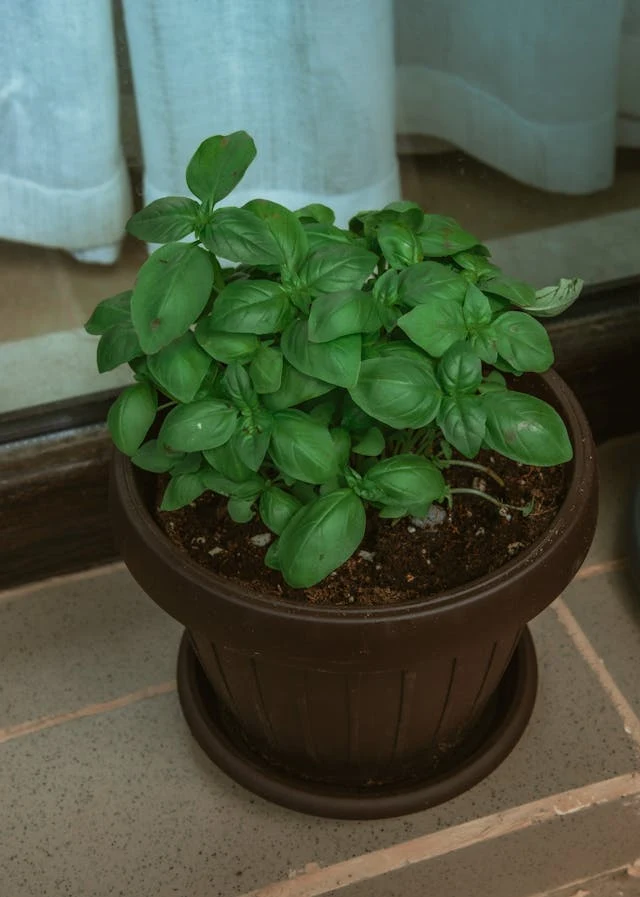
Basil hates sitting in wet soil, so drainage holes aren’t optional, if your pot doesn’t have them, the roots will rot before you notice anything’s wrong. Go with something around 6-8 inches wide at minimum; basil’s roots spread out more than people expect, and a cramped pot stunts the whole plant.
For soil, skip whatever’s sitting in your garden and get a proper potting mix: something light and well-draining, not garden soil, which compacts in containers and suffocates the roots. I mix in a bit of perlite if the potting mix seems dense, just to keep things airy. Terracotta pots are worth considering too, since they wick away extra moisture, which works in basil’s favor if you tend to overwater like I do.
Starting From Seed vs. Buying a Plant
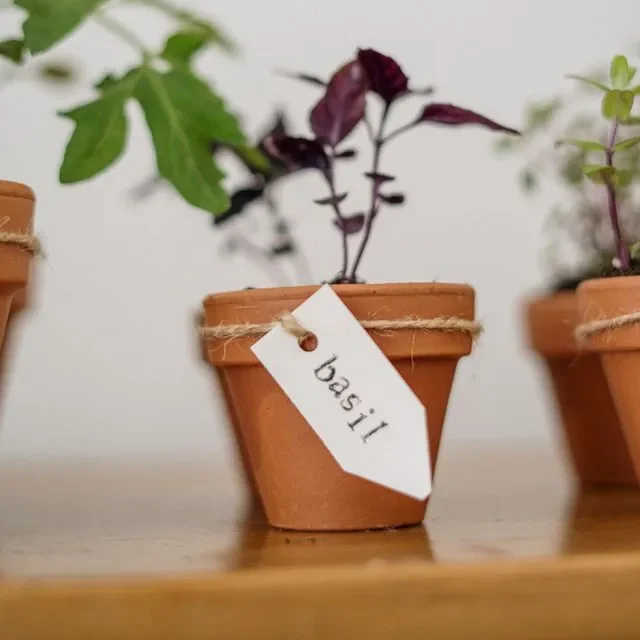
Seeds are cheaper and satisfying if you’re patient, but they take a couple of weeks just to germinate, and you won’t get a real harvest for a month or two after that. I’ve started basil from seed plenty of times and it works fine, you just need to accept the slow start. If you don’t have basil seeds on hand yet, here’s where I buy mine.
Buying a starter plant from a nursery skips all of that. You’re basically buying a head start: something that’s already past the fragile seedling stage and ready to grow. It costs more upfront, but if you want basil on your plate sooner rather than later, it’s the obvious shortcut. Buy starter plant from here.
| Starting From Seed | Buying a Starter Plant | |
|---|---|---|
| Cost | Cheaper | More expensive |
| Time to harvest | 6-8 weeks or more | 2-3 weeks |
| Effort | More hands-on (germination, thinning) | Less work upfront |
| Variety options | Wider selection of basil types | Limited to what the nursery stocks |
| Best for | Patient growers, seed-saving | Quick results, beginners |
Basil Care Guide
Getting basil planted is the easy part. Keeping it alive long enough to actually cook with it is where most people trip up, and it usually comes down to three things: light, water, and temperature. Get those roughly right and the plant does most of the work itself.
Light Requirements — Does Basil Need Full Sun?
Basil wants a lot of light, outdoors that means full sun, and indoors it means the brightest window you’ve got, ideally south-facing. Six hours of direct light a day is the target, and most kitchen windows don’t quite hit that, especially in winter when the sun sits low and weak.
If your plant’s stretching toward the window with long gaps between leaves, that’s it telling you it’s not getting enough. A cheap grow light fixes this fast, I run mine for about 12-14 hours a day on a timer and don’t think about it again. Not glamorous, but it works better than moving the pot around the house chasing sunbeams.
Watering Basil Indoors
Basil wants consistently moist soil, not wet soil, and that distinction kills more plants than people realize. Stick a finger an inch into the soil, if it’s dry, water; if it’s still damp, wait a day. Overwatering is the more common mistake, and it shows up as yellowing leaves and a mushy stem, not wilting like you’d expect.
Water at the base rather than over the leaves, and always let the pot drain fully rather than sitting in a saucer of standing water. I water mine roughly twice a week, though that shifts depending on how warm the room is and how much light it’s getting.
Temperature and Humidity
Basil is a warm-weather plant at heart, so it wants somewhere between 65-80°F, and it sulks if it gets much colder than that. Keep it away from drafty windows in winter and away from AC vents in summer, basil doesn’t handle temperature swings well, and cold air near the leaves can turn them black almost overnight.
Humidity matters more than people expect indoors, especially with dry winter heating running. If the air’s too dry, misting the leaves occasionally helps, or grouping it near other plants to bump up the moisture in the air around it.
How to Harvest Basil
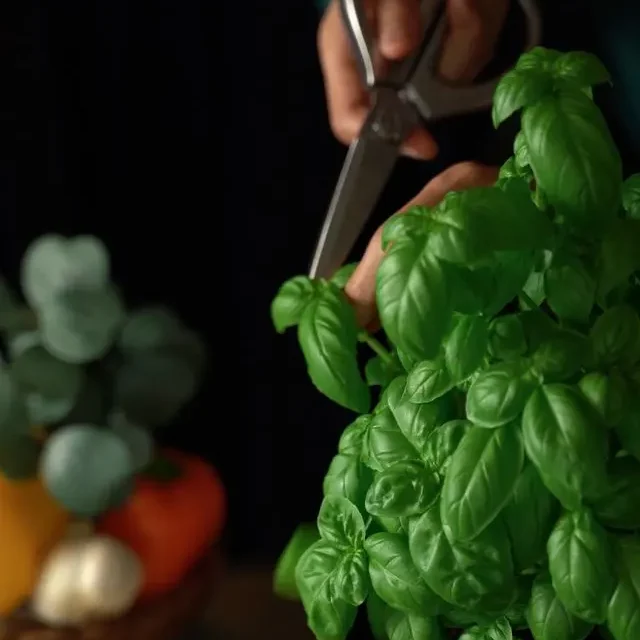
The trick is cutting above a node, that’s the spot where two leaves branch off the stem in opposite pairs. Snip right above one of those points, not just plucking off individual leaves from the top. This tells the plant to send out two new stems from that node instead of one, so instead of a single tall stalk, you end up with a fuller, bushier plant. I usually take the top couple of inches off each stem, never more than about a third of the plant at once.
Does basil grow back after harvesting?
And yes, basil grows back after harvesting, as long as you’re cutting it the right way. Pluck it wrong, just tearing leaves off the top, and the plant gets leggy and stops branching. Cut it right and it keeps regrowing for months. I’ve harvested from the same plant every week or two since spring, and it’s still going. The one thing that’ll stop it for good is letting it flower; once it bolts and puts energy into seeds, the leaves turn bitter and growth slows way down, so pinch off any flower buds the second you spot them.
How to Prune Basil for Bushier Growth
Pruning and harvesting basil are basically the same action, but it helps to think about pruning specifically as maintenance, not just food-gathering.
Same rule as harvesting: always cut above a node, where a pair of leaves branches off the stem. Do this regularly, even when you don’t need the leaves for anything, and the plant keeps branching out instead of shooting up into one long, thin stem. I prune mine every one to two weeks, even during weeks I’m not cooking with it much, skipping it is how a basil plant turns into a scraggly stick with a few leaves on top.
Regular pruning matters more than most people realize:
- Prevents legginess — without it, basil puts all its energy into growing taller instead of fuller, leaving you with a thin, floppy stem and leaves only at the top
- Delays flowering — pruning keeps cutting off the growth points that would eventually turn into flower buds, which buys you more time before the plant bolts and the leaves turn bitter
- Extends the plant’s productive life — a basil plant that’s pruned regularly can keep producing for months, sometimes close to a year, instead of petering out after a few weeks
- Encourages fuller, bushier growth — every cut above a node signals the plant to send out two stems instead of one, so the plant gets denser over time instead of scraggly
Can Basil Be Propagated From Cuttings?
Yes, and it’s honestly the easiest way to get a second basil plant going without buying more seeds or another nursery plant. Take a healthy cutting, stick it in water, and basil roots on its own within a couple of weeks, no rooting hormone, no special setup.
Here’s the process:
- Snip a stem about 4-6 inches long, cutting just below a node, from a healthy part of the plant
- Strip off the lower leaves so nothing sits underwater and rots
- Drop the cutting into a glass of water, making sure at least one node is submerged
- Set it somewhere with bright, indirect light, not direct sun, which can stress a cutting before it’s rooted
- Change the water every couple of days so it doesn’t go cloudy or start smelling off
- Watch for roots, which usually show up within 1-2 weeks
- Once roots are about an inch long, move the cutting into soil
This is also a good way to keep a constant supply of basil going. When one plant starts slowing down or looking tired, you’ve already got a rooted cutting ready to take over.
Why Basil Turns Bitter (And How to Stop It)
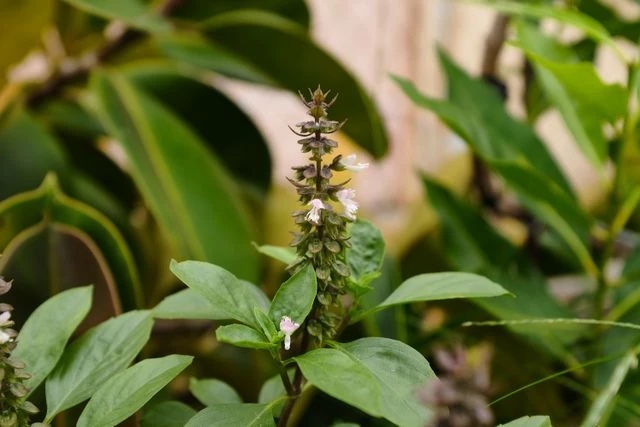
If your basil suddenly tastes bitter, spicy, or almost like licorice, it’s probably flowering. Once basil bolts, it shifts its energy from growing leaves to producing seeds, and that change in the plant’s chemistry is what ruins the flavor. Heat stress and inconsistent watering push it toward bolting faster too, but flowering is the main culprit.
How to spot it early
Look for small buds forming at the tips of the stems, usually where the top leaves meet. They start tiny and easy to miss, then open into small white or purple flowers within a few days. If you catch the buds before they open, you’re still in good shape.
Can you stop it?
Once a stem has actually flowered, you can’t reverse the flavor change on that stem, the chemical shift has already happened. But you can stop it from spreading to the rest of the plant, and you can slow bolting down before it starts.
What to do about it
- Pinch off flower buds the moment you spot them, cutting the stem back to a healthy set of leaves below
- Check your plant every few days once it’s mature, bolting can happen fast, especially in summer heat
- Keep the plant out of intense, direct heat if it’s prone to bolting early
- Water consistently, since drought stress is one of the things that pushes basil to flower sooner
- Harvest and prune regularly, since cutting the plant back keeps redirecting its energy into leaf growth instead of flowers
If a stem’s already flowered and gone bitter, cut it back hard past the flowers. New growth from below usually comes in tasting normal again.
Troubleshooting Guide for Basil
Most dying basil plants come down to one of three things: not enough light, too much water, or a cold draft it’s sitting in. The good news is once you know what to look for, it’s usually pretty obvious which one’s the problem.
Leggy, pale, or yellowing basil
Leggy growth with big gaps between leaves means the plant’s stretching for light it isn’t getting. Pale leaves usually point the same direction, or sometimes to a nitrogen deficiency if the plant hasn’t been fed in a while. Yellowing is different — that’s almost always overwatering, especially if the stem feels soft near the base.
Does basil die in winter?
Indoors, no, not on its own. Basil isn’t frost-hardy and won’t survive outside once temperatures drop, but inside it can keep going year-round if it’s getting enough light. The catch is winter light is weaker and shorter, so plants that were fine all summer sometimes start declining once the days shrink, even with no change in care.
Common indoor mistakes
Overwatering tops the list, usually from watering on a schedule instead of checking the soil first. Low light is next, especially plants kept a few feet back from the window instead of right up against the glass. Drafts from windows or AC vents round it out, stressing the plant in ways that are easy to miss until the leaves start dropping.
Drying, Storing, and Freezing Basil
Got more basil than you can use right now? A few ways to keep it from going to waste:
- Fridge: Wrap loosely in a damp paper towel and store in a bag, good for about a week, though it’s never quite as good as fresh
- Freezing in oil: Blend leaves with olive oil and freeze in ice cube trays, pull one out whenever a recipe needs it
- Freezing in water: Same idea, just plain water instead of oil, if you want to skip the oil
- Drying: Hang small bunches somewhere dry and out of direct light, or use a dehydrator if you want it done faster, takes the flavor down a notch compared to freezing, but it lasts basically forever in a sealed jar
Frequently Asked Questions:
Are basil seeds and chia seeds the same?
No, and they don’t taste the same either, though they can look similar once soaked, both swell up and get a bit gelatinous in water. Basil seeds are from the basil plant and are typically used for propagation, while chia seeds come from a completely different plant and are usually eaten for nutrition.
Can I grow basil from a store-bought grocery store bunch?
Sometimes, if the stems still have some length on them and haven’t been sitting in the fridge for too long. Treat it the same as any other cutting; trim below a node, strip the lower leaves, and put it in water. It’s hit or miss compared to a cutting from a healthy live plant, but worth trying if you’ve already got the bunch anyway.
Does basil need fertilizer indoors?
It helps, especially since potted plants use up the nutrients in their soil faster than you’d think. A diluted liquid fertilizer every 3-4 weeks is usually enough, basil doesn’t need heavy feeding, and overdoing it can actually push growth at the expense of flavor.
Is basil toxic to cats or dogs?
No, basil is considered safe for both. It’s actually on the ASPCA’s non-toxic plant list, so an indoor basil plant isn’t something you need to worry about if you’ve got pets wandering around the kitchen.
Can I grow more than one basil plant in the same pot?
You can, as long as the pot’s big enough to give each plant room to spread its roots, cramming too many into a small container just means they compete for water and nutrients. If you’re growing multiple varieties, separate pots make it easier to keep track of which is which.
What’s the difference between sweet basil and Thai basil for indoor growing?
Sweet basil is the more common variety for indoor kitchens, with the classic flavor most recipes call for. Thai basil has a spicier, slightly anise-like taste and tends to hold up a little better in heat, but both grow the same way indoors and need roughly the same care.