


Picture this: you’re standing in the produce aisle, basket in hand, eyes bouncing between a crisp head of lettuce and a dense, tightly packed cabbage. They look almost interchangeable, both leafy, both green, both quietly insisting they’re the healthier choice. And yet, for some reason, you can never quite decide which one deserves a spot in your cart. Most of us grab whichever green feels familiar. But when it comes to nutrition, familiar doesn’t always mean optimal, and the difference between these two vegetables might genuinely surprise you.
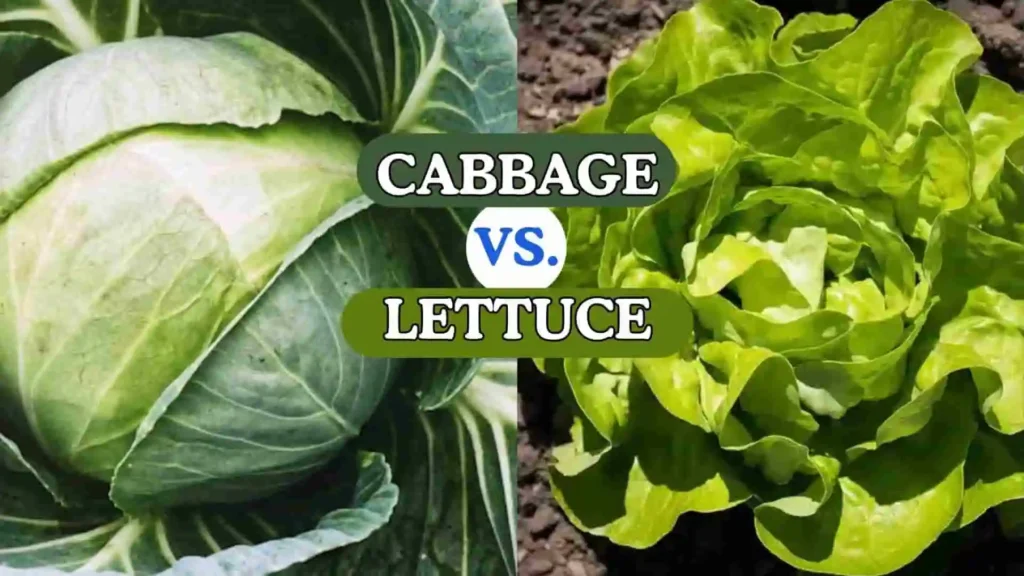
The debate of lettuce vs cabbage is more nuanced than it looks. These two vegetables share shelf space and a similar silhouette, but they part ways quite dramatically when it comes to nutritional profile, culinary versatility, gut health benefits, and even caloric density. Whether you’re building a weight-loss salad, boosting your immune system, or simply trying to eat more whole foods, the cabbage vs lettuce question is one worth answering properly.
In this post, we break down everything, calories, vitamins, fiber, antioxidants, digestive benefits, and real-world uses, so you can make a genuinely informed choice the next time you’re standing in that produce aisle. Let’s dig in.
In This Article
Calories, Nutrients & What’s Actually Inside Each Leaf
Before anything else, let’s answer the two questions people search most: how many calories are in lettuce? Around 15 kcal per 100g, making it one of the lowest-calorie foods you can eat. How many calories are in cabbage? Slightly more, at 25 kcal per 100g, still remarkably low, but notably denser in almost every other nutrient category. That ten-calorie gap is just the beginning of the story.
Nutrition comparison table (per 100g, raw)
| Nutrient | Lettuce (romaine) | Cabbage (green) |
|---|---|---|
| Calories | 15 kcal | 25 kcal |
| Carbohydrates | 2.9 g | 5.8 g |
| Protein | 1.4 g | 1.3 g |
| Fat | 0.2 g | 0.1 g |
| Dietary fiber | 2.1 g | 2.5 g |
| Vitamin C | 4 mg | 36 mg |
| Vitamin K | 102 µg | 76 µg |
| Folate (B9) | 136 µg | 43 µg |
| Vitamin A (RAE) | 436 µg | 5 µg |
| Potassium | 247 mg | 170 mg |
| Iron | 0.97 mg | 0.47 mg |
Data: USDA FoodData Central. Values are approximate and vary by variety and preparation.
Calorie breakdown: lettuce (~15 kcal) vs cabbage (~25 kcal)
At 15 kcal per 100g, lettuce is essentially calorie-free in any practical sense, you’d have to eat an entire large salad bowl to reach 30 calories. Cabbage’s 25 kcal per 100g still makes it one of the most diet-friendly vegetables you can buy, but those extra calories come packaged with meaningfully more fiber and vitamin C.
For anyone tracking calories closely, lettuce wins on raw numbers. But cabbage delivers considerably more nutrition per calorie, so if you’re weighing calorie cost against nutritional return, cabbage is actually the better value. It depends entirely on what you’re optimizing for.
Vitamins & minerals — where each one wins
Neither vegetable dominates across the board. Each has a clear lane, and knowing which one excels at what can genuinely change how you shop.
Lettuce is the stronger choice for:
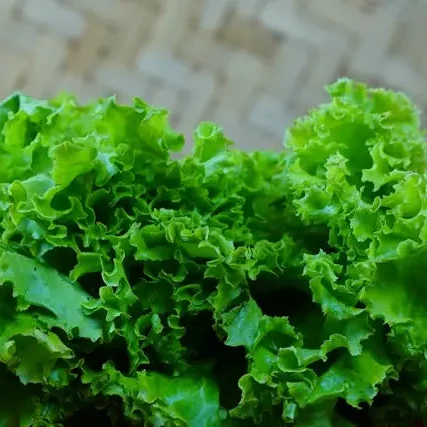
- Vitamin A and beta-carotene — romaine contains over 5,000 µg of beta-carotene per 100g, vital for eye health, skin, and immune function
- Vitamin K — at 102 µg per 100g, it supports blood clotting and bone strength
- Folate (B9) — 136 µg per 100g makes lettuce particularly valuable during pregnancy and for cell repair
- Iron and potassium — higher mineral content than cabbage across the board
Cabbage is the stronger choice for:
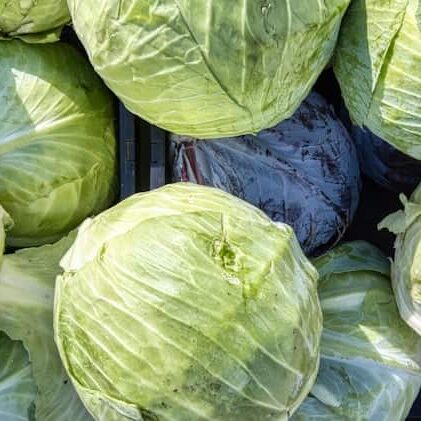
- Vitamin C — 36 mg per 100g versus lettuce’s 4 mg; that’s nearly nine times more, making it a genuine immune booster
- Glucosinolates — sulfur-containing antioxidants linked to cancer prevention, found almost exclusively in cruciferous vegetables like cabbage
- Vitamin B6 — better for metabolism support and brain health
- Gut-friendly compounds — especially when fermented into sauerkraut or kimchi
The standout gap is vitamin C. If immune support or skin health is your goal, cabbage wins by a wide margin. If you need folate or vitamin A, both critical during pregnancy, romaine lettuce is the better pick.
Fiber content comparison
Both vegetables are solid fiber sources relative to their calorie count, but cabbage holds a consistent edge. Lettuce provides around 2.1 g of fiber per 100g; cabbage comes in at 2.5 g. The difference isn’t dramatic in isolation, but it compounds when you consider that cabbage is also more filling, more calorie-dense, and, when fermented, adds probiotic bacteria on top of its fiber content.
Cabbage fiber is predominantly insoluble, which supports bowel regularity, with some soluble fiber that feeds beneficial gut bacteria. Lettuce fiber, while lighter, still contributes to hydration and digestive ease thanks to its extremely high water content of around 95%.
Neither vegetable will single-handedly meet your daily fiber target of 25–38 g, but both earn a regular place in a gut-friendly diet.
Which Is Better for Weight Loss — and Can Cabbage Reduce Belly Fat?
When people search whether lettuce or cabbage is better for weight loss, they’re usually hoping one of them holds a secret advantage. The honest answer is that both vegetables support weight loss through the same core mechanism: they are extremely low in calories, high in water, and filling enough to help you eat less overall. Neither burns fat on its own, but both make sustaining a calorie deficit significantly easier.
The more interesting question is which one does it better, and whether the popular claim that cabbage can reduce belly fat has any real science behind it.
Satiety & water content
Satiety — how full a food makes you feel relative to its calorie cost — is where both of these vegetables genuinely shine, though in slightly different ways.
Lettuce is around 95% water by weight. At 15 kcal per 100g, it has one of the lowest calorie densities of any food on earth. A large bowl of romaine lettuce weighing 200g costs you just 30 calories, yet takes up significant stomach volume and slows the pace of eating. For anyone using a high-volume eating approach, where the goal is to eat large portions while staying in a calorie deficit, lettuce is practically unbeatable.
Cabbage brings a different kind of satiety. At 25 kcal per 100g and around 92% water, it is still extremely low-calorie, but its higher fiber content (2.5 g per 100g versus lettuce’s 2.1 g) means it slows digestion more effectively. Fiber delays gastric emptying, the rate at which your stomach passes food to the small intestine, which keeps you feeling fuller for longer after a meal. Cabbage also takes more chewing, which research consistently links to reduced calorie intake at a sitting.
In practical terms, lettuce fills your plate and your stomach immediately. Cabbage keeps you satisfied for longer after the meal is over. Both are useful tools, and the best choice depends on where in your day you tend to overeat.
A brief note on the cabbage soup diet: this popular short-term plan involves eating large quantities of cabbage-based soup for seven days. Any weight lost on it comes from extreme calorie restriction and water loss, not from anything uniquely fat-burning about cabbage itself. It is not recommended as a sustainable approach, but it does illustrate just how aggressively low-calorie cabbage can be when used as a dietary staple.
The belly fat question — what science says
The idea that cabbage specifically targets belly fat is widespread online, but it requires some unpacking. No single food can spot-reduce fat from a particular area of the body, that is not how human metabolism works. Belly fat, or visceral fat, is reduced through an overall calorie deficit sustained over time, combined with adequate protein, fiber, sleep, and stress management.
That said, cabbage does contain compounds that support the conditions under which visceral fat is more likely to reduce.
Fiber and blood sugar stability. Cabbage’s fiber content helps moderate blood sugar spikes after meals. Chronically elevated insulin levels, which follow repeated blood sugar spikes, are associated with greater visceral fat accumulation. A diet rich in fiber-dense, low-glycemic vegetables like cabbage helps keep insulin more stable, which over time supports a hormonal environment less conducive to belly fat storage.
Glucosinolates and liver function. Cabbage contains glucosinolates, sulfur compounds that support liver detoxification pathways. A well-functioning liver is more efficient at metabolizing fat, including visceral fat. This is a supportive relationship, not a direct fat-burning mechanism, but it is grounded in legitimate physiology rather than marketing.
Anti-inflammatory properties. Chronic low-grade inflammation is strongly associated with visceral fat accumulation and resistance to fat loss. Cabbage, particularly red cabbage, contains anthocyanins and other polyphenols with documented anti-inflammatory effects. Again, this is not the same as directly burning belly fat, but reducing inflammatory load as part of a broader dietary pattern does support more effective fat loss over time.
Lettuce contributes here too, primarily through its high water content (which supports kidney function and reduces water retention around the midsection) and its beta-carotene content, which has antioxidant and anti-inflammatory properties.
The bottom line: cabbage will not reduce belly fat on its own, and neither will lettuce. But as regular components of a calorie-controlled, whole-food diet, both, and particularly cabbage, create conditions that make fat loss more achievable and sustainable.
For anyone making lettuce a daily weight loss staple, growing it at home is a surprisingly simple way to keep a constant supply on hand. See our lettuce grow guide to get started.
Gut Health, Digestion & What Organ Cabbage Is Really Good For
Two of the most searched questions about cabbage are “does cabbage clean your gut” and “what organ is cabbage good for.” Both deserve a straight answer. Cabbage does not detox or cleanse the gut in the dramatic sense that wellness marketing sometimes implies, but it genuinely supports digestive health through fiber, fermentation, and bioactive compounds in ways that are well-documented in nutritional science. And the organ benefits extend well beyond the gut.
Cabbage and the gut microbiome
The gut microbiome, the ecosystem of trillions of bacteria, fungi, and other microorganisms living in your digestive tract, is increasingly understood to influence everything from immune function and mood to metabolic rate and chronic disease risk. What you eat directly shapes which microbial species thrive.
Cabbage supports the gut microbiome through two distinct pathways: raw and fermented.
Raw cabbage and fiber. The 2.5 g of dietary fiber per 100g in raw cabbage functions partly as a prebiotic, meaning it feeds beneficial bacteria rather than being digested by the body itself. Specific fiber types in cabbage, including pectin and other non-starch polysaccharides, are fermented by gut bacteria into short-chain fatty acids (SCFAs) such as butyrate, propionate, and acetate. Butyrate in particular is the primary energy source for colonocytes, the cells lining your colon, and plays a critical role in maintaining the intestinal barrier. A healthy intestinal barrier reduces intestinal permeability, commonly referred to as leaky gut, which is linked to systemic inflammation and a range of chronic conditions.
Fermented cabbage: kimchi and sauerkraut. This is where cabbage’s gut credentials become genuinely impressive. When cabbage is lacto-fermented, the process used to make both sauerkraut and kimchi, the naturally occurring bacteria on the cabbage leaves, primarily Lactobacillus species, consume the sugars and produce lactic acid. The result is a food rich in live probiotic bacteria, additional organic acids, and enhanced bioavailability of certain nutrients.
A 2021 study published in Cell by researchers at Stanford University found that a diet high in fermented foods, including kimchi and sauerkraut, increased microbiome diversity and reduced markers of immune activation compared to a high-fiber diet alone. Microbiome diversity is consistently associated with better metabolic health, lower rates of obesity, and improved resilience against pathogenic bacteria.
Sauerkraut also provides vitamin C (produced during fermentation), B vitamins, and in some preparations, meaningful amounts of vitamin K2, a form of vitamin K linked to cardiovascular and bone health that is largely absent from raw cabbage.
So does cabbage clean your gut? Not in any literal sense. But regular consumption of both raw and fermented cabbage genuinely nourishes the gut lining, feeds beneficial bacteria, and supports a more diverse and resilient microbiome. That is as close to “cleaning” the gut as nutrition science actually gets.
Liver, heart — other organs cabbage supports
The gut is not the only organ that benefits from regular cabbage consumption. The evidence for liver and cardiovascular support is credible and worth understanding.
The liver. Cabbage belongs to the cruciferous vegetable family, which includes broccoli, Brussels sprouts, kale, and cauliflower. Cruciferous vegetables are uniquely rich in glucosinolates, sulfur-containing compounds that, when chopped or chewed, are converted by the enzyme myrosinase into biologically active metabolites including sulforaphane and indole-3-carbinol.
These compounds activate phase II detoxification enzymes in the liver, specifically a family called glutathione S-transferases, which help neutralize and excrete carcinogens, excess hormones, and other toxic compounds. A review published in Nutrients (2018) noted that cruciferous vegetable intake was associated with upregulation of these hepatic detoxification pathways in both animal and human studies. This is the legitimate biological basis for the claim that cabbage supports liver health, not a vague cleansing effect, but a specific enzymatic mechanism.
Indole-3-carbinol, found at meaningful levels in cabbage, also supports estrogen metabolism in the liver, helping the body clear excess estrogen efficiently. This has implications for hormonal balance and has been studied in the context of hormone-sensitive cancers, though the research in humans is still developing.
The heart. Red and purple cabbage varieties are particularly high in anthocyanins — the same pigments responsible for their color. Anthocyanins are flavonoid antioxidants that have been associated in observational studies with reduced LDL oxidation, lower blood pressure, and improved arterial flexibility. A large prospective study from Harvard’s Nurses’ Health Study found that higher anthocyanin intake was associated with a significantly reduced risk of myocardial infarction in young and middle-aged women.
Cabbage also contains potassium (170 mg per 100g), which supports healthy blood pressure by counteracting the effects of sodium, and vitamin K, which plays a role in preventing arterial calcification.
The thyroid — a nuance worth noting. Raw cabbage contains goitrogens, compounds that can interfere with iodine uptake and thyroid hormone production when consumed in very large quantities. For most people eating cabbage as part of a varied diet, this is not a concern. However, individuals with existing thyroid conditions or iodine deficiency should be aware that very high raw cabbage intake could be counterproductive. Cooking largely neutralizes goitrogenic compounds.
Does lettuce help digestion too?
Lettuce is not the gut-health powerhouse that cabbage is, but it makes a genuine and often underappreciated contribution to digestive wellbeing.
Its primary digestive benefit is hydration. At approximately 95% water, lettuce contributes significantly to overall fluid intake, and adequate hydration is fundamental to healthy bowel function, water softens stool, supports peristalsis, and helps prevent constipation. For people who struggle to drink enough fluids, high-water-content foods like lettuce make a meaningful difference.
Lettuce also provides around 2.1 g of fiber per 100g, which, while slightly lower than cabbage, still supports regular bowel movements and feeds gut bacteria. Romaine lettuce in particular contains a milky latex compound called lactucarium in its stems, which has historically been associated with mild sedative and digestive-soothing properties, though robust human clinical evidence remains limited.
One area where lettuce does stand out is folate, at 136 µg per 100g, it supports rapid cell division in the gut lining, where cells turn over approximately every three to five days. Adequate folate is essential for maintaining the integrity of that lining.
Lettuce does not ferment well and offers no probiotic pathway. It also lacks the glucosinolates that make cabbage particularly valuable for liver support. But as a daily digestive aid, gentle, hydrating, and genuinely fiber-contributing, it earns its place on the plate alongside, rather than instead of, cabbage.
Can You Use Cabbage Instead of Lettuce — And Is One Safer to Eat?
The short answer is: yes, you can substitute cabbage for lettuce in most situations, and from a food safety standpoint, cabbage has a meaningfully cleaner track record. Here is why, and how to make the swap work in your kitchen.
Food safety — what the data shows
Lettuce has a well-documented history of foodborne illness outbreaks, particularly involving E. coli O157:H7 and Listeria monocytogenes. The US Centers for Disease Control and Prevention (CDC) has identified leafy greens, predominantly romaine and iceberg lettuce, as the single largest source of foodborne illness outbreaks linked to produce in the United States over the past two decades. A 2018 romaine lettuce outbreak linked to irrigation water contamination in Yuma, Arizona, infected over 200 people across 36 states and resulted in five deaths.
The structural reason lettuce is particularly vulnerable comes down to its anatomy. Lettuce leaves are thin, loosely arranged, and highly porous, they absorb contaminated water easily and their large surface area relative to their mass gives pathogens more contact points. Once E. coli or Listeria penetrates the leaf tissue itself, washing cannot remove it. The CDC and FDA both note that pre-washed bagged lettuce does not eliminate contamination risk, and that cooking is the only reliable kill step, which lettuce rarely undergoes.
Cabbage presents a different structural profile. Its leaves are thick, tightly packed, and waxy on the outer surface, all characteristics that make bacterial penetration harder. The dense head formation also means inner leaves are physically protected from environmental contamination during growing. Outer cabbage leaves, which bear the most exposure, are typically removed and discarded before sale or use.
Cabbage has been involved in foodborne illness outbreaks, most notably through fermented products and pre-shredded coleslaw mix, but the frequency and scale of cabbage-linked outbreaks is substantially lower than those associated with lettuce. A 2013 analysis in the journal Emerging Infectious Diseases ranked leafy vegetables (predominantly lettuce) as responsible for the greatest number of outbreak-associated illnesses among all food commodities in the US between 1998 and 2008.
This does not mean lettuce is dangerous to eat, hundreds of millions of people consume it safely every day. It means that if food safety is a particular concern for you, if you are immunocompromised, pregnant, elderly, or cooking for young children, cabbage is the more robust choice, and washing whole cabbage heads under running water while removing outer leaves is a straightforward and effective safety measure.
Practical swaps in everyday cooking
Cabbage can replace lettuce in more situations than most people expect. The key is understanding that cabbage brings more texture, a slightly more assertive flavor, and considerably more structural integrity, all of which work in its favor in certain applications and require minor adjustments in others.
Tacos and wraps. This is the easiest and most natural swap. Shredded green or red cabbage is already the default topping in fish tacos, Korean BBQ wraps, and Vietnamese bánh mì for good reason, it holds its crunch under warm proteins and wet sauces far longer than lettuce does. Lettuce wilts within minutes of contact with heat or acidic dressings; cabbage holds its texture for the duration of the meal. Use finely shredded raw cabbage wherever you would use shredded iceberg or romaine.
Salads. Raw cabbage works well as a salad base, particularly when paired with bold, acidic dressings. Because it is denser than lettuce, it benefits from either being sliced very thinly or being lightly massaged with a small amount of salt or acid (lemon juice or vinegar) for five minutes before serving, this softens the cell walls and makes it noticeably more tender and palatable. It holds dressed salads in the fridge overnight without going soggy, which lettuce cannot do.
Sandwiches and burgers. A crisp cabbage leaf, particularly from the inner layers of a green or savoy cabbage, makes an excellent sandwich layer, it adds crunch, doesn’t release water into the bread the way lettuce sometimes does, and holds its structure under warm ingredients. Savoy cabbage leaves are softer and closer to butter lettuce in texture, making them the most seamless substitute in this context.
Lettuce cup substitutes. Large cabbage leaves, particularly from savoy or napa cabbage, work well as lettuce cup replacements for Asian-style minced meat fillings. They are slightly more rigid, which actually makes them easier to handle and eat without spilling.
Soups and cooked dishes. This is where cabbage clearly outperforms, it holds its structure in braises, stir-fries, and soups in a way that lettuce cannot. If a recipe calls for wilting greens into a warm dish, cabbage is almost always the better functional choice.
When NOT to substitute
Cabbage is not a universal replacement, and there are situations where the swap does not work well.
Delicate salads. When a recipe relies on the light, almost neutral backdrop of butter lettuce or baby gem leaves, a classic French vinaigrette salad, a wedge salad, or a salad where the greens are meant to be subtle and the toppings are the focus, cabbage’s density and more pronounced flavor can overwhelm the dish. The textural contrast is too significant.
Raw applications where tenderness matters. Young children, elderly people, or anyone with dental sensitivities may find raw cabbage difficult to chew, particularly green or red varieties. In these cases, well-washed butter lettuce or romaine remains the more practical and comfortable option.
Flavor-sensitive dishes. Cabbage has a mild but detectable sulphurous note, particularly when it is cut and left to sit. In very simply dressed salads where the green is supposed to taste fresh and neutral, this can be noticeable. If you are finding substituted cabbage tastes slightly off in a simple salad, a squeeze of lemon juice and a short resting time after dressing usually resolves it.
Dishes calling for wilted lettuce. Some recipes, particularly certain British and Chinese preparations, call specifically for quickly wilted lettuce, which produces a silky, slightly bitter result. Cabbage does not replicate this texture when cooked briefly; it requires considerably longer cooking to soften and behaves differently once heated.
The rule of thumb is straightforward: anywhere structural integrity, crunch, and longevity matter, cabbage is the better choice. Anywhere delicacy, neutrality, and tenderness are the point, lettuce holds its ground.
Taste, Texture & How to Actually Cook With Each
If nutrition is the reason you choose between these two vegetables, taste and texture are the reason you keep coming back to one over the other. Lettuce and cabbage eat like completely different foods, one is mild, cool, and delicate; the other is earthy, sturdy, and assertive. Understanding where each one performs best is what turns a healthy eating intention into a habit that actually sticks.
Raw vs cooked performance
Lettuce is almost exclusively a raw vegetable, and that is not a limitation — it is its identity. The appeal of lettuce is its freshness: a clean, watery crunch and a flavor so mild it functions as a neutral canvas for whatever dressing, protein, or topping shares the bowl. Romaine has the most structure of the common varieties, with a slightly bitter rib and a satisfying snap. Butter lettuce is softer and almost sweet. Iceberg is the crunchiest and most water-forward, with very little flavor of its own.
Heat is lettuce’s enemy. Even brief contact with a warm ingredient begins wilting the leaves within seconds, and cooking lettuce directly produces something most people find unappealing, slimy, bitter, and structurally collapsed. The few exceptions (quickly wilted lettuce in certain Chinese and British preparations) are niche enough that for practical purposes, lettuce lives in the cold and raw world.
Cabbage is the opposite kind of vegetable entirely. Raw, it is crunchy, dense, and slightly peppery with a faint sulphurous edge that softens considerably once it is dressed, salted, or fermented. It can be shredded finely for slaws and salads, left in larger pieces for wraps, or kept as whole leaves for cups and rolls. Massaging shredded raw cabbage with a little salt for a few minutes before using it breaks down its cell walls and produces something noticeably more tender and flavorful, a step worth doing for any raw preparation where texture matters.
Cooked, cabbage transforms. Gentle braising makes it yielding and sweet. Stir-frying over high heat keeps it crisp at the edges while softening the interior. Roasting caramelises its natural sugars and produces deeply savoury, slightly charred leaves that taste nothing like the raw version. Long, slow cooking in soups and stews makes it almost silky, with a mild, comforting flavour that absorbs surrounding seasonings readily. Unlike lettuce, cabbage improves with most forms of heat rather than collapsing under them.
Best dishes for each
Lettuce excels in:
Classic salads. Romaine is the backbone of a Caesar salad for good reason, its structure holds creamy dressing without immediately wilting, and its mild bitterness cuts through richness. Butter lettuce works beautifully in lightly dressed salads where tenderness is the point. Iceberg delivers crunch and coolness in a wedge salad with blue cheese dressing, and nothing else quite replicates that particular eating experience.
Wraps and lettuce cups. Large, pliable lettuce leaves, particularly butter lettuce and romaine, make clean, low-carb wraps for minced chicken, prawn, or tofu fillings. The neutral flavor keeps the focus entirely on the filling.
Sandwiches and burgers. A leaf of crisp romaine or iceberg adds freshness and crunch to a sandwich without competing with other ingredients. Its mild flavor means it works with virtually any filling combination.
Garnishes and fresh toppings. Shredded iceberg on tacos, pulled pork, or gyros provides textural contrast and a cooling effect against spiced, warm proteins, a role it performs better than cabbage in this specific context because of its lighter flavour.
Cabbage excels in:
Slaws. Raw cabbage is the foundation of coleslaw precisely because it does not go limp under dressing the way lettuce does. A cabbage slaw dressed an hour before serving is better than one dressed immediately, the acid and salt soften it slightly and the flavors meld. Red cabbage slaws with apple and caraway, or Asian-style slaws with sesame and rice vinegar, are among the most versatile and crowd-pleasing side dishes in any cook’s repertoire.
Stir-fries. Shredded green or napa cabbage is one of the best stir-fry vegetables available. It takes on wok char at high heat while retaining some bite, absorbs soy sauce, ginger, and garlic beautifully, and adds bulk and nutrition without overpowering other ingredients. Add it toward the end of cooking to preserve texture.
Tacos and Korean BBQ. Finely shredded cabbage under grilled fish, carnitas, or Korean beef bulgogi holds its crunch through an entire meal in a way shredded lettuce simply cannot. It also provides a structural contrast to rich, fatty proteins that makes each bite more balanced.
Braised and stuffed dishes. Whole cabbage leaves stuffed with spiced meat and rice, then braised in tomato sauce, is a dish found across Eastern European, Middle Eastern, and Asian cuisines for good reason, the leaves soften into something almost tender and silky while holding their shape well enough to encase the filling. No lettuce variety can do this.
Soups and stews. Cabbage is one of the most useful soup vegetables in any cuisine. It adds body, absorbs flavor from the broth, and holds its texture through extended cooking times. It features in everything from Irish colcannon and Polish bigos to Korean doenjang jjigae and Italian ribollita.
Fermented preparations. Sauerkraut and kimchi extend cabbage’s usefulness far beyond any fresh vegetable, producing a condiment, side dish, and gut-health food all in one that adds acidity, umami depth, and probiotic value to everything it touches.
Which Is Better — Lettuce or Cabbage? Our Verdict
After comparing calories, nutrients, gut health, food safety, and cooking performance, the honest verdict on lettuce vs cabbage is this: there is no universal winner. Both earn a place in a healthy diet, the better question is which one suits your specific goal, and that has a clear answer.
Choose lettuce if…
- You are focused on maximum calorie control — at 15 kcal per 100g, it is unbeatable for volume eating
- You need more folate or vitamin A, particularly relevant during pregnancy or for eye health
- You want a neutral, mild base that lets other ingredients do the talking
- Speed matters — lettuce needs no prep beyond washing and tearing
Choose cabbage if…
- You want more nutrition per calorie — more vitamin C, fiber, and gut-supporting compounds for only a modest calorie increase
- You are cooking rather than eating raw — cabbage stir-fries, braises, and soups in ways lettuce cannot
- Gut health is a priority — its prebiotic fiber and fermented forms (sauerkraut, kimchi) make it the stronger digestive choice
- You want food that lasts — a cabbage head keeps for one to two weeks versus lettuce’s few days
The cabbage vs lettuce debate ultimately comes down to what you are asking the vegetable to do. The best-stocked kitchen keeps both — and knows exactly when to reach for which.
If this kind of head-to-head comparison is useful to you, we apply the same approach to other popular produce debates — including cherry tomatoes vs grape tomatoes, which divides opinion more than you might expect.
Frequently Asked Questions
Is lettuce or cabbage better for weight loss?
Both support weight loss through low calories and high water content, but they work differently. Lettuce at 15 kcal per 100g is better for volume eating and immediate fullness. Cabbage at 25 kcal per 100g keeps you fuller for longer thanks to higher fiber. For sustainable fat loss, cabbage has a slight edge overall.
Can cabbage reduce belly fat?
Cabbage cannot spot-reduce belly fat — no single food can. However, its fiber content helps stabilise blood sugar and insulin levels, its anti-inflammatory compounds reduce visceral fat-promoting inflammation, and its glucosinolates support liver function. As part of a calorie-controlled diet, cabbage creates conditions that make belly fat loss more achievable.
Does cabbage clean your gut?
Not in any literal detox sense, but cabbage genuinely supports gut health through multiple pathways. Its prebiotic fiber feeds beneficial bacteria, its glucosinolates support liver detoxification, and fermented cabbage — sauerkraut and kimchi — introduces live probiotic bacteria that improve microbiome diversity. Regular consumption meaningfully supports a healthier digestive environment.
What organ is cabbage good for?
Cabbage benefits several organs. It supports the gut through prebiotic fiber and fermented forms, the liver through glucosinolates that activate detoxification enzymes, and the heart through anthocyanins and potassium that reduce blood pressure and LDL oxidation. Red cabbage in particular offers the broadest range of organ-level benefits.
Is cabbage safer than lettuce?
From a food safety standpoint, yes. Lettuce — particularly romaine — has a well-documented history of E. coli and Listeria outbreaks due to its thin, porous leaves that absorb contaminated water. Cabbage’s thick, tightly packed leaves are harder for bacteria to penetrate, and outer leaves are typically removed before eating, making it the lower-risk choice.
How many calories are in lettuce vs cabbage?
Lettuce contains approximately 15 kcal per 100g, making it one of the lowest-calorie foods available. Cabbage contains around 25 kcal per 100g — still extremely low, but with a higher nutritional return per calorie. For pure calorie minimisation, lettuce wins. For nutrition per calorie, cabbage is the better value.
Can you use cabbage instead of lettuce?
Yes, in most situations. Cabbage works well as a lettuce substitute in tacos, slaws, stir-fries, sandwiches, wraps, and salads. It holds its crunch longer under dressings and warm ingredients. The swap works less well in delicate salads or dishes where a mild, tender green is specifically needed.
Which has more fiber — lettuce or cabbage?
Cabbage contains approximately 2.5g of fiber per 100g compared to lettuce’s 2.1g. The difference is modest in isolation, but cabbage fiber is more effective at slowing digestion and feeding gut bacteria. Fermented cabbage adds further digestive benefit through live probiotic cultures on top of its base fiber content.
Is cabbage anti-inflammatory?
Yes, particularly red and purple varieties. Cabbage contains anthocyanins, glucosinolates, and vitamin C — all compounds with documented anti-inflammatory properties. Chronic inflammation is closely linked to visceral fat accumulation, metabolic disease, and digestive issues, making regular cabbage consumption a meaningful part of an anti-inflammatory diet.
Which is better for gut health — lettuce or cabbage?
Cabbage is considerably better for gut health. It contains prebiotic fiber that feeds beneficial bacteria, glucosinolates that support liver detoxification, and can be fermented into sauerkraut or kimchi — both rich in live probiotic cultures. Lettuce contributes hydration and some fiber but lacks cabbage’s depth of digestive and microbiome benefits.