
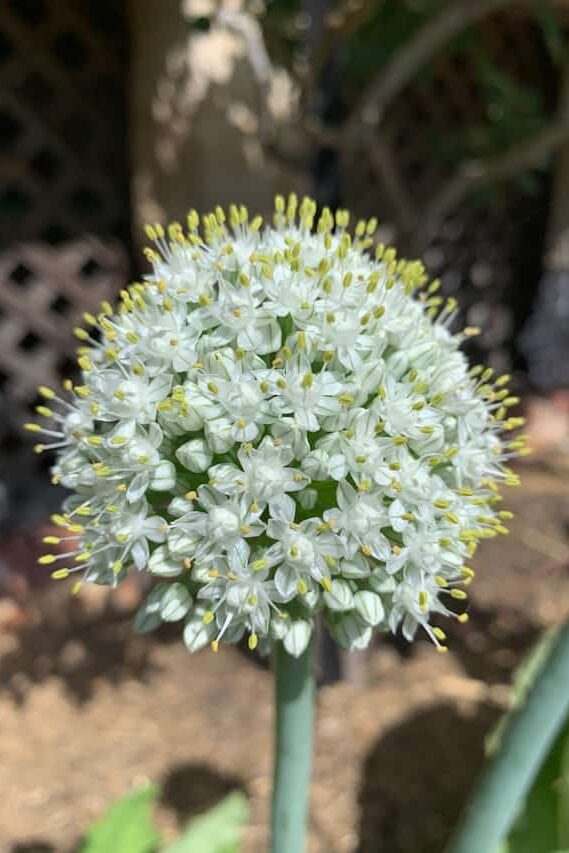
If you’ve ever grown green onions and left them just a little too long, you’ve probably noticed something surprising, a tall stalk shooting upward, topped with a delicate round cluster of tiny white flowers. It looks almost too pretty to pull up. But should you? Are those flowers actually edible, or does flowering mean your green onions have gone past their prime?
The answer, as with most things in the garden, is: it depends. Green onion flowers (the result of a process called bolting) aren’t a gardening disaster. In fact, they open up a whole new set of possibilities, from garnishing dishes to collecting seeds for your next planting cycle. At the same time, flowering does signal a shift in the plant’s energy and flavor that every home grower should understand.
In this post, we’ll break down exactly what happens when green onions flower, whether those blooms are safe and tasty to eat, how you can put them to use in the kitchen and garden, and whether bolting is something you should try to prevent. Whether you’re a seasoned kitchen gardener or someone who just found a surprise flower stalk in a windowsill pot, this guide has you covered.
Just getting started with growing your own green onions? Before your plants even think about flowering, you’ll want to nail the basics of getting them growing in the first place. Check out our complete guide: How to Grow Green Onions Indoors from Scraps or Seeds (Complete Guide) , everything you need to know to grow a thriving batch from scratch, right on your kitchen counter.
In This Article
Why Do Green Onions Flower?
If your green onions have suddenly sent up a tall center stalk with a flower bud at the top, your plant has bolted, and understanding why this happens starts with understanding the plant itself.
Green onions belong to the onion family, which are biennial crops by nature. In the wild, their life cycle unfolds over two years: the first year is dedicated to leafy growth and building energy reserves, while the second year is when the plant flowers, sets seed, and completes its life cycle. Flowering is essentially the plant’s way of reproducing before it dies.
The problem is, your green onions don’t always wait for year two.
When Bolting Happens Early
When green onions flower in their first year of growth, that’s what gardeners call bolting, and it’s almost always triggered by stress. The plant interprets certain environmental cues as a signal that its survival is at risk, so it rushes to flower and produce seeds before it’s too late.
The most common stress triggers include:
- Temperature extremes — a sudden heat wave or an unexpected cold snap can send the plant into panic mode
- Inconsistent watering — going from too dry to too wet (or vice versa) disrupts the plant’s rhythm
- Sudden temperature swings — even a brief stretch of cold weather followed by warmth can confuse the plant
This last point is particularly important for indoor and container growers. A green onion sitting near a drafty window or an air conditioning vent may experience rapid temperature fluctuations that mimic the transition between seasons, essentially tricking the plant into thinking it has lived through two full growing cycles. Once the plant “believes” it has already completed its first year, it shifts its energy away from leaf production and toward flowering.
The result? Tougher, more pungent leaves, a hollow center stalk, and a flower head working its way skyward.
What Color Are Green Onion Flowers? (The Most Common Colors Explained)
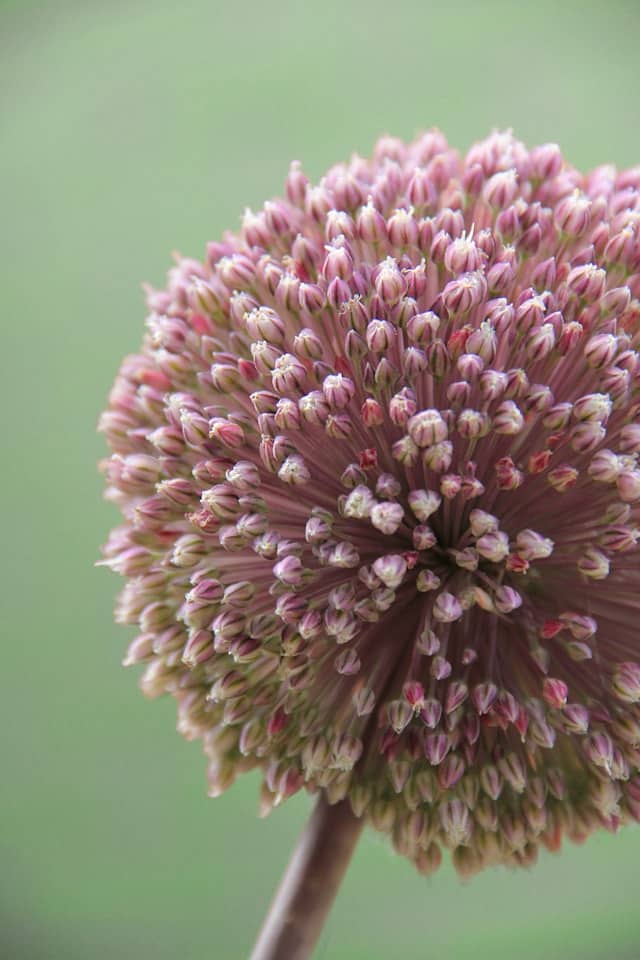
Onion flower heads can come in purple, pink, white, and lavender — and each color has its own personality, variety, and flavor profile. Here’s what you’re most likely to find in home gardens.
White — The Most Common in Kitchen Gardens
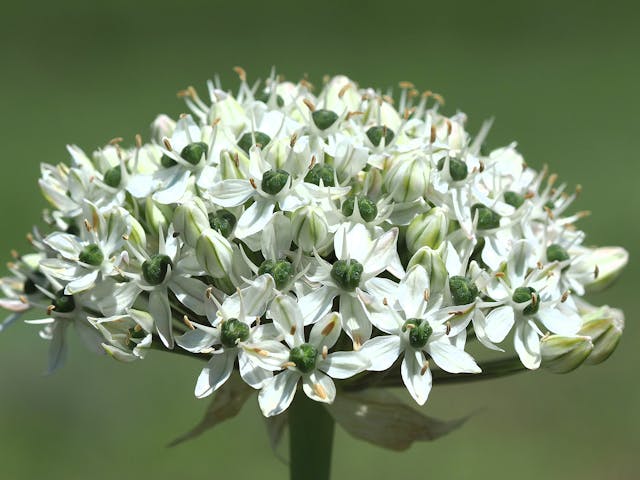
The color you’ll most likely see when standard green onions or bunching onions bolt. White flowers are small, delicate, and clustered in a globe at the top of a tall stalk. They have the mildest flavor of all, making them the best choice for eating raw or using as a garnish.
Purple / Violet — The Most Common in Gardens
Most alliums you’ll see in gardens are purple. Bold, globe-shaped, and hard to miss these appear most often on chives, wild onions, and ornamental alliums. They carry a stronger, more pungent flavor than white flowers but are still fully edible.
Pink / Lavender — The Softest Look
Common on nodding and Japanese onion varieties. Unlike the tight round globe of purple types, pink-flowered varieties tend to produce flopping mop heads in pretty shades of pink and purple. Lavender varieties are softer still, with flattened, loosely clustered blooms appearing in mid-to-late summer.
Burgundy / Two-Toned — The Dramatic One
Most likely a drumstick allium. These start out two-toned burgundy-green, then open into deeper color by early July. They’re more ornamental than culinary but still edible and stunning in dried arrangements.
| Color | Most Common On | Flavor | Bloom Time | Best Use |
|---|---|---|---|---|
| White | Kitchen green onions, bunching onions | Mildest | Spring–Summer | Eating, garnishing |
| Purple | Chives, wild onions, ornamental alliums | Strong | Late Spring–Early Summer | Garden display, garnishing |
| Pink/Lavender | Nodding onion, Japanese onion | Mild–Medium | Mid–Late Summer | Cottage gardens, garnishing |
| Burgundy | Drumstick allium | Medium | Early Summer | Ornamental, dried arrangements |
How Long Until Green Onions Flower?
There’s no single answer to this question, the timeline from planting to flowering depends heavily on growing conditions, variety, and whether your plant decides to bolt ahead of schedule. Here’s what to generally expect.
The Typical Timeline
Under normal, stable growing conditions, green onions follow their natural biennial rhythm. Flowering typically occurs in the second year of growth, once the plant has completed a full cycle of vegetative development and is ready to shift its energy toward reproduction. If you’re growing green onions as an annual crop, harvesting within a few weeks to a few months of planting, you’ll likely never see a flower at all.
However, if plants are left in the ground or in their container beyond the first growing season, or if they’re grown from sets or transplants that already have some age to them, the flowering stage can arrive sooner than you’d expect.
Factors That Speed Up Flowering
Certain conditions can fast-track the bolting process, pushing your green onions to flower well ahead of schedule:
- Heat — sustained high temperatures signal the plant that the growing season is coming to an end, prompting it to reproduce quickly
- Drought — water stress is one of the most reliable bolting triggers, as a struggling plant prioritizes seed production over leaf growth
- Cold snaps — a brief but sharp drop in temperature, even for just a few days, can mimic the end of a growing season and flip the plant’s internal switch toward flowering
- Age of the planting material — if you’re regrowing from older scraps or using bulbs that have already been through a cold period, the clock may already be running faster than you realize
Any combination of these factors compounds the effect. A green onion that experiences a cold spell followed by a heat wave is under significant stress from two directions at once, and bolting in that scenario is very likely.
The Early Warning Sign to Watch For
The good news is that bolting doesn’t happen overnight, your plant gives you a heads-up if you know what to look for. The earliest and most reliable sign is the appearance of a teardrop-shaped stalk tip emerging from the center of the plant. Unlike the flat, hollow leaves you’re used to seeing, this central shoot is round, firm, and slightly thicker than the surrounding foliage.
Once you spot that distinctive teardrop shape, the flower head is already forming inside. You still have a window to harvest the plant at peak flavor before the energy fully shifts, but that window closes quickly. Keep a close eye on it, because within days that stalk will elongate, the tip will open up, and the flowering process will be well underway.
Are Green Onions Still Good After They Flower?
Spotting a flower stalk on your green onions might feel like a loss, but it doesn’t mean your harvest is ruined. The short answer is yes, bolted green onions are perfectly edible. The longer answer is that the eating experience changes, and how you handle them from this point forward makes all the difference.
What Changes After Bolting
Once a green onion flowers, the plant’s priorities shift entirely. Instead of putting energy into producing tender, flavorful leaves, it redirects everything toward the flower and seed development. That biological shift has a noticeable impact on the parts you’d normally eat.
The green stalks tend to become tougher and more fibrous as the plant matures past the flowering stage, what was once a crisp, mild bite can turn chewy and harder to enjoy raw. Alongside the texture change, the flavor often intensifies or takes on a slightly bitter edge, a far cry from the mild, fresh taste you’d expect from a young green onion.
That said, neither of these changes makes the plant unsafe or unpleasant in the right context. Cooked dishes, stir-fries, soups, frittatas, can handle that bolder, more assertive flavor very well. And if the bitterness is too much to enjoy as-is, bolted green onions make an excellent base for chutney, where the strong flavor mellows beautifully with cooking, vinegar, and spices.
The One Thing You Shouldn’t Do
What you want to avoid is leaving bolted onions sitting in the ground or in their container while you harvest the rest of your crop on your usual schedule. Bolted plants deteriorate faster than their unbolted neighbors, and that spoilage can spread.
A simple rule to follow: harvest bolted onions first, before you touch the others, Pull them up, use them right away or process them into something shelf-stable like chutney, and clear that space for a fresh planting. Treat it less like a failure and more like an early harvest, one that just calls for a slightly different recipe.
What to Do When Green Onions Flower
Discovering that your green onions have bolted doesn’t leave you with just one option , in fact, you have three solid paths forward depending on how much time you have, what’s in your kitchen, and how much growing space you want to reclaim. Here’s how to make the most of each one.
Harvest Immediately and Use Fresh
The simplest response to bolting is also the most satisfying: pull them up and cook with them right away. Freshly harvested bolted green onions still have plenty of flavor, just a bolder, more pungent version of what you’re used to. They work beautifully in anything that involves heat, since cooking softens the tougher texture and mellows the intensity.
Think soups, stews, stir-fries, egg dishes, or slow-cooked chutneys. If the stalks feel too fibrous to enjoy raw, treat them the way you’d treat a mature leek, as something to cook with rather than garnish with.
Preserve Them for Later
If you have more bolted onions than you can use in one or two meals, preserving is a smart way to avoid waste and build up a useful pantry staple.
- Chop and freeze — slice the stalks into usable pieces, spread them on a tray to freeze individually, then transfer to a freezer bag. They won’t retain their crisp texture after thawing, but they’re perfect for dropping straight into hot dishes from frozen
- Dehydrate into onion powder — slice the stalks thinly, dehydrate at a low temperature until completely dry, then blitz in a spice grinder. Homemade onion powder from bolted green onions has a surprisingly deep, complex flavor
- Freeze-dry for long-term storage — if you have access to a freeze dryer, this is the gold standard for preserving both flavor and nutritional value over an extended period. Freeze-dried green onion pieces rehydrate well and keep for years when stored properly
Whichever method you choose, make sure to process the onions promptly after harvesting rather than letting them sit, bolted plants deteriorate quickly once pulled.
Cut the Flower Stalk to Buy More Time
Not ready to harvest just yet? Snip the flower stalk off at the base as soon as you spot it. Removing it stops the plant from redirecting energy into seed production, leaving more available for the bulb and remaining foliage.
The plant won’t fully reverse its bolting, but cutting the stalk does slow the decline and buys you a little extra time before you need to harvest. Think of it as hitting the pause button, useful when you want to stagger your pulls or simply aren’t ready to deal with the whole crop at once.
How to Collect Seeds from Green Onion Flowers
If your green onions have bolted, there’s a silver lining worth taking seriously, those flower heads are full of seeds, and collecting them is one of the most rewarding things a home grower can do. A single flower head can yield dozens of seeds, giving you an entirely free supply for your next planting cycle.
Wait for the Right Moment
Timing is everything with seed collection. Harvesting too early means the seeds haven’t fully matured and won’t germinate reliably. You’re looking for the flower head to transition from its soft, white blooming stage to something dry and papery. The tiny seed pods will turn from green to black, and the flower head as a whole will look visibly dried out and slightly drooping.
A good rule of thumb: if the seeds fall out easily when you gently rub the flower head between your fingers, they’re ready.
How to Harvest the Seeds
On a dry, calm day, avoiding rain or high humidity, which can introduce moisture and cause mold, cut the flower stalks near the base and place them head-first into a paper bag. Give the bag a firm shake to dislodge the seeds, or rub the flower heads between your palms directly over the bag. You’ll notice the small, angular black seeds collecting at the bottom.
Avoid plastic bags at this stage, as they trap moisture and can cause the seeds to spoil before you’ve even stored them.
Cleaning and Drying
Tip the contents of the bag onto a flat surface and gently blow away the lighter chaff, the dry floral debris that comes off with the seeds. What you want to keep are the dark, firm seeds. Spread them out on a paper towel or plate and leave them somewhere warm and well-ventilated for a few days to make sure they’re completely dry before storage.
Any residual moisture at the storage stage is the main reason collected seeds fail, so don’t rush this step.
Storing Your Seeds
Once fully dry, transfer the seeds to a small paper envelope or a glass jar with a tight-fitting lid. Label it with the variety and the date, then store it somewhere cool, dark, and dry, a kitchen cupboard away from the stove works well, or the bottom drawer of a refrigerator for longer-term storage.
Properly stored green onion seeds remain viable for one to two years, though germination rates do decline over time. For the best results, aim to use them within the first season after collecting.
Should You Cut the Flowers Off Onions?
As a general rule, yes, cut them as soon as you spot the flower bud forming. Left unchecked, the flowering process causes the bulb to split and the stalks to toughen, and bolted onions won’t store well regardless. Snip the flower stalk at the base, then move those onions to the top of your harvest list and use them first.
Just keep in mind that cutting the flower won’t restart bulb growth or fully reverse the bolting, it simply slows the deterioration and buys you a little extra time.
The one reason to leave the flowers intact is if you’re attracting pollinators to your garden or collecting seeds for the next planting. In that case, let a few plants flower fully and follow the seed-saving steps outlined in the previous section.
Can You Eat Onion Flowers?
Yes, and they’re something of a hidden culinary gem. Green onion flowers are completely edible, and both the blooms and the stems that carry them have a mild, pleasant onion flavor somewhere between a scallion and a leek. Delicate enough to use raw, but distinctive enough to actually add something to a dish.
How to Use Them
The simplest way to enjoy them is as a garnish, scattered over salads, omelets, pasta, or open sandwiches, the tiny white florets add a subtle onion note and a visual touch that looks far more intentional than it is. They also work beautifully as an infusion base, steeped in olive oil or vinegar to create a lightly flavored condiment that keeps well and works across dozens of recipes.
Beyond garnishing and infusing, try them folded into soft scrambled eggs, tossed through a warm grain salad, or layered into a sandwich where you’d normally reach for raw onion but want something a little more refined.
One Thing to Check First
Before eating flowers from any plant, make sure no pesticides, herbicides, or chemical fertilizers have been used on or near them. If you’ve been growing your green onions organically, especially indoors from scraps, you’re almost certainly fine. When in doubt, give the flowers a gentle rinse and err on the side of caution.
What Are Onion Flowers Used For?
Green onion flowers are more useful than most gardeners realize. Here’s a quick rundown of what they bring to the table — literally and otherwise.
In the kitchen, the flowers make elegant garnishes, add a mild onion note to salads, eggs, and pasta, and infuse beautifully into olive oil or vinegar for a gourmet pantry staple that costs almost nothing to make.
In the garden, flowering green onions are a genuine asset. The blooms attract bees and other pollinators, and honestly, a cluster of white onion flowers nodding on tall stalks looks rather lovely — ornamental enough to leave standing on purpose.
For future harvests, a few flower heads left to dry on the plant will reward you with a generous supply of seeds to collect and replant next season — completely free, and often more reliable than shop-bought seeds.
So before you reach for the scissors, it’s worth asking what you actually need most right now: a quick harvest, a pollinator-friendly patch, a jar of infused oil, or seeds for next year. Chances are, your bolted green onions can deliver whichever one you need.
Can You Harvest Green Onions After They Flower?
Yes, but timing matters. Pull them as soon as possible after flowering and they’re still perfectly usable fresh. The longer you wait, the tougher and more fibrous the internal flower stalk becomes, eventually reaching the point where it’s too woody to eat at all.
Once harvested, keep bolted onions separate from the rest of your crop. Bolted onions deteriorate faster and can cause neighboring, healthy onions to spoil more quickly if stored together.
For the best late harvest, cut rather than pull if the stalk has already hardened, discard the tough central stem, and use whatever tender outer leaves remain in a cooked dish rather than raw.
Will Onion Flowers Reseed?
Yes, left to their own devices, green onion flowers will reseed naturally. Once the flower head dries out completely, the seed pods split open and scatter small black seeds into the surrounding soil. In a garden bed, this can mean a spontaneous new flush of growth right where the parent plant stood.
If you’d rather take control of the process, wait until the flower head turns dry and papery, then cut the whole stalk and collect the seeds manually. Rub the dried flower head between your fingers over a bowl, the tiny black seeds fall away easily when they’re ready. Spread them on a paper towel for a few days to ensure they’re fully dry before storing in a labeled paper envelope or small glass jar somewhere cool and dark.
Expect reasonable but not guaranteed germination from saved seeds. Viability is generally good in the first year and tapers off through the second. For best results, sow them within twelve months of collecting and plant more than you need, a germination rate of around 70–80% is a realistic target from healthy, well-stored seeds.
Do Onion Flowers Smell?
Yes, green onion flowers carry the characteristic allium scent, though it’s considerably milder than what you’d get from slicing into a raw bulb. If you’ve ever been near chive blossoms in bloom, the smell is very similar: a soft, faintly savory onion note that’s more pleasant than pungent.
That gentle scent is actually part of what makes the flowers useful in the garden, it’s one of the key signals that attracts bees and other pollinators to the blooms, making flowering green onions a quiet but effective addition to a pollinator-friendly growing space.
Scent intensity does vary. Variety plays a role, some green onion types have a stronger allium presence than others, and stage of bloom matters too. Flowers at peak bloom tend to smell the most, while older, drying flower heads lose much of their fragrance as the volatile compounds dissipate.
Frequently Asked Questions
Do green onion flowers mean the plant is dying?
No — flowering (bolting) is a natural part of the plant’s life cycle, not a sign of death. After flowering, the plant can continue to grow, although it may produce fewer edible leaves as it prioritizes reproduction. It’s a shift in energy, not an end.
Are green onion flowers edible?
Yes, completely. The stalks, buds, and flowers are all edible and can be incorporated into savory dishes for added flavor — sprinkled over salads, floated on soups, stirred into potato salads, or used over egg-based dishes like quiches and scrambles.
How long does it take for green onions to flower?
Generally, green onions bloom from late spring to early summer. Once buds form, it takes approximately 2 to 4 weeks to reach full bloom, and the flowers typically last about 2 to 3 weeks before wilting.
Should I remove green onion flowers?
It depends on your goal. If you want to keep eating the greens, cut the flower stalk as soon as you see it. If you want to save seeds for next season, leave it alone and let it dry out fully. For most home cooks, cutting the stalk is sufficient — for permaculture enthusiasts, allowing natural seeding aligns with low-intervention gardening.
Why are my green onions flowering so early?
Wide temperature swings can deceive onions into completing their life cycle prematurely — if a cold snap suddenly occurs after warm weather, the onions may be confused into thinking they’ve already gone through two growing seasons, triggering early flowering.