
Green onions, scientifically known as Allium fistulosum, are a popular vegetable known for their mild onion flavor and versatility in cooking. They have long, hollow green leaves and small white bulbs at the base, which are edible and can be used in salads, soups, stir-fries, and garnishes.
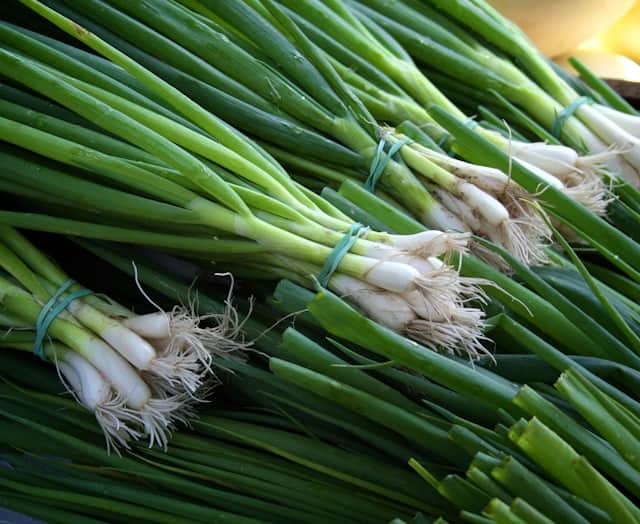
You may have noticed different names like scallions, green onions, and spring onions used interchangeably. While they are similar, there are slight differences:
- Scallions
Scallions have long, hollow green leaves with small, barely noticeable white bulbs at the base. They have a mild flavor, making them perfect for raw dishes, garnishes, and fresh salads. Because their bulbs are small, they are usually eaten for their tender green tops rather than the base. - Green Onions
Green onions are often used interchangeably with scallions. They feature a small white base and green tops, but their flavor is slightly stronger when cooked. They are versatile in both raw and cooked dishes, making them a popular choice in many kitchens. - Spring Onions
Spring onions have a more developed, slightly larger white bulb at the base compared to scallions and green onions. Their flavor is stronger and more pronounced, and they can be eaten raw in salads or cooked in stir-fries, soups, and other dishes. The larger bulb also makes them suitable for roasting or grilling.
Many people use scallions, green onions, and spring onions interchangeably because all have long green tops and edible white bases. However, scallions usually have very small bulbs and a mild flavor, green onions are similar but slightly stronger, and spring onions have larger bulbs with a more pronounced taste.
| Common Name | Scallion, green onion, spring onion, bunching onion |
| Botanical Name | Allium fistulosum |
| Family | Amaryllidaceae |
| Plant Type | Perennial, bulb |
| Size | 1–3 feet tall, 1–2 feet wide |
| Sun Exposure | Full sun |
| Soil Type | Sandy, loamy, well-drained |
| Soil pH | Acidic, neutral |
| Bloom Time | Spring |
| Hardiness Zones | 6–9 |
| Native Area | Asia |
| Toxicity | Toxic to pets |
Fresh green onions can add a burst of flavor to soups, salads, omelets, and stir-fries, and the best part is you don’t need a garden to enjoy them. Learning how to grow green onions indoors is incredibly simple and perfect for beginners who want to start growing food at home. Green onions are one of the easiest vegetables to grow indoors because they require very little space, grow quickly, and adapt well to small containers placed on a bright windowsill.
Growing green onions at home also comes with several benefits. You can harvest them fresh whenever you need them, save money on store-bought herbs and vegetables, and enjoy chemical-free produce right from your kitchen. Even better, green onions regrow quickly, which means one small planting can give you multiple harvests over time.
Another great thing about learning how to grow green onions indoors is the flexibility in how you start them. You can regrow them from kitchen scraps, plant small bulbs in soil, or grow them from seeds if you want a continuous supply. In this complete guide, you’ll learn simple step-by-step methods to grow healthy green onions indoors using all three approaches.
In This Article
Why Grow Green Onions At Home?
Growing green onions indoors is a simple way to have fresh herbs available anytime you need them. Instead of buying a new bunch from the store every week, you can harvest green onions directly from your kitchen windowsill whenever you’re cooking. Since they grow quickly and often regrow after cutting, they provide a steady supply of fresh flavor for soups, salads, and many everyday meals.
Another reason many people choose to grow green onions indoors is that they save money and require very little space. A small pot or even a jar can be enough to grow them successfully, making them ideal for apartments or homes without gardens. Their easy care and fast growth also make them perfect for beginners who want to start indoor gardening without complicated tools or equipment.
What You Need to Grow Green Onions Indoors
You only need a few simple things to start growing green onions indoors:
Green onion bulbs or kitchen scraps
You can regrow green onions using the white root ends from store-bought green onions or start with small onion bulbs. As long as the roots are intact, they can quickly begin growing new green shoots.
Small container or glass jar
A small glass jar, cup, or container works well for starting green onions indoors. It should be deep enough to hold the roots while keeping the green tops above the water.
Potting soil (optional)
While green onions can grow in water, planting them in potting soil can help them grow stronger and last longer. Soil also provides nutrients that support healthier regrowth.
Water
Water is essential, especially if you are regrowing green onions from scraps. Keep the roots submerged in a small amount of clean water and change it every few days to keep it fresh.
Sunny windowsill
Place your container near a sunny window where the plants can receive several hours of natural light each day. Good light helps green onions grow faster and produce healthy green leaves.
How to Plant Green Onions
Planting green onions is easy and can be done in small containers indoors or in your garden. The best time to plant depends on your method: indoors, you can start anytime, while outdoor planting is usually done in early spring or late summer for cooler climates.
Selecting a Planting Site: Choose a spot that receives full sunlight or bright indirect light indoors. Green onions grow best in well-draining soil, whether in a container or garden bed, to prevent root rot and support healthy growth.
Spacing, Depth, and Support: Plant green onion seeds or bulbs about 1–2 inches apart to give each plant room to grow. Seeds should be lightly covered with ¼ inch of soil, while bulbs or root ends should be planted so the white base sits just above the soil surface. Green onions don’t need staking, but giving them enough vertical space helps the green tops grow straight and strong.
How to Grow Green Onions from Seeds
Growing green onions from seeds is a simple process, though it takes a bit longer than regrowing from scraps or bulbs. Here’s how to do it step by step:
- Choose quality seeds
Purchase fresh green onion seeds from a garden center or online. Look for seeds labeled for indoor or container growing to ensure better germination. - Prepare a container
Use a small pot or seed tray with drainage holes. Fill it with well-draining potting soil, leaving about half an inch from the top. - Sow the seeds
Scatter the seeds evenly on the soil surface and lightly cover them with a thin layer of soil (about ¼ inch). Don’t bury them too deep, as they need light to germinate. - Water gently
Mist the soil lightly or water gently so it stays consistently moist but not soggy. Overwatering can cause seeds to rot. - Provide light and warmth
Place the container on a sunny windowsill or under a grow light. Green onion seeds germinate best at 65–75°F (18–24°C) and need 6-8 hours of light daily. - Thin seedlings
Once seedlings reach 2–3 inches tall, thin them out so that each plant has space to grow. Leave about 1–2 inches between each plant. - Harvest when ready
After 8–12 weeks, the green shoots will be ready to harvest. Cut the greens above the soil line to allow continuous regrowth.
How to Flower Green Onions
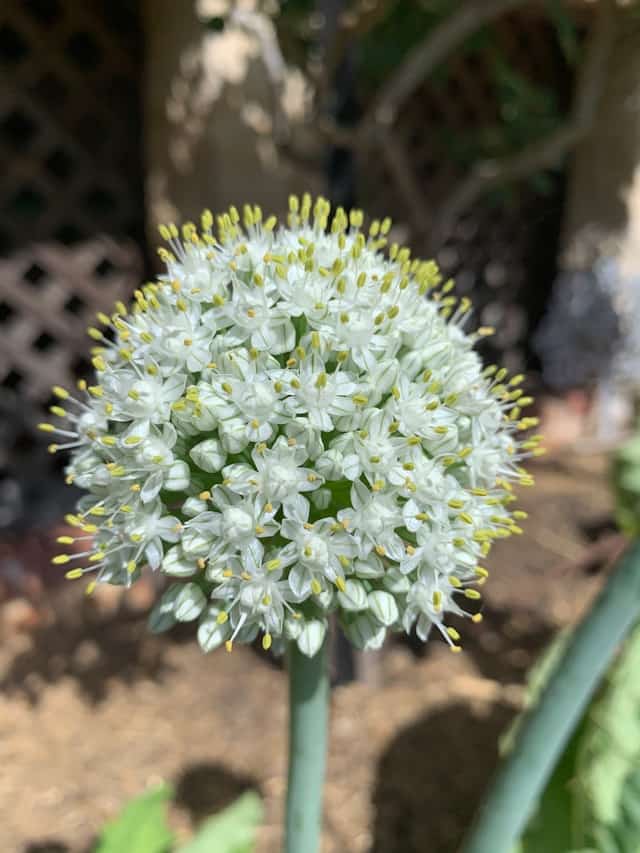
Green onions can produce flowers, called umbels, if left to grow beyond the typical harvesting stage. Flowering usually occurs when the plant matures and experiences longer daylight hours, often in late spring or early summer.
To encourage flowering:
- Let some plants grow fully: Avoid harvesting all the green tops; allow a few green onions to reach full height.
- Provide plenty of sunlight: Green onions need 6-8 hours of light per day to trigger flower development.
- Maintain proper care: Keep the soil or water consistently moist and provide nutrients if growing in soil.
- Be patient: It can take several weeks for the flower stalk to emerge and develop small white or purple star-shaped flowers.
How to Harvest Seeds of Green Onions
To harvest seeds from green onions, first allow the plants to grow until the flower stalks fully develop and bloom with small star-shaped flowers. After the flowers dry out and turn brown, the tiny black seeds inside are ready to collect. Gently shake or rub the dried flower heads over a container, or cut the stalks and store them upside down in a paper bag to catch the seeds. Once collected, store the seeds in a cool, dry, and dark place in an airtight container until you’re ready to plant them. Harvesting your own seeds lets you grow green onions year after year and select the strongest, healthiest plants for your indoor garden.
Two Easy Ways to Regrow Green Onions Indoors
Green onions are very flexible plants and can grow well in different conditions indoors. The two easiest methods are growing them in water or soil, and both require very little effort. Depending on what materials you have at home, you can choose either method and start regrowing fresh green onions within a few days.
Growing Green Onions in Water
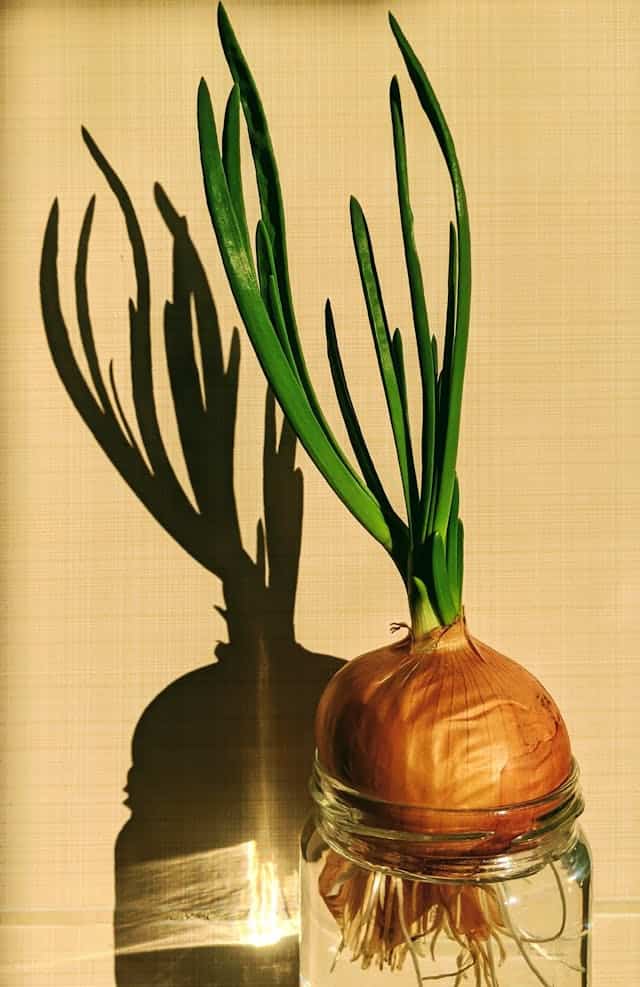
Step 1: Save the white root ends
When using store-bought green onions, cut off the green tops for cooking and keep the white bottom part with the roots attached. These root ends are what will regrow new green shoots.
Step 2: Place them in a glass with water
Put the root ends upright in a small glass or jar. Add enough water to cover the roots but avoid submerging the entire bulb to prevent rotting.
Step 3: Put near sunlight
Place the container on a sunny windowsill where the plants can receive several hours of natural light each day. Sunlight helps stimulate faster growth.
Step 4: Change water regularly
Refresh the water every 2–3 days to keep it clean and prevent odors or bacteria from forming around the roots.
Step 5: Harvest when they regrow
Within a few days, you’ll notice new green shoots growing. Once they reach a good height, simply cut what you need and allow the plant to continue regrowing.
Growing Green Onions in Soil
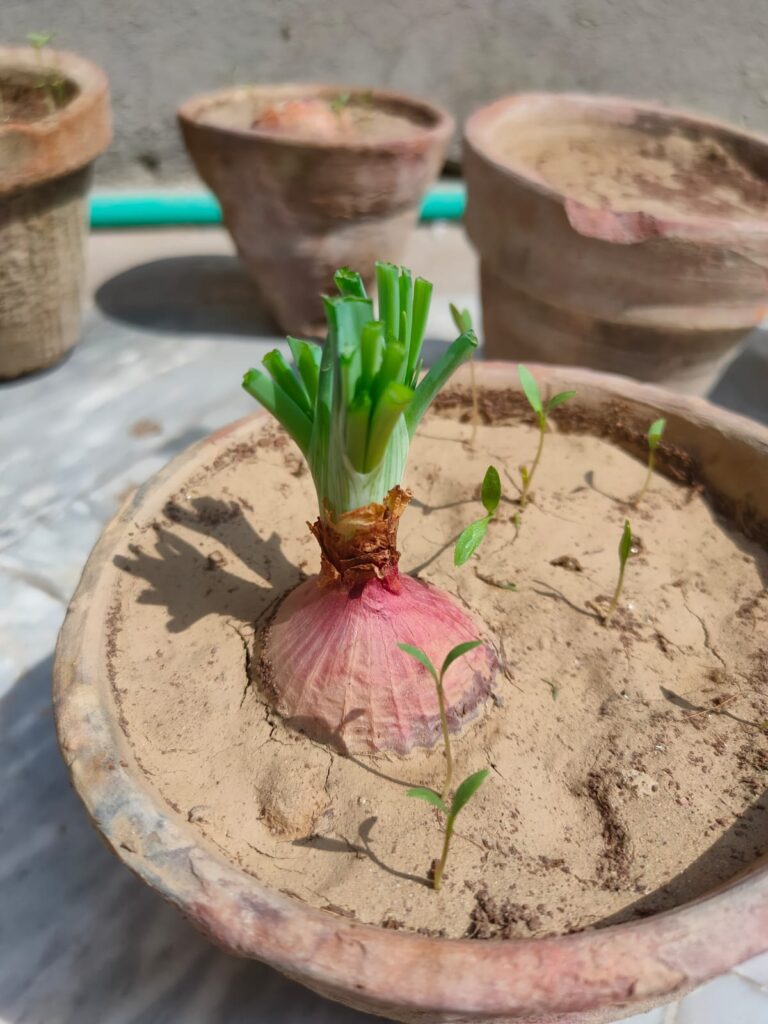
Step 1: Choose a small pot
Select a small pot or container with drainage holes. This helps prevent excess water from sitting in the soil and keeps the roots healthy.
Step 2: Fill with potting soil
Add fresh potting soil to the container, leaving a little space at the top. Light, well-draining soil works best for green onions.
Step 3: Plant the root ends
Place the root ends into the soil with the roots facing downward and the white part slightly above the soil surface. Space them a little apart if planting multiple.
Step 4: Water lightly
Water the soil gently so it becomes slightly moist but not soggy. Green onions prefer consistently moist soil but not overly wet conditions.
Step 5: Place in bright light
Keep the pot in a bright spot such as a sunny windowsill. With proper light and watering, the green shoots will begin growing quickly.
Green Onion Care
Caring for green onions is simple, making them perfect for indoor gardening. Paying attention to light, water, temperature, and nutrients ensures healthy, continuous growth.
Light: Green onions need 6-8 hours of sunlight or artificial light daily. Place them on a sunny windowsill or under a grow light to encourage strong, vibrant green shoots.
Water: Keep the soil or water consistently moist but not soggy. Overwatering can lead to root rot, while underwatering slows growth. For water-grown onions, change the water every 2–3 days.
Temperature and Humidity: Green onions grow best at 65–75°F (18–24°C). They tolerate normal indoor humidity levels, but avoid placing them in cold drafts or near air conditioners.
Fertilizer: For soil-grown green onions, a balanced, water-soluble fertilizer every 2–3 weeks supports strong growth. Water-grown onions typically don’t need extra nutrients for the first few regrowth cycles.
Pollination: Pollination isn’t necessary for indoor green onions since you’re harvesting the greens and not letting them flower. Focus on leaves and root health for continuous harvests.
Best Light Conditions for Indoor Green Onions
Green onions grow best when placed on a sunny windowsill where they can receive natural light. Ideally, they need about 6-8 hours of sunlight per day to develop strong green shoots and maintain healthy growth. A south- or east-facing window usually works best, as it provides consistent, bright light throughout the day.
If natural sunlight is limited, you can use grow lights to keep your green onions thriving indoors. With artificial lighting, green onions still need about 6-8 hours of light daily. LED or fluorescent grow lights work well and should be positioned a few inches above the plants to mimic natural sunlight, ensuring they grow tall, healthy, and vibrant.
Which Method Is Best for Growing Green Onions Indoors?
When people search for how to grow green onions indoors, one of the most common questions they ask is which method is best: soil or water.
Both methods, growing green onions in water or soil, work well indoors, but each has its advantages depending on your goals:
Soil method: Growing green onions in soil produces stronger, healthier plants that can provide longer-lasting harvests. Soil supplies nutrients that water alone cannot, which helps the onions grow more robustly. It takes a little more effort, but the results are usually better for continuous harvesting.
Water method: This is the easiest and fastest way to regrow green onions from scraps. You’ll see new shoots in just a few days, and it’s almost foolproof for beginners. The main limitation is that onions grown in water usually don’t develop strong roots or last as long as those grown in soil.
If you want quick regrowth with minimal effort, go with water. If you want long-term, stronger plants with multiple harvests, soil is the best choice.
How Long Do Green Onions Take to Grow Indoors
Green onions are fast-growing and can start regrowing within just a few days when placed in water or soil. Typically, you’ll see noticeable green shoots in 5–7 days, depending on light, temperature, and care.
You can begin harvesting once the green tops reach 6–8 inches in height. Regularly cutting the greens encourages continuous regrowth, allowing you to enjoy fresh green onions multiple times from the same roots.
How to Harvest Green Onions Without Killing the Plant
To harvest green onions without harming the plant, cut the green tops about an inch above the white base. This way, the roots remain intact, allowing the plant to continue growing.
By leaving the base undisturbed, your green onions can regrow continuously, giving you multiple harvests from the same plant over time.
Can You Regrow Green Onions Forever?
Green onions can regrow multiple times from the same roots, often producing fresh shoots for several harvests. With proper care, you can enjoy continuous growth, especially when using the water method for quick regrowth.
Growing in water: When regrowing in water, the roots can keep producing green shoots for several cycles. Make sure to change the water every few days to keep it fresh and prevent odors or bacteria. After a few regrowth cycles, the roots may start to weaken, so it’s a good idea to eventually transplant them into soil for stronger, longer-lasting growth.
Growing in soil: Green onions grown in soil tend to produce stronger, healthier plants that can last longer than those in water. To maintain continuous harvests, keep the soil slightly moist and nutrient-rich. After a few harvests, consider adding fresh soil or replanting the onions to ensure the roots remain healthy and the shoots keep growing vigorously.
Common Problems When Growing Green Onions Indoors
Yellow leaves
Yellowing leaves usually indicate overwatering, nutrient deficiencies, or insufficient light. Adjust watering habits and ensure your onions get enough sunlight or grow light.
Slow growth
Green onions may grow slowly if they don’t receive enough light or if the roots are overcrowded. Make sure they have space and at least 6-8 hours of light daily.
Rotting roots
Roots can rot if they sit in stagnant water or if soil drains poorly. Use a well-draining container and change water regularly when growing in jars.
Weak sunlight
Lack of adequate light causes shoots to become thin, pale, and weak. Place onions on a bright windowsill or use grow lights to keep them healthy and vibrant.
Tips for Growing Green Onions Faster Indoors
Rotate plants for even light
Turn your containers or pots every few days to ensure all sides of the green onions get equal sunlight. This helps the shoots grow evenly and prevents them from leaning toward the light.
Change water often
If you’re regrowing in water, refresh it every 2–3 days to keep it clean and oxygenated. Fresh water encourages faster root development and healthier growth.
Trim regularly
Harvest the green tops by cutting above the white base instead of pulling the entire plant. Regular trimming stimulates continuous regrowth and keeps the plants producing more shoots.
Keep warm indoor temperatures
Green onions grow faster in warm indoor conditions, ideally between 65–75°F (18–24°C). Avoid placing them in cold drafts or near air conditioners to maintain steady growth.
Vegetables Commonly Confused with Green Onions
Chives vs Green Onions
Chives are often mistaken for green onions because they both have long, thin green stalks and a mild onion flavor. However, chives are much thinner, more delicate, and typically used as a garnish. Unlike green onions, chives do not have a noticeable white bulb at the base and are usually harvested entirely as small green shoots.
Garlic Greens vs Green Onions
Garlic greens, or garlic scapes, resemble green onions because of their long, green stalks. They are confused in cooking for their similar appearance, but garlic greens have a stronger, garlicky flavor and are more fibrous. Green onions have a small white base and milder taste, while garlic greens grow from garlic bulbs and may have a curling tip.
Leeks vs Green Onions
Leeks are often confused with green onions when young because of their long green tops, but leeks are much thicker and have a more cylindrical, layered structure. The edible white and light green parts of leeks are larger and milder than green onions, and they are usually cooked rather than eaten raw due to their tougher texture.
Shallots vs Green Onions
Shallots can look similar to green onions before they fully mature, especially the green shoots. The confusion arises because both have green tops. However, shallots grow a larger, elongated bulb with a stronger, more complex flavor, and their green shoots are usually tougher than green onions. They are mainly grown for the bulb rather than the tops.
Common Pests and Diseases of Green Onions
Even though green onions are generally easy to grow indoors, they can occasionally face pests and diseases. Knowing what to watch for helps keep your plants healthy.
Pests:
- Onion Thrips – Tiny insects that suck sap from leaves, causing silvery streaks and stunted growth.
- Aphids – Small, soft-bodied insects that cluster on green shoots and can spread diseases.
- Fungus Gnats – Small flies attracted to overly moist soil; larvae can damage roots.
Diseases:
- Downy Mildew – Fungal disease that causes yellowing leaves and grayish mold under humid conditions.
- Purple Blotch – Fungal infection leading to purple spots on leaves and leaf tip dieback.
- Root Rot – Caused by overwatering or poor drainage, leading to soft, mushy roots and wilting shoots.
Frequently Asked Questions
What’s the best way to grow green onions?
The best way depends on your goal. For quick regrowth, growing green onions in water is easiest. For stronger, longer-lasting plants, planting them in soil is ideal. Both methods are simple and beginner-friendly.
Is it better to regrow green onions in water or soil?
If you want fast, easy regrowth, water is best. If you want stronger plants and continuous harvests, soil is better because it provides nutrients that water alone cannot.
Can green onions grow from regular onions?
Green onions can regrow from the white root ends of store-bought onions, but they won’t grow as full as regular onions. They are mainly grown for their green shoots rather than forming a large bulb.
How to grow onions at home without seeds?
You can grow onions at home from kitchen scraps or small onion bulbs. Place the root ends in water or soil, keep them in a sunny spot, and they’ll regrow fresh green tops in just a few days.
What vitamins are in green onions?
Green onions are rich in vitamin K, vitamin C, and vitamin A, and they also provide small amounts of B vitamins and antioxidants. They support immune health, bone strength, and overall wellness.
Can you grow green onions indoors?
Yes! Green onions can be easily grown indoors using either water or soil. They thrive on a sunny windowsill or under grow lights.
Do green onions need soil to grow indoors?
Not necessarily. Green onions grow well in water, but planting them in soil helps produce stronger, longer-lasting plants.
How long does it take for green onions to grow indoors?
Green onions can regrow in water in about 7–10 days. Soil-grown onions may take 2–3 weeks for full growth.
Can I harvest green onions multiple times?
Yes! Cut just above the white base, leaving the roots intact. They can regrow multiple times before needing new bulbs.
Why are my indoor green onions turning yellow?
Yellow leaves usually indicate too much water, poor light, or nutrient deficiency. Adjust light and watering for healthier plants.