
Learning how to grow broccoli microgreens at home is one of the smartest and most rewarding things you can do for your kitchen and your health. Broccoli microgreens are the young seedlings of the broccoli plant, harvested just 7–10 days after germination, and research suggests they contain up to 40 times more sulforaphane than mature broccoli. That single compound is linked to reduced inflammation, improved liver detoxification, better blood sugar regulation, and even cancer-protective properties.
The best part? Broccoli microgreens are genuinely easy to grow at home. They don’t require a garden, specialist equipment, or prior experience, just a shallow tray, quality seeds, and a bright windowsill. Most beginners achieve a successful first harvest with minimal effort and are set up and growing confidently within a single afternoon.
New to microgreens altogether? Start with our complete guide — How to Grow Microgreens at Home: The Complete Beginner’s Guide — before diving into the broccoli-specific steps below.
Growing at home also means you control everything, no pesticides, no mystery growing conditions, and no paying premium health store prices for greens you can produce yourself for pennies per tray. This complete guide covers everything you need to know about how to grow broccoli microgreens at home, from understanding what makes them so nutritionally exceptional to harvesting them at peak flavor and potency.
In This Article
What You Need to Grow Broccoli Microgreens at Home
Getting your broccoli microgreen supplies right from the start saves you time, money, and failed trays. The good news is the setup is minimal, here’s exactly what you need and why each element matters.
Choosing the Right Broccoli Seeds for Microgreens
Not all broccoli seeds are created equal. Always buy seeds specifically labelled for microgreen or sprouting use, these are untreated, food-grade, and tested for high germination rates. Avoid standard garden seeds, which are often coated with fungicide treatments unsuitable for close-contact food growing. Look for open-pollinated or organic broccoli varieties for the cleanest, most nutritious results. Reputable microgreen seed suppliers will list germination rates of 90% or higher, anything lower risks patchy, uneven trays.
Best Growing Medium: Soil vs. Hydroponic Mat
Both work excellently for broccoli microgreens, the right choice depends on your priorities. A fine potting mix or coconut coir delivers slightly richer flavor and is the most forgiving option for beginners, as it retains moisture evenly and buffers against over and underwatering. Hydroponic mats, jute, hemp, or coco coir pads, are cleaner, faster to set up, and reduce mold risk, making them ideal for indoor kitchen growing where mess is a concern. Whichever medium you choose, ensure your drainage tray has holes and sits inside a solid catch tray below.
For your tray, a standard 10×20 inch shallow growing tray is the industry standard and fits most windowsills and shelving units comfortably. You’ll also need a spray bottle for misting and a second tray or dark cover for the germination phase.
How long should you soak broccoli seeds before growing microgreens?
Broccoli seeds are small enough that soaking is optional rather than essential, unlike larger seeds such as sunflower or pea. However, soaking for 4–6 hours in clean room-temperature water can improve germination speed and evenness, particularly in cooler growing environments. If you’re in a warm room and using fresh, high-quality seeds, you can skip soaking entirely and still achieve excellent results.
How to Grow Broccoli Microgreens at Home: Step-by-Step
Following a reliable process for growing broccoli microgreens step by step is what separates consistently great harvests from frustrating, patchy trays. Here’s the exact method to follow from day one.
Step 1 — Soak and Prep Your Seeds
Measure out your seeds, for a standard 10×20 inch tray, approximately 1–1.5 tablespoons of broccoli seeds is sufficient for dense, even coverage. As mentioned, soaking is optional but beneficial. If soaking, place seeds in a small bowl of clean room-temperature water for 4–6 hours, then drain thoroughly through a fine mesh sieve. While your seeds soak, prepare your tray by filling it with a lightly moistened growing medium levelled to about an inch deep, or lay your hydroponic mat flat and saturate it evenly before draining excess water.
Step 2 — Sow Seeds on Your Tray
Scatter your seeds as evenly as possible across the entire surface of your growing medium. Broccoli seeds are small, so take your time distributing them to avoid thick clumps, overcrowding is one of the leading causes of mold during broccoli microgreen germination. Once sown, mist the surface gently but thoroughly with your spray bottle and press seeds lightly into contact with the medium using a flat hand or the base of a second tray. Good seed-to-medium contact is critical for even germination.
Step 3 — The Blackout Period (Germination)
Cover your tray with a second tray or opaque lid and place it somewhere warm, ideally between 65–75°F (18–24°C). Yes, broccoli microgreens absolutely need a blackout period. The darkness and warmth simulate underground conditions, driving strong downward root development and upward shoot energy that produces sturdy, vigorous seedlings. Without it, germination is slower and uneven.
Check your tray once daily, misting lightly if the surface appears dry. Broccoli microgreens typically sprout within 2–3 days, you’ll know the blackout phase is over when seedlings are visibly pushing against the cover or have reached approximately an inch in height.
Step 4 — Move to Light and Water Daily
Once sprouted, remove the cover and move your tray into bright, indirect light or under a grow light. In total, broccoli microgreens take 7–10 days to grow from seed to harvest, so after the 2–3 day germination phase, you’re typically looking at just 5–7 more days in the light before they’re ready to cut.
From this point, switch from top misting to bottom watering, pour a small amount of water into the solid catch tray beneath and allow the growing medium to absorb moisture upward. This keeps the leaves and stems dry, dramatically reducing mold risk. Aim for 12–16 hours of light daily and check moisture levels every day — broccoli microgreens dry out faster under grow lights than on windowsills, so adjust accordingly.
How to Harvest Broccoli Microgreens at Home
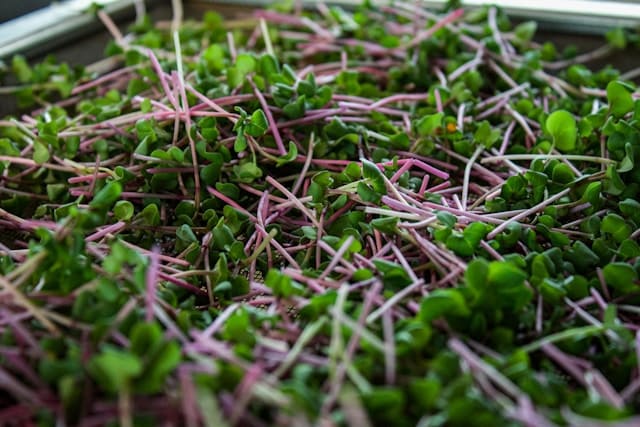
Knowing exactly when to harvest broccoli microgreens is what locks in peak flavor, texture, and nutritional potency. Harvest too early and you lose yield; leave them too long and flavor turns bitter and sulforaphane levels begin to decline.
Signs Your Broccoli Microgreens Are Ready to Harvest
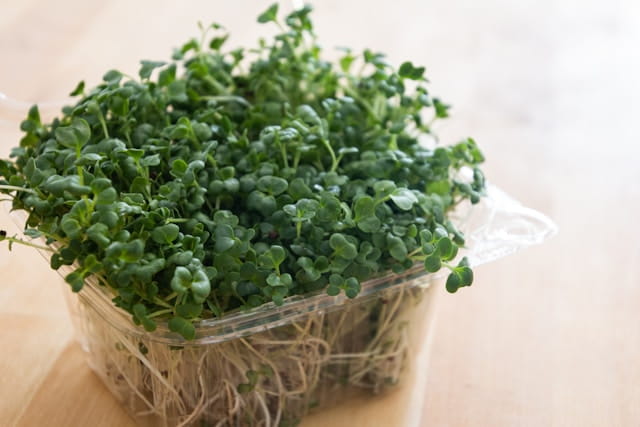
The clearest signal that your microgreens are ready for harvesting microgreens at home is the appearance of the first set of true leaves, the second pair of leaves that emerge after the initial seed leaves (cotyledons). At this stage, your broccoli microgreens should be standing tall and upright, a vibrant deep green throughout, with firm stems that don’t flop or bend under their own weight.
This typically occurs between day 7 and day 10 from sowing. Don’t rely on the calendar alone, use visual cues as your primary guide, since temperature, light intensity, and seed quality all affect grow speed.
To harvest, use a clean, sharp pair of scissors or a small knife. Cut stems just above the growing medium or mat in smooth, confident strokes, avoid sawing back and forth, which bruises the stems and accelerates spoilage. Harvest in the morning when sugar content in the leaves is at its peak for the best possible flavor. Rinse gently under cool water, shake off excess moisture, and allow to air dry briefly before storing or serving.
Do Broccoli Microgreens Regrow After Harvest?
No — broccoli microgreens do not regrow after cutting. Broccoli is a single-harvest crop at the microgreen stage. Unlike pea shoots, which can occasionally produce a sparse second flush, broccoli seedlings lack the stored energy reserves in their root system needed to regenerate new growth once the stem is cut. Any regrowth attempts typically produce weak, yellowed, nutritionally poor shoots not worth waiting for.
The most practical and productive approach is to start a fresh tray immediately after harvesting, or better yet, stagger a new tray every 5–7 days so you always have a crop at a different growth stage. This rolling system keeps your kitchen in continuous supply without gaps or the disappointment of waiting on regrowth that never delivers.
How to Store Broccoli Microgreens and Keep Them Fresh
Proper storing of microgreens after harvest is just as important as growing them well. Even a perfect tray can go to waste within days if stored incorrectly, here’s how to protect your harvest and get the most from every cut.
How long do broccoli microgreens last? Freshly harvested broccoli microgreens stored correctly in the refrigerator will stay crisp, flavorful, and nutritious for 5–8 days. Left at room temperature, they deteriorate within 24–48 hours. The difference between a 2-day shelf life and an 8-day shelf life almost always comes down to moisture management and storage method rather than variety or grow quality.
The single most important rule of storing microgreens is to never refrigerate them wet. After harvesting and rinsing, spread your microgreens loosely on a clean paper towel and allow them to air dry completely, even 20–30 minutes of drying time makes a measurable difference to shelf life. Once dry, transfer them to an airtight container lined with a fresh dry paper towel. The paper towel acts as a moisture buffer, absorbing any condensation that builds inside the container without drying the greens out entirely.
Store your container in the coldest section of your refrigerator, typically the back of the middle or bottom shelf, at a consistent temperature between 35–40°F (2–4°C). Avoid storing near ethylene-producing fruits like apples or bananas, which accelerate yellowing and leaf deterioration.
For the longest possible shelf life, consider harvesting directly into your storage container without rinsing first, and washing only the portion you’re about to eat. This minimises moisture exposure and handling stress on the delicate stems and leaves.
Signs your stored broccoli microgreens have turned include a slimy texture, sour or unpleasant smell, yellowing leaves, or visible mold at the stem ends. Fresh broccoli microgreens should smell clean, mildly vegetal, and faintly sulphurous, similar to fresh broccoli florets. When in doubt, discard and start a fresh tray.
How to Eat and Use Broccoli Microgreens
One of the best things about growing your own crop is having a constant supply ready to use, and broccoli microgreens recipe ideas are far more versatile than most people realize.
Can you eat broccoli microgreens raw? Absolutely, and raw is actually the preferred way to eat them. Heat degrades sulforaphane, the primary compound that makes broccoli microgreens so nutritionally exceptional. Cooking them significantly reduces their health benefits, so whenever possible, add broccoli microgreens fresh and uncooked at the end of preparation rather than incorporating them into anything heated.
Here are some of the simplest and most effective ways to use them daily, no complicated broccoli microgreens recipes required:
- Salads — toss a generous handful through any green salad for a peppery, nutritious boost
- Sandwiches and wraps — layer fresh microgreens in place of or alongside lettuce
- Smoothies — blend a small handful into green smoothies; the flavour is mild when combined with fruit
- Eggs and omelettes — scatter over the top just before serving, never during cooking
- Soups — use as a fresh garnish added to the bowl after pouring, not while heating
- Avocado toast — a natural pairing that has become a staple for good reason
- Grain bowls and Buddha bowls — adds freshness, texture, and a significant nutritional upgrade
When should you not eat microgreens? Avoid eating any microgreens that show signs of mould, sliminess, yellowing, or an off smell. People taking blood-thinning medications like warfarin should moderate their intake of vitamin K-rich greens including broccoli microgreens and consult their doctor. Individuals with thyroid conditions should also seek medical guidance, as cruciferous vegetables consumed in large quantities may interfere with thyroid function.
Why does my stomach hurt after eating broccoli sprouts or microgreens? This is more common than you might expect and is rarely a cause for concern. Broccoli microgreens are rich in fiber, sulphur compounds, and glucosinolates, all of which can cause temporary bloating, gas, or mild stomach discomfort, particularly if you’re new to eating them regularly or consume a large quantity at once. Start with small amounts, a tablespoon or two daily, and gradually increase as your digestive system adjusts. If discomfort persists beyond a few days of regular consumption, consult a healthcare professional to rule out a sensitivity to cruciferous vegetables.
Broccoli Microgreens vs. Broccoli Sprouts: Which Is Better for You?
The broccoli sprouts vs. broccoli microgreens debate is one of the most common questions in the functional food space, and the answer is more nuanced than most sources let on. Both are nutritional powerhouses derived from the same seed, but they differ meaningfully in how they’re grown, what they contain, and how you use them.
Broccoli sprouts are germinated seeds eaten root, seed, and shoot together, typically harvested at 3–5 days in a jar or sprouting tray with no growing medium. Broccoli microgreens are grown in soil or a hydroponic mat, harvested at 7–10 days by cutting the stem, and eaten as a leafy green. The extra growing time makes a significant difference to nutritional profile.
Which is better for sulforaphane content?
This is where the sulforaphane comparison gets genuinely interesting. Sprouts have long been celebrated as the gold standard for sulforaphane concentration, and they do contain impressive levels. However, recent research suggests that broccoli microgreens grown in soil contain comparable and in some cases higher levels of sulforaphane precursors (glucoraphanin) than sprouts, particularly when harvested at peak stage. The difference is less dramatic than supplement marketing often implies.
Are broccoli microgreens healthier than mature broccoli?
By a significant margin, yes. Studies have found broccoli microgreens contain anywhere from 10 to 40 times more sulforaphane than an equivalent weight of mature broccoli florets. They also deliver higher concentrations of vitamins C, E, and K, along with a denser antioxidant profile, all in a fraction of the calories. Mature broccoli still offers valuable fiber and nutrients, but microgreens are nutritionally concentrated in a way that fully grown vegetables simply cannot match at the seedling stage.
Practical differences also matter when choosing between the two. Sprouts carry a slightly higher food safety risk than microgreens due to the warm, moist, oxygen-rich conditions required for jar sprouting, conditions that can also encourage bacterial growth if hygiene is imperfect. Microgreens, grown in a medium and harvested as a cut green, present a lower risk profile when grown and stored correctly.
In terms of flavor, broccoli sprouts tend to be sharper and more intensely sulphurous, while broccoli microgreens offer a milder, more pleasant flavor that integrates easily into everyday meals without overpowering other ingredients.
| Feature | Broccoli Microgreens | Broccoli Sprouts |
|---|---|---|
| Harvest Time | 7–10 days | 3–5 days |
| Sulforaphane | Very high (10–40x mature broccoli) | Slightly more concentrated per gram |
| Flavour | Mild, versatile | Sharp, sulphurous |
| Food Safety Risk | Lower | Slightly higher |
| Shelf Life | 5–8 days | 3–5 days |
| Best Used In | Salads, bowls, toast, smoothies | Salads, sandwiches, juicing |
| Cost to Grow | Low | Very low |
Frequently Asked Questions
How to make broccoli microgreens at home?
Fill a shallow tray with moist potting mix or a hydroponic mat, sow broccoli seeds densely, mist well, and cover for 2–3 days during germination. Once sprouted, move to bright light and bottom-water daily. They’ll be ready to harvest in 7–10 days.
How can I grow broccoli sprouts at home?
Broccoli sprouts don’t need trays or growing medium. Soak seeds for 8 hours, drain, and place in a clean jar covered with a mesh lid. Rinse and drain twice daily at room temperature and they’ll be ready to eat in 3–5 days.
Are broccoli microgreens easy to grow?
Yes — they’re one of the most beginner-friendly microgreens available. They germinate reliably, grow quickly, and require minimal equipment. Most first-time growers achieve a successful harvest on their very first try.
How many days to grow broccoli microgreens?
From seed to harvest, broccoli microgreens take 7–10 days. Germination occurs in the first 2–3 days during the blackout phase, followed by 5–7 days of growth under light before they’re ready to cut.
Can broccoli sprouts lower blood sugar?
Early research is promising. Sulforaphane — found in high concentrations in both broccoli sprouts and microgreens, has been studied for its potential role in improving insulin sensitivity and reducing fasting blood sugar levels. Always consult a healthcare professional before using food therapeutically.
How to grow broccoli microgreens in a jar?
Jars are better suited to sprouts than microgreens. For true broccoli microgreens, a shallow tray and growing medium are needed to support root development and upright stem growth. If space is your concern, a small 5×5 inch tray works just as well as a standard full-size tray.
Is it safe to eat broccoli sprouts every day?
For most healthy adults, yes — in moderate amounts. Daily consumption of broccoli sprouts is generally considered safe and beneficial. However, very large quantities over time may affect thyroid function in sensitive individuals due to their glucosinolate content. Moderation and dietary variety are always sensible.
Why does my stomach hurt after eating broccoli sprouts?
Broccoli sprouts are rich in fibre, sulphur compounds, and glucosinolates that can cause temporary bloating or gas, particularly when eaten in large amounts or introduced suddenly to your diet. Start with small portions and increase gradually to allow your digestive system to adjust.
Can I grow broccoli microgreens without soil?
Absolutely. Hydroponic growing mats made from jute, hemp, or coco coir are excellent alternatives that are cleaner and equally effective. Saturate the mat, sow your seeds, and follow the same germination and light routine as you would with soil.
How long do broccoli microgreens last?
Stored correctly in an airtight container lined with a dry paper towel, broccoli microgreens last 5–8 days in the refrigerator. Always allow them to dry fully before storing and avoid washing until just before eating to maximize shelf life.