
The Pink Princess Philodendron is one of the most sought-after houseplants thanks to its striking pink variegation and lush, tropical foliage. However, maintaining its vibrant colors and healthy growth indoors can be challenging, especially in spaces with limited natural light. That’s where the best grow lights for Pink Princess Philodendron come in. In this guide, we’ll explore the types of grow lights that work best, how to use them correctly, and tips to ensure your plant thrives year-round.
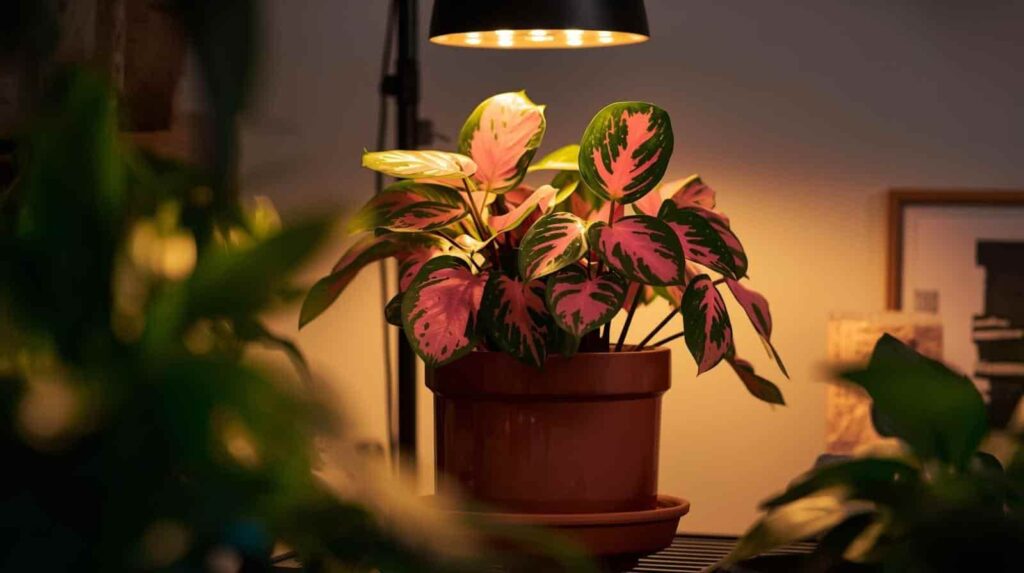
Table of Contents
Why Grow Lights Are So Useful
Growing plants indoors can sometimes feel challenging, especially when natural sunlight is limited. Not every home has bright windows, and seasonal changes can make light even more inconsistent. That’s where grow lights completely change the game.
Indoor gardening has never been so easy, you don’t need the sun at all times. With the right grow light setup, you can grow your favorite plants in the dead of winter or keep them thriving indoors all year round, even in darker rooms or apartments.
Grow lights provide a consistent, controlled source of light that mimics natural sunlight. This helps plants photosynthesize properly, maintain healthy foliage, grow stronger stems, and produce vibrant leaves. Whether you’re growing tropical houseplants, herbs, or decorative foliage plants, using grow lights correctly gives you full control over their growth, no matter the season.
How to Measure Light for Indoor Plants
If you’re using grow lights, understanding how to measure light correctly is just as important as choosing the right fixture. Light intensity directly affects photosynthesis, growth speed, leaf size, and overall plant health. Fortunately, measuring light isn’t complicated once you understand the basic units.
You can measure light using a lux meter, a foot-candle meter, or a PAR meter, depending on how precise you want to be.
Common Light Measurement Units Explained:
For most homes and indoor gardeners, lux and foot-candles (fc) are the most commonly used units to measure light. These units are practical, easy to understand, and widely supported by affordable light meters and smartphone apps.
Foot-Candles (fc)
Foot-candles measure the intensity of light that reaches a surface. One foot-candle equals the amount of light produced by one candle at a distance of one foot. This unit is commonly used in the United States and is practical for general indoor gardening.
Plant reference ranges:
- Low light: 50–250 fc
- Medium light: 250–1,000 fc
- Bright indirect light: 1,000–2,000+ fc
Foot-candles are simple and effective for estimating whether your plants are receiving enough light.
Lux
Lux is the metric equivalent of foot-candles and is used internationally. It measures the total visible light hitting a surface. One foot-candle equals approximately 10.76 lux.
Quick reference:
- Low light: 500–2,500 lux
- Medium light: 2,500–10,000 lux
- Bright indirect light: 10,000–20,000+ lux
Lux meters are affordable and widely available, making them popular for home growers.
How Light Affects Pink Princess Philodendron
The Philodendron Pink Princess thrives in bright indirect light. It prefers strong, filtered sunlight near a bright window but should be protected from harsh direct sun, which can scorch its leaves. In low light conditions, the plant grows slowly, becomes leggy with stretched stems, and produces smaller leaves.
Want your Pink Princess Philodendron to thrive? See our full guide on growing and caring for it here.
Loss of Pink Variegation
Loss of pink variegation in the Philodendron Pink Princess is usually caused by insufficient light. The pink areas of the leaves do not contain chlorophyll, which means they cannot contribute to photosynthesis. When the plant isn’t receiving enough bright indirect light, it compensates by producing more green pigment to survive. As a result, new leaves may appear mostly green with little to no pink.
For more details on restoring your Pink Princess’s pink variegation, check out this blog.
Do Pink Princess Philodendrons Need Grow Lights?
The Philodendron Pink Princess does not always need a grow light, but in many indoor environments, it greatly benefits from one.
If you have a bright room with strong indirect sunlight (such as near a south- or east-facing window), your plant can thrive naturally. However, in homes with limited daylight, north-facing windows, apartments, or during winter months, natural light may not be strong enough to support healthy growth and vibrant pink variegation.
In these situations, especially in darker homes or during long winters, grow lights are the best option to keep your plant healthy, colorful, and actively growing.
Types of Grow Lights for Pink Princess Philodendron
When choosing a grow light for your Philodendron Pink Princess, the right type of light can make all the difference. Here’s a closer look at the most effective options and why they work well:
Full Spectrum LED Grow Lights
Full spectrum LED grow lights emit a balanced range of light wavelengths similar to natural sunlight, including blue and red light that plants use for photosynthesis.
Why they’re great:
- Provide complete light coverage for all growth stages
- Very energy-efficient and long-lasting
- Run cool, reducing risk of heat stress
- Ideal for single plants or larger groups
Most indoor gardeners who want a reliable, all-purpose option.
Clip-On Grow Lights
These compact lights attach directly to shelves, desks, or plant stands with a clip. They’re typically LED and often adjustable in direction and angle.
Why they’re great:
- Affordable and space-saving
- Easy to position exactly where you need the light
- Great for small spaces or individual plants
Coverage is smaller, so they’re best for one or two plants rather than larger setups.
LED Panel Grow Lights
LED panel lights are flat boards with many small LED bulbs. They hang above plants and provide wide, even illumination.
Why they’re great:
- Good for multiple plants or larger collections
- Even light distribution reduces shaded spots
- Available in different sizes and intensity levels
Plant shelves, grow tents, or clusters of indoor plants.
Grow Light Strips for Plant Shelves
These are long, thin LED strips that attach under shelves or cabinets. They shine downward and are often used in tiered displays.
Why they’re great:
- Perfect for multi-shelf setups
- Provide gentle, consistent light for plants at different heights
- Low-profile and unobtrusive
Shelving units with several plants needing moderate light.
Best Grow Lights for Pink Princess Philodendron
The best grow lights for Philodendron Pink Princess are full‑spectrum LED lights because they mimic natural sunlight and support healthy growth and vibrant variegation. Choose lights with adjustable height and a wide coverage area so the plant gets consistent bright, indirect illumination without heat stress.
These grow lights are perfect for other Philodendrons too, check out the 15 best types to grow indoors.
How to Choose the Best Grow Light
Picking the right grow light for your plants, especially something like Philodendron Pink Princess, can feel overwhelming. To make it simple, focus on four key factors that determine how well the light will support healthy growth.
Light Spectrum
Plants don’t use all wavelengths of light equally. The most useful light is in the 400–700 nm range, which includes blue and red wavelengths that power photosynthesis.
- Blue light supports strong leaf and stem growth.
- Red light helps with overall development and flowering (though not as critical for foliage plants).
Full spectrum grow lights mimic natural sunlight and provide a balanced range of usable wavelengths, helping your plants grow evenly and maintain vibrant foliage.
Wattage & Intensity
Wattage tells you how much power a grow light uses, but intensity is what really matters to your plant, how much usable light actually reaches the leaves.
- Too little intensity = slow growth
- Too much intensity = leaf burn or stress
Look for lights with enough output to reach your plant’s light requirements. For indoor growers, checking lux or PPFD values is more helpful than wattage alone because they reflect the light your plant actually receives.
Check out these 15 indoor plants that thrive in low light and require less intensity.
Coverage Area
Consider how many plants you have and how much space you want to light up. A grow light may be perfect for one plant but too small for a shelf of plants.
- Small lights (clip-ons, bars), good for 1–2 plants
- Medium lights (LED panels), great for shelves or clusters
- Large lights, ideal for bigger collections or grow tents
Always check the manufacturer’s recommended coverage area and match it to your setup.
Heat Output
Grow lights produce heat, and too much heat can stress or burn your plants. LEDs are ideal because they give off much less heat than older options like fluorescent or HID lights.
- Low heat is safer for plants close to the light
- Higher heat may require distance or cooling
Make sure the fixture you choose won’t overheat your space or scorch leaves, especially when placing lights close to a plant.
How Much Light Does Pink Princess Philodendron Need
The Philodendron Pink Princess thrives in bright, indirect light. For optimal growth and vibrant pink variegation, it generally needs about:
- 10,000–20,000 lux (or roughly 1,000–2,000 foot-candles) of indirect light
- 12–16 hours of light per day if using grow lights
Too little light slows growth, makes stems leggy, and reduces pink coloration, while direct sunlight can scorch its leaves. Maintaining bright, filtered light is key to healthy growth and keeping those signature pink patches vibrant.
For a full table of light requirements for popular houseplants, check out this helpful resource here.
How to Use Grow Lights Correctly
Using grow lights properly is just as important as choosing the right type. Correct placement, duration, and intensity ensure your plants thrive without stress. Here’s a simple guide for getting it right with your Philodendron Pink Princess or any indoor plant:
Position the Light at the Right Distance
Keep the light 12–24 inches above the plant for most LEDs. Too close can cause leaf burn, while too far reduces effectiveness. Adjust the height based on the light’s intensity and your plant’s response.
Maintain Proper Light Duration
Most tropical houseplants need 12–16 hours of light per day. Mimic natural day-night cycles by turning lights off at night. Using a timer helps maintain consistency, which prevents stress and encourages steady growth.
Best Light Schedule for Pink Princess
A simple schedule is:
- Morning to evening: 12–16 hours of light
- Night: Lights off to allow rest
This balance keeps the plant compact, encourages strong stems, and preserves vibrant pink variegation.
Common Grow Light Mistakes to Avoid
Even with the best grow lights, indoor plants like the Philodendron Pink Princess can suffer if lights are used incorrectly. Here are the most common mistakes and how to avoid them:
Placing Lights Too Close or Too Far
Placing lights too close can burn or curl leaves, while placing them too far can make plants leggy, pale, and reduce pink variegation. Always check the recommended distance for your light type.
Over or Underexposing Plants
Providing too many hours of light can stress the plant and damage leaves, while too few hours slows growth and dulls color. Stick to 12–16 hours of light per day for tropical houseplants.
Ignoring Light Coverage
Not all plants on a shelf receive the same light. Rotate plants or use wide-coverage lights to ensure even exposure across all leaves.
Using the Wrong Light Spectrum
Plants require blue and red wavelengths for healthy growth. Lights that are purely decorative or white-only may not support photosynthesis effectively.
Forgetting Heat Management
Even LED lights generate some heat. Placing them too close or using high-heat bulbs can scorch leaves. Maintain proper distance and airflow to prevent heat stress.
Signs Your Pink Princess Is Getting the Right Amount of Light
Your Philodendron Pink Princess is getting enough light if it shows:
- Compact, healthy growth with sturdy stems
- Vibrant pink variegation on new leaves
- Regular leaf production without yellowing
- No stress signs like curling, scorching, or fading
Frequently Asked Questions
What kind of light does a Pink Princess Philodendron need?
Pink Princess Philodendrons thrive in bright, indirect light. Direct sunlight can scorch the leaves, while low light can reduce pink variegation and slow growth.
Can I put my Pink Princess under a grow light?
Yes! Grow lights are ideal for indoor conditions with limited sunlight. Place full-spectrum LED lights 12–18 inches above the plant for best results.
What grow light is best for Philodendron?
Full-spectrum LED grow lights are the most effective for Philodendrons, including Pink Princess. They mimic natural sunlight and support vibrant leaf color and healthy growth.
Do Pink Princess Philodendrons like grow lights?
Yes! Grow lights help maintain healthy pink variegation and encourage compact, bushy growth, especially in low-light indoor spaces.
How far should a grow light be from a Pink Princess Philodendron?
For LEDs, 12–18 inches above the canopy is ideal. Keep an eye on leaf color, if leaves bleach or curl, raise the light slightly.
How many hours of light does a Pink Princess need?
Provide 12–14 hours of light per day and 10–12 hours of darkness. Using a timer ensures consistent growth and proper variegation.
Can grow lights replace natural sunlight for indoor Philodendrons?
Yes, high-quality grow lights can fully substitute for sunlight, giving your plant the energy it needs for photosynthesis and maintaining pink variegation.
What happens if a Pink Princess doesn’t get enough light?
Leaves may become mostly green, growth slows, and new foliage can lose pink variegation. Insufficient light is the most common reason for dull coloration.
Are fluorescent lights good for Pink Princess Philodendrons?
Fluorescent lights work, especially T5 or T8 tubes, but LEDs are more energy-efficient and longer-lasting, providing better full-spectrum coverage.
How can I maintain pink variegation under grow lights?
Use bright, indirect full-spectrum light, rotate the plant regularly, and avoid placing it in total shade. Proper fertilization also helps maintain pink areas.
Do Pink Princess Philodendrons need light all year round?
Yes, they need consistent light year-round. During winter months, supplement with grow lights to compensate for reduced natural sunlight.
Can too much light harm my Pink Princess?
Yes. Direct, intense light can scorch leaves and fade pink variegation. Keep lights indirect and maintain proper distance from the foliage.